Fine and Gross Motor Skills Activities for Kids: 20 Ideas by Age

Fine and gross motor skills activities are short, simple games that train either the big movements of legs, torso and arms, or the precision of hands and fingers. The two build on each other: without trunk stability, small fingers can’t control a pencil properly. Here are twenty ideas sorted by age, using materials you already have at home.
In Short
- Gross motor skills: jumping, climbing, throwing and balancing. Fine motor skills: pinching, threading, fastening and drawing.
- Fine motor skills depend on gross motor skills: a child with a weak, wobbly trunk has less control in their fingers.
- The best activities use everyday materials: clothespins, chickpeas, bottles, masking tape and water.
- Summary chart with all 20 activities by age so you can pick the right game for the moment of day.

What Are Fine Motor Skills and What Are 10 Examples?
Fine motor skills are the voluntary control of the small muscles of the hands, fingers, wrists and feet. They make actions like picking up a button, opening a jar or cutting along a line possible. The American Academy of Pediatrics stresses that free play with small objects and hands-on materials builds these abilities before writing begins.
Ten clear examples, from simplest to most complex:
- Picking up a small object with a pincer grasp (thumb and index finger).
- Moving chickpeas from one bowl to another without dropping any.
- Threading large beads or tubular pasta.
- Fastening and unfastening Velcro.
- Screwing the lid on a jar.
- Peeling off and re-sticking masking tape.
- Cutting along a straight line with blunt-tip scissors.
- Folding a paper in half with edges lined up.
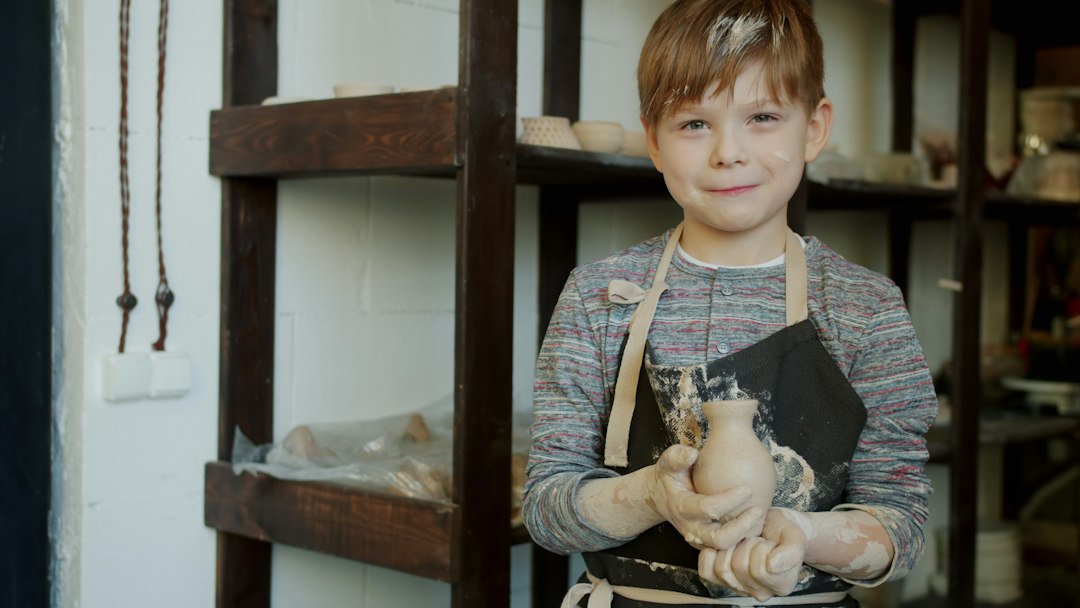
- Kneading and shaping playdough or homemade dough.
- Filling a bottle with a funnel without spilling.

10 Fine Motor Skills Games for Kids Aged 3 to 6
Between ages 3 and 6, fine motor skills should be practised through games lasting 5 to 10 minutes, never long sessions. Short fine and gross motor skills activities that slot into the daily routine work best.
1. Clothespin Line-Up
Clip socks or fabric scraps onto a string with clothespins. Trains thumb strength and hand-eye coordination.
2. Button Sorting Bag
Sort large buttons by colour and size into an egg carton. Then add a cable tie as a narrow opening to push them through.
3. Newspaper Ball Toss
Tear newspaper into strips and roll small balls. Then throw them into a box one metre away: adds visual coordination.
4. Finger Painting on Salt
Spread a thin layer of salt on a tray and draw strokes with your index finger. You can wipe and repeat without using up materials.
5. Pasta Threading
Stick raw spaghetti into a dough base and thread tubular pasta rings onto it. Count how many they put on each stick.
6. Sponge Water Transfer
Squeeze a sponge to move water from one container to another. Works forearm strength and pressure control.
7. Tearing and Pasting
Tear tissue paper into pieces and glue them onto a big drawing with a glue stick. Improves the three-finger pencil grip.
8. Kitchen Tongs Pickup
Pick up pompoms or cotton balls with kitchen tongs. Harder than clothespins and prepares the pencil grip.
9. Zipper and Fastener Bags
Open and close small bags with different closures: Velcro, drawstring, button and zip. A classic of Montessori practical life shelves.
10. Sensory Bottles
Fill clear bottles with rice, buttons or glitter. Screwing the lid on tight is a great screwing exercise.
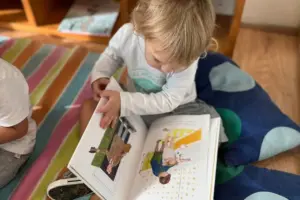
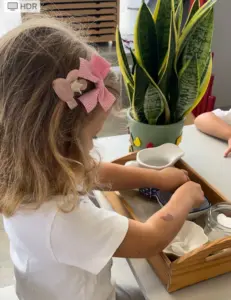
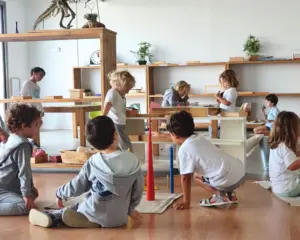
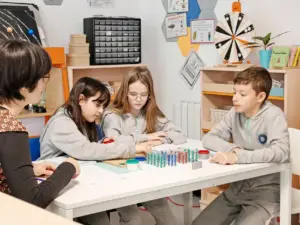
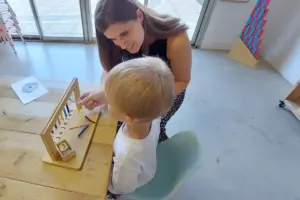
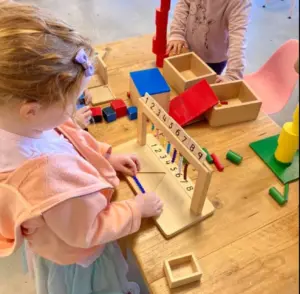
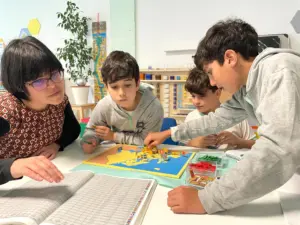
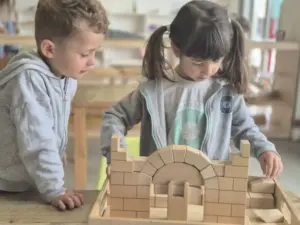
At Casa de Niños (3-6) these activities are part of the everyday routine: children pour water, fasten, sweep and tidy up without it ever feeling like a lesson.

10 Gross Motor Skills Activities to Do at Home
Gross motor skills involve the large muscle groups and support attention span. The Spanish Paediatric Association reminds us in its children’s physical activity guidelines that daily active play improves rest and mood. These ideas all fit in a living room or a local park.
- Example: the floor is lava. Imagine your 4-year-old has to cross the living room stepping only on cushions. Place five at different distances and ask them to reach the other side without touching the floor. Three minutes of balance and planning.
- Tape road: draw straight, curved and zigzag lines on the floor and walk along them without stepping off.
- Jump with feet together between two rope lines.
- Throw paper balls into a wastebasket from different distances.
- Crawl backwards along a marked hallway.
- Dance and freeze when the music stops.
- Carry a glass half full of water without spilling.
- Step up and down a single step, alternating feet.
- Roll a big ball against the wall with both palms.
- Hold a bridge pose or tree pose for 10 seconds.
Summary Chart of All 20 Activities by Age
This chart sorts the activities by age and skill type. Print it or stick it on the fridge and pick an activity based on how much time you have.
- Ages 0-3: crawl through a cushion tunnel, move chickpeas bowl to bowl, peel off tape, stack boxes.
- Ages 3-6: clothespin line-up, pasta threading, tearing and pasting, the floor is lava, cutting along a straight line.
- Ages 6-9: tying shoelaces, simple origami, water bottle with funnel, balance circuit with a stopwatch.
- Ages 9-12: fine bead bracelets, sewing with a blunt-tip needle, one-legged balance with eyes closed.
A Common Mistake and How to Fix It
The frequent mistake: making the activity too hard and then doing it for the child. If your 3-year-old tries a small button and gets frustrated, swap the game for something bigger (Velcro), don’t open the button for them. Success first, difficulty later. That way the child repeats the activity because they enjoy it and the movement sticks.
Frequently Asked Questions
What are fine motor skills and 10 examples?
Fine motor skills are the control of the small muscles of the hands and fingers. Ten examples: pinching, threading, fastening, screwing, cutting, crumpling paper, kneading, squeezing a clothespin, pouring with a funnel, closing a zip. All of them are practised with everyday objects from around the house.
What are 10 activities to exercise fine motor skills?
Ten activities: transferring chickpeas with tongs, threading pasta, tearing and pasting paper, finger painting on salt, squeezing a sponge, opening bags with different fasteners, stacking lids, cutting straight lines, kneading dough and posting coins into a piggy bank. Sessions of 5 to 10 minutes.
What games can I play to work on fine and gross motor skills together?
Games that combine both motor skills are the most complete: the floor is lava, carrying water without spilling, cushion circuits with clothespins, standing up while playing with playdough, and throwing paper balls. Alternate big movements with precise gestures in the same session.
What are the 10 basic movement activities for kids?
The basic movement activities are: walking, running, jumping, crawling, climbing, rolling, throwing, catching, balancing and moving sideways. They are trained through simple games and form the foundation on which writing and sports are later built.
Start today with just one activity from the chart and repeat it for a week before switching. If you’re looking for an environment where these skills are practised daily in three languages, book a personalised school visit and see the Montessori environments in action.