
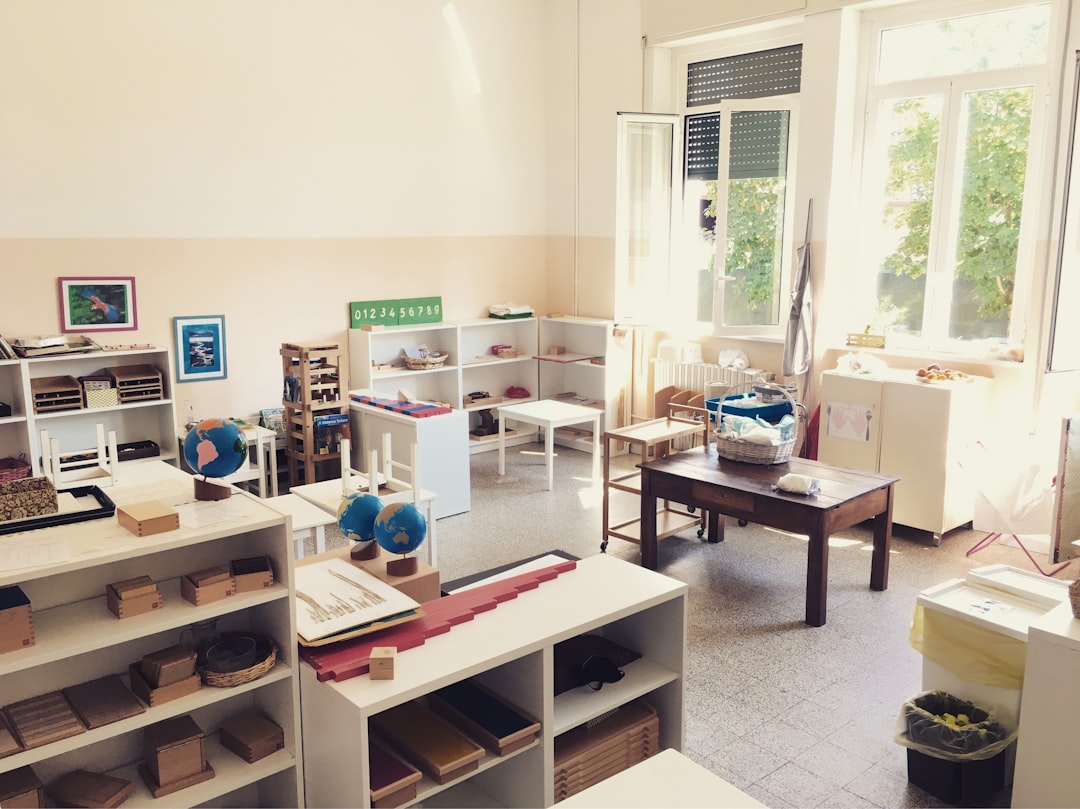
Montessori Environment at Home: Keys for Every Age
In short
Your home is already a Montessori environment. It just needs a little observation and common sense. Creating a true Montessori environment at home does not require an unlimited budget or designer furniture. Three years of seeing families at IMS Sotogrande have taught me that the key is intention, not money.

Your home is already a Montessori environment. It just needs a little observation and common sense. Creating a true Montessori environment at home does not require an unlimited budget or designer furniture. Three years of seeing families at IMS Sotogrande have taught me that the key is intention, not money. In the Acompañando-té sessions, a service we offer at the school, mothers and fathers discover that with few changes their children gain in autonomy and calm. And that is what every educator seeks.
But what exactly is a Montessori environment at home? It is more than a beautiful space. It is an environment that follows Dr. Montessori’s principles: order, beauty, accessibility, and clear limits. Every corner has a purpose and every object invites action, not passivity. Far from being an Instagram trend, it is about designing a home that respects the child’s natural development.
What is a Montessori environment at home? Beyond low furniture
Many people think that a Montessori environment at home consists of buying low wooden shelves and wicker baskets. That helps, but the true prepared environment is psychological. Dr. Montessori spoke of an environment that responds to the child’s psychic needs in each plane of development.
Order that invites action
A fundamental principle is order. Not military-style order, but an external order that helps the child build internal order. At IMS Sotogrande, each material has its place on the shelf. The little ones know where everything is and returning it to its spot becomes part of the work. At home, we can replicate this by limiting the amount of toys in view and rotating them. Less is more. Choosing five activities and storing the rest in a closet reduces overstimulation and extends concentration.
The power of the real and natural
Another pillar is natural materials and real experiences. A plastic toy kitchen is not the same as a small knife and real fruit. In our Children’s Community classrooms, children cut banana, water plants, or wash cloths. At two years old they are already able to serve themselves water from a small pitcher. The message to the child is clear: we trust you. Replacing electronic toys with everyday objects enhances hand-eye coordination and cause-and-effect logic. Neuroscience supports this idea: Harvard University studies show that children learn better with tactile and multisensory experiences until age six.
Full accessibility: so the child doesn’t need you for everything
The Montessori environment at home fails if the adult intervenes at every step. Accessibility means the child can reach their clothes, kitchen utensils, and hygiene materials without help. At IMS Sotogrande, coat hooks are 90 cm from the floor and sinks are low. In your kitchen, place unbreakable plates and glasses on a shelf within reach of a two-year-old. You will see how the pride of serving themselves outweighs any occasional spill. Accidents are learning opportunities, not disasters.
The observing adult: less intervention, more guidance
Maria Montessori insisted that the adult should be a dynamic observer, not a dictator. In IMS family support sessions, the first exercise is to sit on a low chair and watch. No phone. No correcting. Five minutes a day of pure observation reveal what your child needs: perhaps a stool by the sink or fewer toys in the living room. That gaze without judgment transforms family dynamics more than any designer furniture.

Montessori environment by stages: keys for each plane of development
Not all ages require the same. Dr. Montessori divided childhood into successive planes with distinct psychological characteristics. Adapting the home to each stage maximizes the child’s potential.
0 to 3 years: movement and safe exploration
Early childhood is a period of psychic creation. The baby absorbs the world like a sponge. The key is to offer a completely safe environment that does not restrict their need for movement. In the Children’s Community classrooms at IMS Sotogrande, the floor is padded, there are mirrors at floor level for the baby to recognize themselves, and bars fixed to the wall to push up when standing. At home, eliminate playpens and high chairs with harnesses. A mattress on the floor as a bed allows the child to get in and out freely, fostering independence from eight months.
For this stage, an open shelf with few materials is enough: a basket of balls with different textures, an object permanence box (a Montessori classic), and board books. The golden rule: the child chooses, explores, and puts away. If they don’t tidy up, it’s fine at first. You model without drama.
3 to 6 years: the conscious mind and order
From three years of age, the child refines their senses and coordination. This is the stage of









