Light Table for Toddlers and Kids: What to Do on It, Sizes (A3/A2) and Ideas

A professional light table is a flat, backlit surface designed for regular use, perfect for exploring transparencies, layers and outlines with precision and comfort. Montessori educators love it because it naturally draws children into concentration and sensory work. In this guide you’ll find out what kids actually do on a light table, how much one costs, which sizes make sense, and ideas to try at home or in the classroom.
The Quick Rundown
- It builds sustained attention, visual discrimination, fine motor skills and creativity.
- Prices range from very affordable basic models to high-end professional units.
- The most useful sizes run from A3 to A2 for families and teachers.
- The key isn’t brightness, it’s even light output, color temperature and keeping materials organized.

What Can Kids Do on a Light Table?
On a light table children build sustained attention, visual perception, hand-eye coordination and imaginative play. Language develops too when a child names the colors, shapes and silhouettes they see, and creativity takes off with layers of acetate sheets, paper and small translucent objects.
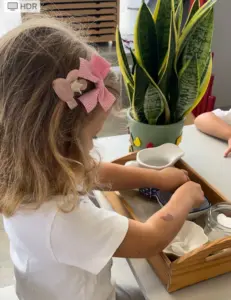
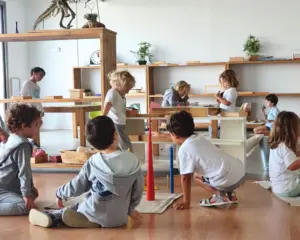
In a Montessori setting the light table fits beautifully because materials are offered neatly, in trays, with a clear purpose. The child chooses, works at their own pace, and returns everything to its place. The light focuses the gaze and cuts down distractions, something young children often struggle with.
Activity Ideas by Age Group
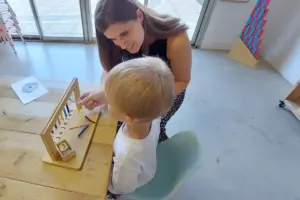
Between 18 months and 3 years, focus on layering colors and fitting simple shapes together, always with large pieces that can’t be swallowed. From 3 to 6, children can sort figures by color and size, trace simple outlines, or explore how colors change when overlapped.
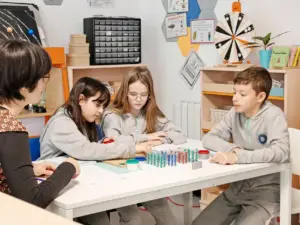
In the 6-to-12 age range, the light table becomes a study tool: tracing maps, observing leaf veins, designing layered comics, or investigating the structure of a sheet of paper. Here the child is fully independent and the adult simply sets the challenge.

How Much Does a Light Table Cost?
Light table prices vary with size, lighting quality and how sturdy the frame is. Basic options for occasional home use are very affordable, while a unit for daily classroom or studio work sits in a higher price bracket that pays for itself in durability.
Before fixating on the price tag, check four things: whether the brightness is adjustable, whether the color temperature is neutral, whether the surface is scratch-resistant, and whether the frame can handle daily use. A cheap table that flickers or overheats ends up in the storage closet, and that costs more in the end.
A Common Mistake (and How to Fix It)
Mistake: buying the cheapest model without checking how even the light is. When the LEDs leave dark patches in the corners, the child loses interest and you think the problem is their attention span.
Fix: before buying, look for videos or spec sheets showing the table switched on with an A3 sheet on top. If the lighting is even corner to corner, materials will look the same across the whole work surface.

Light Table Activity Ideas
- Layer cellophane cut-outs to discover what color appears when you mix two.
- Trace a simple drawing in pencil onto tracing paper, a great warm-up before writing.
- Sort a collection of pebbles, leaves or colored beads by transparency.
- Build a layered story with character silhouettes moving across a background.
Example: An Afternoon of Exploration at Home
Imagine your 4-year-old comes home from school with zero energy for anything. You switch on the light table, lay down three pieces of cellophane (red, blue and yellow) and ask them to discover what happens when they overlap. Ten minutes later they’re inventing names for the new colors they’ve created. No screens, nothing weird to buy.
If you’re working with a group, try the same materials as a silent guessing game: each child builds a geometric shape from three pieces and the others try to guess what it is. The format encourages respect for taking turns and careful observation.
What Size Light Table Should You Get?
For home use an A3 light table works well, while groups and professional work call for A2 or larger. The number that matters is the illuminated surface area, not the total frame size, so always check that figure on the spec sheet.
Beyond size, pay attention to height and posture. The table should sit at your child’s elbow height when seated, with feet flat on the floor or on a footrest. Working hunched over tires children out and pushes them to quit the activity early.
What to Look for in the Spec Sheet
Look for adjustable brightness, color temperature close to natural daylight, a panel thick enough not to warp, and a cord long enough that you’re not chained to one particular outlet. A3 drawing light tables are the best sellers because they fit on a normal desk without taking over the whole surface.
A professional-grade model, like those in Acosgraf’s TABLIGHT line, typically emphasizes even illumination and robust frames, two details that make a real difference when the table is used every day. Whatever the brand, what matters is that the unit can keep up with the pace of a classroom or a house full of kids.
Frequently Asked Questions
What can kids do on a light table?
A light table builds attention, visual perception, fine motor skills, language and creativity. It works for everything from sensory color exploration to tracing, sorting and shape study, with materials adapted to the child’s age and interests.
How much does a light table cost?
Pricing depends on size, light evenness and frame sturdiness. There are very affordable basic options for occasional home use and high-end professional units for daily classroom or studio work. Compare lighting quality before comparing price.
What are some light table activity ideas?
The most versatile ideas are layering cellophane to mix colors, tracing outlines onto tracing paper, sorting objects by transparency, and building layered stories with silhouettes. Everything works equally well at home and in the classroom, using simple materials you already have lying around.
What size light table should I get?
For home use, A3 is plenty; for groups or professional work, go for A2 or larger. Make sure the illuminated surface matches what’s advertised and that the height lets your child work with a straight back and elbows level with the table.
If you’re setting up a workspace at home, start with an A3 model with adjustable brightness and add materials as your little one’s interest grows. And if you’d like to see these kinds of resources in action in an authentic Montessori environment, book a personalized visit to the school.