Montessori Floor Bed: What to Check Before You Buy

Shopping for a Montessori floor bed means comparing dimensions, materials and assembly method first, not how cute the house shape looks. A well-chosen floor bed lasts from 18 months to around 6 years, goes together without special tools, and honors Maria Montessori’s original idea: a sleep space within the child’s reach, with no bars or risky climbing. The whole decision comes down to four choices you can see in the table below.
- The short version
- What to check in a Montessori floor bed before you order
- Comparison table: types of floor bed
- Example: how to measure the space before buying
- The most common mistake, and how to avoid it
- How a low bed supports independence at home
- Six-point buying checklist
- Frequently asked questions
The short version
- Always compare in usable centimeters: the mattress must fit snugly with no gaps, and the frame should not exceed 25 - 30 cm in total height.
- Choose certified solid wood with water-based finishes, no strong-smelling varnishes and no sharp edges.
- Prefer bolted, reversible assembly over friction-fit joinery that loosens with use.
- Before buying, measure the real alcove in the room and leave 50 cm clear all around for getting in and out.

What to check in a Montessori floor bed before you order
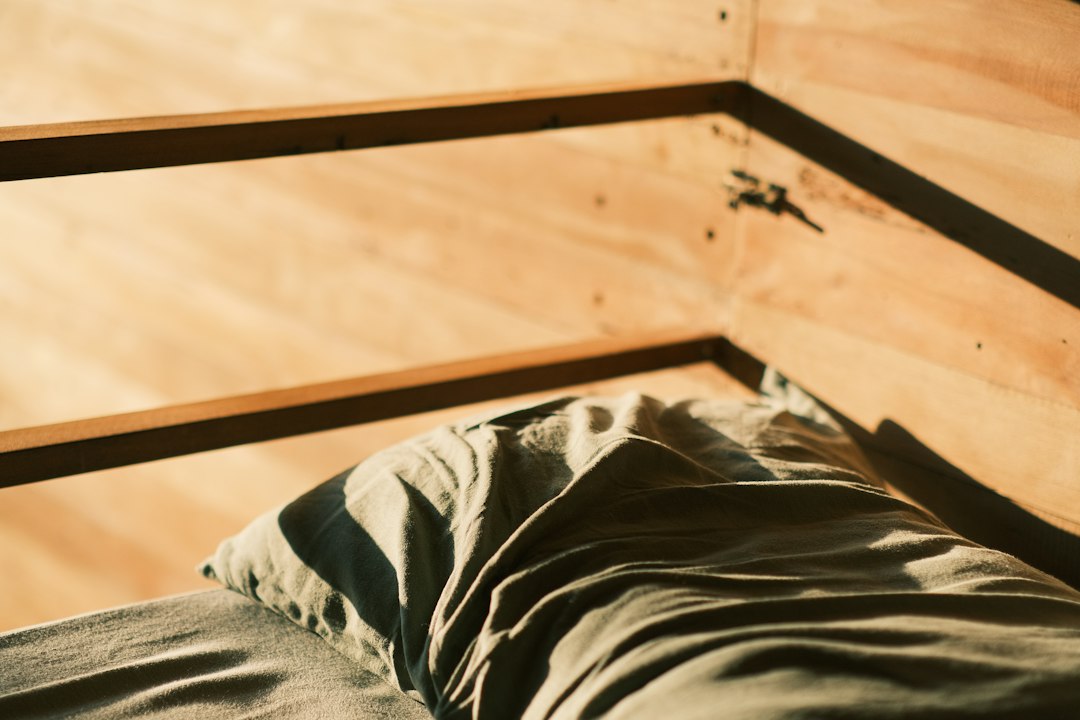
A Montessori floor bed is a low platform with no bars and free access on one side, designed so the child can sleep and get up on their own. That definition matters, because many items sold under the name don’t actually meet it: they’re regular beds shaped like a house, or elevated bunks that only look different. The useful comparison isn’t style, it’s four measurable variables.
Dimensions, height and mattress
140×70 cm models work up to about age 3, while 160×80 or 160×90 sizes carry a child through age 6 or 7. The lower deck should rarely sit higher than 20 cm. If the frame is taller, the child loses the advantage of climbing in and out independently, and you gain an extra nightly worry.
Wood, finishes and safety
Look for solid wood (pine, birch or beech) and emissions certificates such as E1 or CARB P2, which limit formaldehyde in engineered boards. Edges should be rounded and varnishes water-based. The Association Montessori Internationale emphasizes a prepared, safe environment, and the American Academy of Pediatrics recommends firm, clear sleep surfaces with no loose pillows or structures to climb on.
Assembly, shipping and warranty
Ask three things in writing: whether delivery reaches your address or only mainland hubs, who assembles the piece, and how many spare parts are included. Metal brackets with standard metric screws hold up better than a screwless friction-fit system. Keep the parts diagram, you’ll need it every time you move the bed to another room.

Comparison table: types of floor bed
The table summarizes the three families you’ll find when searching for a Montessori floor bed. Read it as criteria, not as a brand ranking.
- Floor bed with side board: free entry on three sides, simple assembly, ideal between 18 months and 4 years. The option most faithful to the method.
- House bed without an elevated base: the same low sleep surface, with a decorative frame. Check that the roof doesn’t invite climbing and that the beams are securely bolted.
- Bed with drawers or an ottoman base: maximizes space in small rooms, but adds weight and makes flipping the mattress harder.

Example: how to measure the space before buying
Imagine your child is 2 years and 1 month old, 88 cm tall, and still sleeping in a 120×60 crib they’re already outgrowing. You have a wall-to-wall gap of 165 cm in the bedroom. Before you open a single website, you measure: 160 cm of usable mattress length, plus 5 cm of deck on each side. If you’d have less than 50 cm left to walk around, go with a 140×70 model placed lengthwise against the wall.
Then mark the final rectangle on the floor with painter’s tape. Your 2-year-and-1-month-old can get in and out at the foot end for an entire afternoon without a single obstacle. That trial costs zero euros and prevents expensive returns.
The most common mistake, and how to avoid it
The typical mistake is buying for the house shape instead of the mattress. Many families receive a beautiful frame only to discover that the mattress from the old crib doesn’t fit, or that a 150×70 size isn’t available for delivery. The fix is simple: decide the standard mattress size first (140×70, 160×80 or 160×90), then look for a frame that accepts it.
A second frequent error is ignoring ventilation. If the lower deck is solid with no slats, the mattress traps moisture in a climate like ours. Choose a base with slats or perforations, and air the mattress out at least once a week.
How a low bed supports independence at home
The low bed works when the rest of the room supports it. Place clothes at their height on a low clothing rack, leave a nightlight within reach, and keep the floor clear so the child can return to bed alone. Montessori pedagogy advocates an environment adapted to the child, as the guidelines from the Asociación Montessori España outline.
Six-point buying checklist
- You’ve measured the real gap and taped the rectangle on the floor.
- You’ve picked a standard mattress size that ships before choosing the frame.
- You’re buying solid wood with an emissions certificate and rounded edges.
- The lower deck has slats or ventilation slots.
- Assembly uses screws and brackets, with instructions and spare parts included.
- You’ve confirmed delivery time, shipping cost and a written warranty.
Frequently asked questions
What age is right for switching to a Montessori floor bed?
The transition usually happens between 18 months and 3 years, when the child climbs out of the crib or needs more room. Watch whether they get up on their own at night and whether the room is safe in the dark. If you have any concerns about sleep, check with your pediatrician.
What are the most common Montessori bed sizes?
The most common are 140×70 cm for 18 months to 3 years, and 160×80 or 160×90 cm for ages 3 to 7. Pick the standard mattress size first, then find the frame, that’s how you avoid dangerous gaps or exposed edges.
What’s the best wood for a low kids’ bed?
Solid pine, birch or beech is the most durable and lowest in emissions. Look for E1 or CARB P2 certificates and water-based finishes with no strong smell. Particle board is only acceptable with a clear emissions certificate, and it holds up worse against bumps.
Can I find a Montessori floor bed with delivery and installation?
Local carpenters can build one to measure, and mainland manufacturers do ship here, usually with assembly handled separately. Before paying, confirm the shipping cost in writing, who assembles the piece, and the warranty term.
How do you set up the room around a low bed?
Lower the clothes to their height, leave a nightlight within reach, and keep the floor clear with nothing to climb on. A well-adapted environment lets the child move independently and calmly, something Montessori pedagogy works on every day.