Fine and Gross Motor Skills: Why They Matter and How to Practice Them at Home

Fine and gross motor skills matter far more than simply moving: they’re what let your child hold a pencil, zip up a jacket, eat independently, or write their name with ease. These are two sides of the same development, and both can be nurtured daily at home and in the classroom without any fancy materials. Let’s look at how they differ, why they matter so much, and how to support them step by step.
In short
- Gross motor skills involve the arms, legs, and core (running, jumping, balancing). Fine motor skills coordinate the hands and fingers (pinching, buttoning, cutting).
- Gross motor develops first, then fine motor: without a stable core, the fingers can’t refine their movements. Don’t rush stages.
- Montessori saw the hand as the instrument of intelligence, while Piaget placed hand-eye coordination in the sensorimotor stage.
- At home, 15 minutes a day with real objects, free play, and self-care tasks is enough to support both skills.

What did Maria Montessori say about fine motor skills?
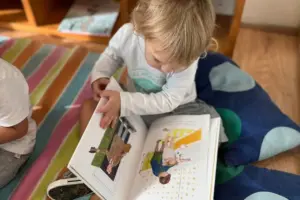
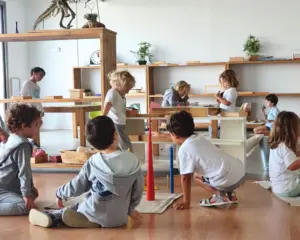
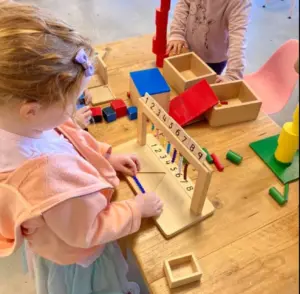
Maria Montessori held that the hand is the instrument of the child’s intelligence. When children handle real objects, they’re not just refining their fingers, they’re building thinking. That’s why the Montessori prepared environment fills its shelves with materials that get grasped, poured, screwed, and fastened.
The doctor observed that there are sensitive periods, windows in which a child feels an intense urge to repeat a movement. Between 18 months and 4 years, a love of buttoning, tying, pouring, and stacking emerges. Honouring that drive instead of doing it for them is the real educational work.
Montessori never separated movement from thought. The Association Montessori Internationale documents how her sensorial and practical life materials aim, above all, to refine the hand. Along the same lines, the Spanish Association of Pediatrics reminds us that free manipulative play is the natural path of motor development in early childhood.

What did Jean Piaget say about fine motor skills?
Jean Piaget placed hand-eye coordination in the sensorimotor stage, from 0 to 2 years. For Piaget, the baby comes to know the world through action: looking, grasping, mouthing, and releasing are their earliest forms of thought.
In his theory, each motor scheme opens a mental door. When a baby passes an object from one hand to another, they’re not just practising fine motor skills, they’re understanding that the object exists even when it changes location. That’s why drilling worksheets and flashcards before their time makes no sense: action comes first, representation follows.

What are motor skills and why do they matter?
Motor skills are a child’s ability to move their body voluntarily and with coordination. They divide into gross motor skills, which use large muscle groups like the legs and core, and fine motor skills, which coordinate the hands, fingers, and wrist. Fine and gross motor skills matter because they underpin independence, written language, and a child’s confidence.
Example: three minutes of independence that sharpen the hand
Imagine your 3-year-old wants to get dressed by themselves before school. Instead of buttoning them up yourself, you leave two spare minutes and hand them a cardigan with the zipper halfway up. If they get frustrated, you demonstrate the motion slowly once, then step back. Those two minutes of trying work the pincer grip, bilateral coordination, and frustration tolerance.
Example: water time as a finger gym
If your 4-year-old helps water the plants with a small watering can, they’re loading weight through the wrist, directing the stream, and calculating how much to pour. An exercise like this, repeated three times a week, preps the hand for letter formation better than many pre-writing worksheets.
How do you practise fine and gross motor skills?
At home, every day
- Gross: climbing stairs alternating feet, jumping over imaginary lava, dragging a grocery box.
- Fine: opening jars, threading large beads, peeling tape, kneading bread, untying knots.
- Independence: setting the table with real cutlery, pegging up laundry, pouring water from a small jug.
In the Montessori classroom
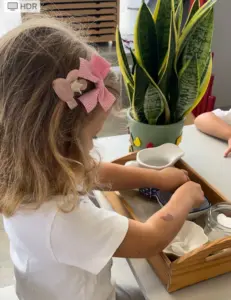
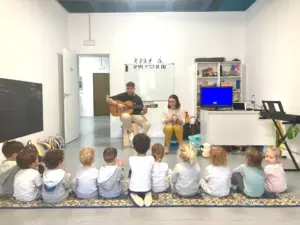
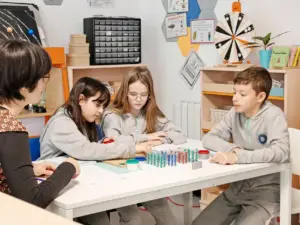
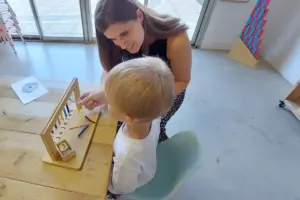
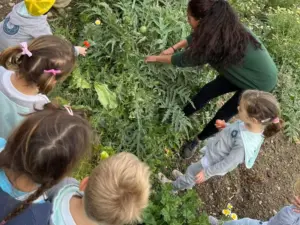
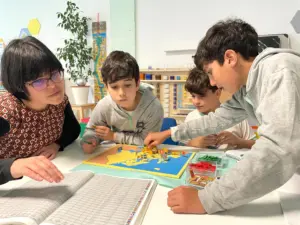
In Children’s House, fine motor skills are exercised through practical life trays: transferring lentils with spoons, folding paper, or wiping windows. In Elementary, from 6 to 12, that foundation turns into fluent handwriting, handcrafts, and experiments that demand precision. Purposeful movement is also complemented by music, physical education, and outdoor activities.
Example: a 15-minute routine for a rainy afternoon
Imagine it’s been raining for three days and your 5-year-old won’t sit still. You set aside a quarter of an hour: five minutes of a cushion obstacle course and balancing on a line on the floor, five minutes of making salt dough, and five minutes of tying knots with shoelaces. You get off the sofa, they burn energy, and both motor skills get a workout without anyone noticing.
Fine motor vs gross motor: key differences
The main difference between fine motor and gross motor skills lies in the size of the muscles involved and the precision of the movement. Gross motor is powerful and broad. Fine motor is delicate and precise. In fine and gross motor development, the former paves the way for the latter: without core stability, the fingers can’t achieve precision.
| Aspect | Gross motor | Fine motor |
|---|---|---|
| Muscles involved | Legs, arms, core | Hands, fingers, wrist |
| Type of movement | Broad and powerful | Precise and delicate |
| Examples | Running, jumping, climbing | Cutting, buttoning, writing |
| Milestones | Walking, balancing | Pincer grip, letter strokes |
| Main focus | Balance and muscle tone | Hand-eye coordination |
Fine and gross motor skills: examples by age
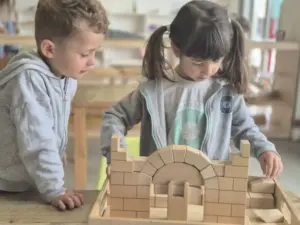
From 0 to 3 years, the most common fine and gross motor examples are putting objects in the mouth, passing them from hand to hand, stacking blocks, and starting to use a spoon. From 3 to 6, jumping with both feet, cutting with blunt-nosed scissors, and buttoning appear. From 6 onwards, fine motor skills refine until they can sustain writing for several minutes.
Common mistake: skipping stages
The most frequent mistake is giving a 2-year-old letter worksheets or a thin pencil before they’ve consolidated their pincer grip and balance. The fix is simple: go back to gross motor for two or three weeks and offer real objects for the hands (clothes pegs, jars, spoons). When the core and hand are ready, letters all but arrive on their own.
Frequently asked questions
What did Maria Montessori say about fine motor skills?
Maria Montessori states that the hand is the instrument of the child’s intelligence. Handling real objects builds thinking, not just dexterity. The prepared environment offers pouring, screwing, and fastening materials because fine motor skills underpin cognitive development in the early years.
What did Jean Piaget say about fine motor skills?
Jean Piaget places hand-eye coordination in the sensorimotor stage, from 0 to 2 years. For him, the baby comes to know the world through action: grasping, releasing, and exploring objects are thought in motion. Fine motor skills emerge from free manipulation of the environment.
What are motor skills and why do they matter?
Motor skills are a child’s ability to move their body voluntarily and with coordination. They underpin independence, written language, and confidence. Well-developed motor skills make writing, reading, and classroom participation easier later on.
How do you practise fine and gross motor skills?
They’re developed through free play, self-care tasks, and daily movement. For gross motor: spaces to run, jump, and climb. For fine motor: tying, pouring, kneading, or using pegs. 15 minutes a day of simple activities, done calmly, is all it takes.