
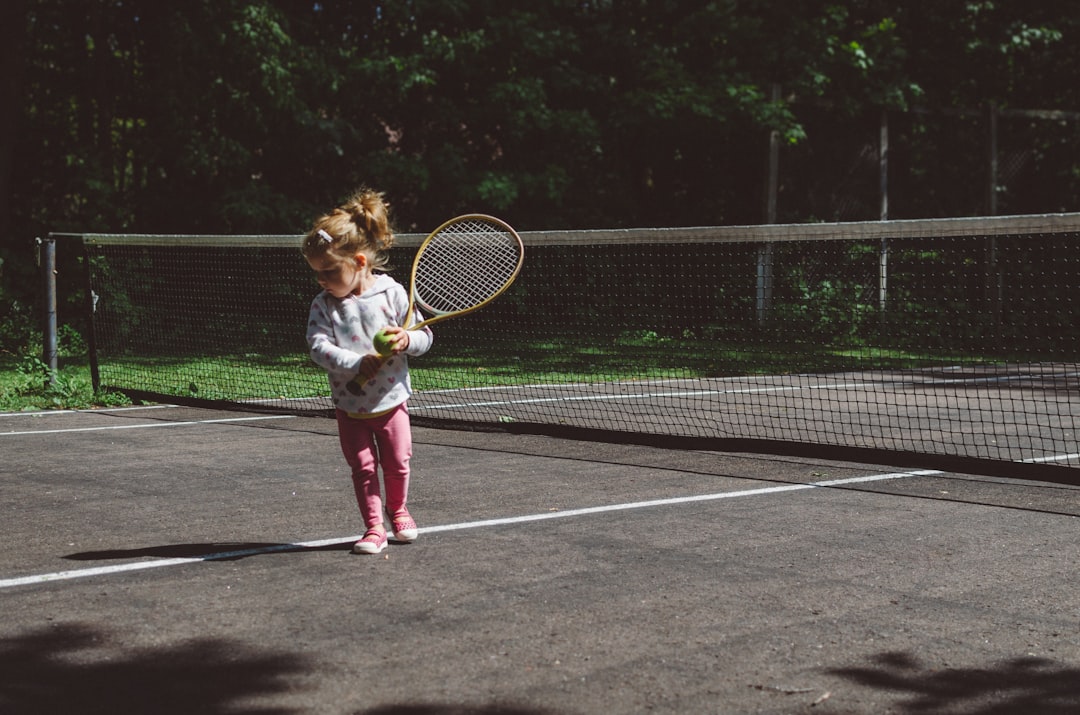
Children’s Padel Classes in Marbella: A Montessori Guide
In short
Las children 's padel classes in Marbella have become a recurring option for many families looking for a structured physical activity for their children. The rise of this sport on the Costa del Sol is undeniable. But what does Montessori pedagogy say about the role of exercise in childhood?
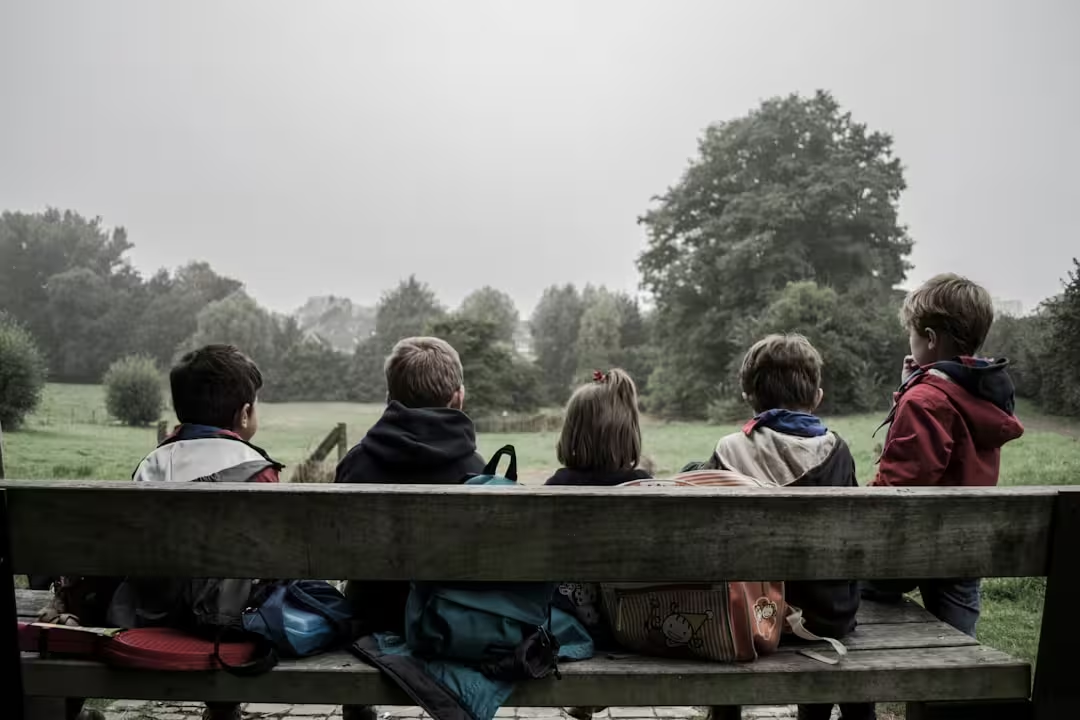
Las children‘s padel classes in Marbella have become a recurring option for many families looking for a structured physical activity for their children. The rise of this sport on the Costa del Sol is undeniable. But what does Montessori pedagogy say about the role of exercise in childhood? At IMS Sotogrande, although we do not offer padel classes, we integrate movement daily as a tool for learning and personal development.
- Benefits of Children's Padel Classes in Marbella from a Montessori Perspective
- The Rise of Kids' Padel in Marbella
- Children's Padel Classes in Marbella: What Does Neuroscience Say?
- The Role of Physical Exercise in Montessori Pedagogy
- Physical Education at IMS Sotogrande: More Than Sport
- Tips for Choosing Sports Activities for Children
- Frequently Asked Questions
- Key Takeaways
Benefits of Children’s Padel Classes in Marbella from a Montessori Perspective
When a child signs up for children‘s padel classes in Marbella , parents often think about coordination, socialization, or energy expenditure. From the Montessori philosophy, we add a deeper layer: sport is a vehicle for the child’s self-construction. Maria Montessori spoke of ‘intentional movement’ as the foundation of all learning. The concentration required to hit a ball, the controlled repetition of a serve, the patience to wait for a turn in the game… all these elements align with the sensitive periods for order, sensory refinement, and control of movement.
A concrete example: in our Children’s House environments (3-6 years), we observe that practical life materials, such as pouring liquids or sweeping, develop the same type of hand-eye coordination that is trained on a padel court. The difference is that padel adds a social component that, in group classes, becomes a laboratory for grace and courtesy. In well-structured children’s padel classes in Marbella , children not only learn technique: they learn to collaborate, respect rules, and manage frustration, all skills present in the Montessori curriculum.
The Rise of Kids’ Padel in Marbella
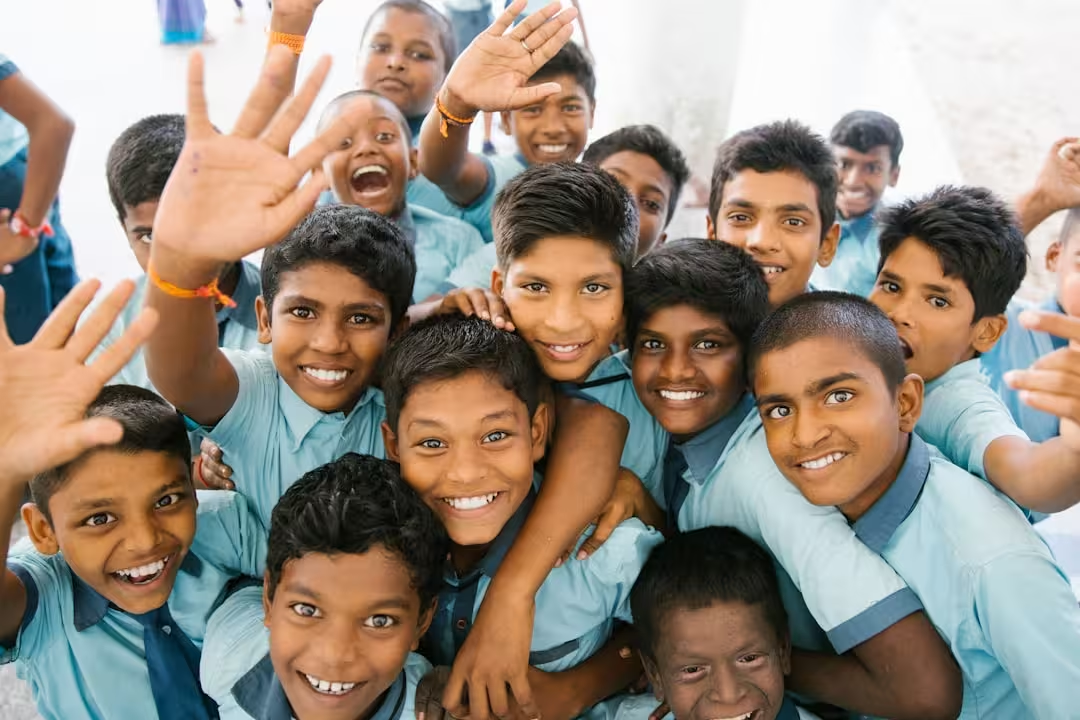
In the last five years, Marbella has seen a multiplication of padel courts and demand for extracurricular activities in this sport. Data from the Spanish Padel Federation confirm that the talent pool is growing by double digits in Andalusia. Families from Campo de Gibraltar, Alcaidesa, San Roque, or La Línea also travel on weekends to Marbella clubs. This passion for padel reflects a real need: children need to move more. The World Health Organization recommends 60 minutes of moderate to vigorous physical activity daily for children aged 5 to 17 years (WHO, 2020).
However, not all sports activities are equally effective. The Montessori key lies not in the sport itself, but in how it is presented. A prepared environment, with materials suited to the child’s size, with guides who observe and minimize verbal corrections, and where error is seen as a natural part of the process, multiplies the benefits. Therefore, although children’s padel classes in Marbella that apply these principles are not yet the norm, Montessori pedagogy offers guidelines for any sports instructor to create sessions more respectful of child development.
Children’s Padel Classes in Marbella: What Does Neuroscience Say?
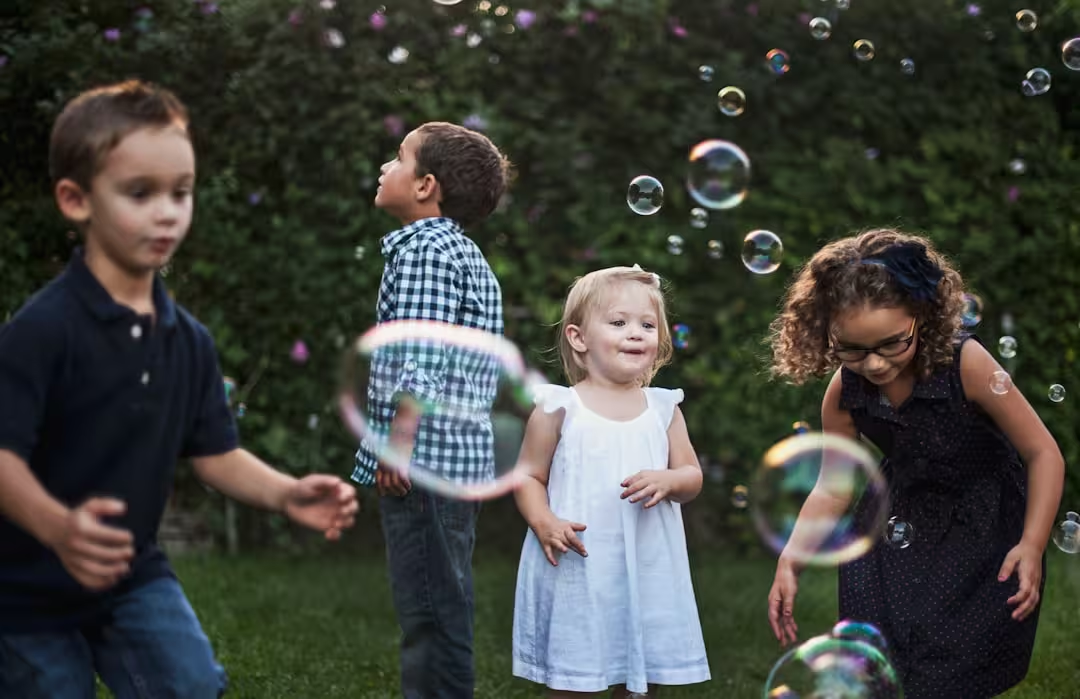
Educational neuroscience supports what Montessori observed empirically. Recent studies show that aerobic exercise increases brain-derived neurotrophic factor (BDNF), a protein that acts as neuronal fertilizer. Additionally, the bilateral coordination involved in padel, using a racket and alternating hands, visually tracking the ball, activates the corpus callosum, improving communication between hemispheres. This has a direct impact on literacy and sustained attention capacity.
At IMS Sotogrande, we apply this knowledge. Physical education sessions with Alejandro Ledesma, our specialist, do not aim to produce elite athletes, but to expose the child to basic movement patterns: crawling, running, jumping, throwing, twisting. From there, we progress to guided games and, from age 6, adapted racket sports. Padel, due to its dynamism, is an excellent complement, as long as early specialization is avoided. The American Academy of Pediatrics warns against sports hyperspecialization before puberty (AAP, 2016). Therefore, if you are looking for children’s padel classes in Marbella , make sure the club prioritizes motor variety and free play over competition.
Book a personalized visit to the school here.
The Role of Physical Exercise in Montessori Pedagogy
Maria Montessori designed the environments so that movement was integrated into every activity. In a 3-6 year old classroom, there are no fixed desks. Children carry trays, move chairs, walk on the elliptical line. This attention to intentional movement contrasts with traditional education, where physical education is an isolated subject. In our school, the body is the first instrument of learning. That is why the experiential psychomotor program of Nido and Infant Community precedes sensorimotor work with specific materials.
Padel can fit perfectly into this philosophy if it is presented as an extension of the environment. Some clubs in Marbella offer sessions in small groups, with adapted rackets and skill circuits reminiscent of Montessori sensory trays. However, for a young child, the greatest benefit is not in learning to make a perfect tray shot, but in developing the ability to choose: do I want to play today or do I prefer climbing? In children’s padel classes in Marbella , a Montessori approach would give the child the freedom to decide when to practice and for how long, always within clear limits that ensure respect for the group and materials.
At IMS Sotogrande, sport is not a separate extracurricular activity, but a pillar of the school day. Children in Taller (6-12) have daily movement sessions, combining yoga, cooperative games, and monthly outings to the natural environment, the Learning Walks. This connection with nature is another strength: padel on a court is fun, but running barefoot on the beach of Sotogrande or climbing in the pinsapar of Grazalema activates senses that an indoor court can never stimulate.
Physical Education at IMS Sotogrande: More Than Sport
For families in Marbella considering our school, the distance is minimal: less than 30 minutes via the A-7 highway. Many expatriate families living in Marbella, Puerto Banús, or Estepona choose IMS Sotogrande precisely because of our comprehensive approach, where movement and learning are inseparable. Our specialist Alejandro Ledesma does not ‘teach’ physical education, but prepares the environment so that each child can explore their motor skills with confidence. From Monday to Friday, students find circuits, hoops, balls, and ropes at their disposal, but they decide the challenge of the day. This principle of autonomy, central to Montessori, is what we often miss in conventional extracurricular activities, including many children’s padel classes in Marbella that replicate the adult model of coach-instruction-repetition.
When to Start with Children’s Padel Classes in Marbella?
Most clubs in Marbella admit children from age 5. From a Montessori perspective, however, the question is not age, but the child’s level of psychomotor development and, above all, genuine interest. We have seen 4-year-olds fascinated by a racket and able to hit a ball with surprising precision, while others prefer climbing or dancing. At IMS Sotogrande, we observe and document these individual inclinations to suggest the most suitable activity to families. We never force, we never compete. So if your child asks to sign up for children’s padel classes in Marbella , accompany them to a trial session and observe without interfering. Do they get frustrated with mistakes? Do they collaborate with others? Do they follow the instructor’s directions? These data will tell you more than any age criterion.
Tips for Choosing Sports Activities for Children
Choosing an activity for your child can be a headache. Padel, football, swimming, dance… The extracurricular offer on the Costa del Sol is very extensive. Here are three guidelines with a Montessori stamp:
- Prioritize multi-sport participation before age 12. A study from the University of Basel showed that elite athletes in racket sports had varied motor training in childhood (Source).
- Observe the instructor-to-child ratio. In Montessori, we work with low ratios to guarantee individual observation. If the padel class has one instructor for more than 8 children, personalized attention is diluted.
- Value the instructor’s attitude. A Montessori guide never shouts, humiliates, or compares. In children’s padel classes in Marbella , a good coach corrects with open questions and avoids empty praise (“very good!”) to focus on describing what they see: “I see you tried that shot three times and on the third you almost got it.”
These principles are applied daily at IMS Sotogrande. Our Rainbow team (special needs) works closely with the physical education specialist to adapt each session to individual rhythms and needs. In the same group, one child may be perfecting the serve while another works on cross-laterality by crawling on the floor. Inclusion is not a pretty word: it is a reality we build every morning.
For expatriate families arriving in Marbella or Sotogrande looking for an international school, physical education is often a decisive factor. Our Spanish-English bilingual program includes specific movement vocabulary, and sessions are conducted naturally in both languages. Thus, while a child learns to hit a padel ball, they internalize instructions in English that will be useful in any international sports environment.
Frequently Asked Questions
Is it good for a young child to play padel?
Well-designed padel, with light rackets and low-pressure balls, can be beneficial from age 5 as long as the child’s interest is respected and early specialization is not sought. At IMS Sotogrande, we prefer adapted racket games within a multi-sport program until the child shows a clear preference.
What is the best age to start padel classes in Marbella?
Most sports schools in Marbella accept children from 5-6 years, although municipal schools sometimes set 7. The key is not chronological age, but motor maturity and intrinsic motivation. A child who has not crawled enough may need more time before moving to sports with implements.
How does IMS Sotogrande combine sport with the Montessori method?
Instead of separate classes where an instructor leads, we prepare the environment with movement options and the child chooses daily which physical education activity to explore. The specialist observes, documents, and proposes new personalized challenges, integrating sport into the school day as another extension of learning.
Does IMS Sotogrande offer padel classes for children?
We do not have a specific padel program. Our physical education is multi-sport and based on freedom of choice. However, Montessori principles are perfectly applicable to any sport discipline, and we can guide families in our community on how to choose a club or instructor that respects child development.
Key Takeaways
Sport, when it respects each child’s rhythms, is an extraordinary ally for physical, cognitive, and emotional development. Children’s padel classes in Marbella can be an excellent complement for a child seeking movement, as long as they avoid a premature competitive approach. But true transformation occurs when body and mind are educated together, not in scattered extracurricular hours, but as part of a coherent educational project.
At IMS Sotogrande, we have been demonstrating for two decades that it is possible to form an international community without sacrificing the unhurried pace of natural development. If your family is evaluating educational options in Marbella or Campo de Gibraltar, we invite you to request a visit. Come see how we breathe movement into every corner of the environment, from Nido to Taller 2. We look forward to seeing you.









