
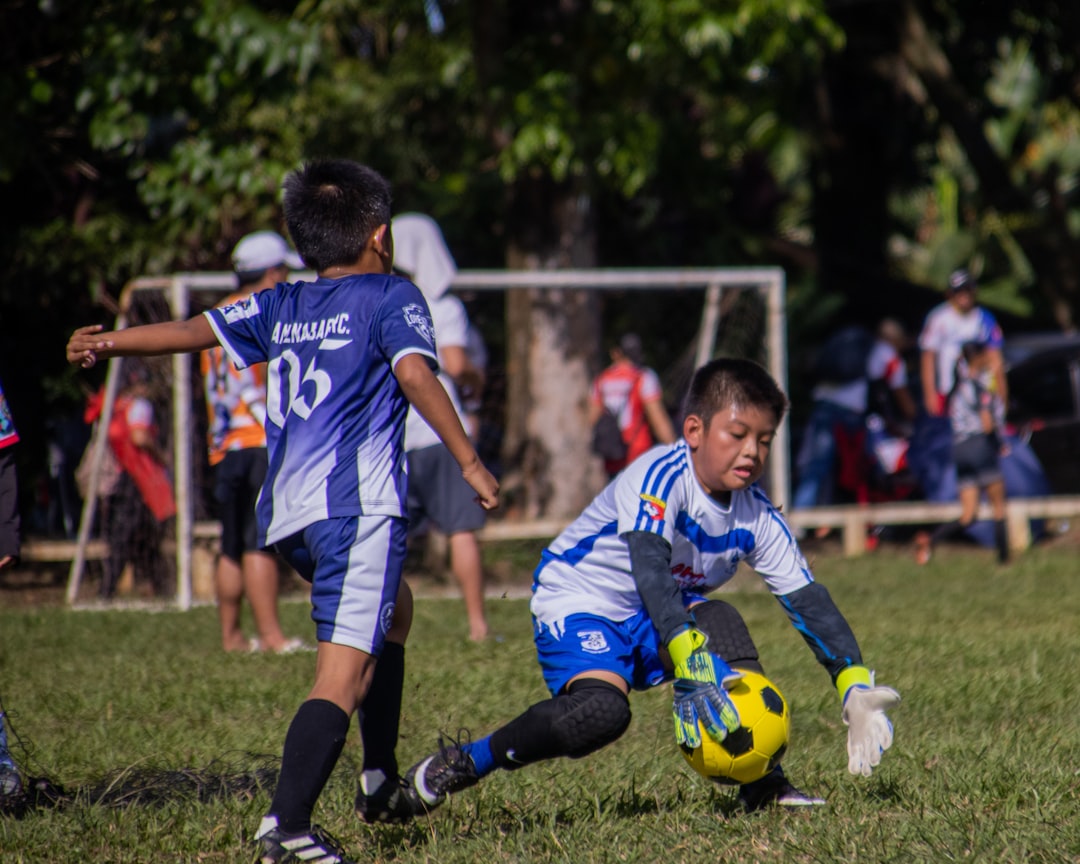
Youth Football Academies in Marbella: How to Choose for Expat Families
In short
Looking for a youth football academy in Marbella that fits your family’s values can be more complex than it seems. It’s not just about teaching a child to kick a ball. It’s about finding an environment where they grow as a person, their pace is respected, and they simultaneously develop motor and social skills.

Looking for a youth football academy in Marbella that fits your family’s values can be more complex than it seems. It’s not just about teaching a child to kick a ball. It’s about finding an environment where they grow as a person, their pace is respected, and they simultaneously develop motor and social skills. At IMS, we see sport as a natural extension of the autonomous learning we experience in the classroom every day. In this article we explore youth football Marbella in depth with practical examples.
- Youth football is more than technique: it’s a laboratory for social skills, resilience, and teamwork.
- Ideal sports training complements, rather than competes with, a child’s academic and emotional development.
- Criteria like fair play, inclusion, and the coach’s philosophy matter more than immediate results.
- The autonomy and confidence built on a good sports team transfer to the classroom and to life.
What is a Marbella family really looking for in youth football?
When an expat family explores youth football schools in Marbella, the first impulse is often to ask about schedules and fees. However, the most important question should be: what values does this school transmit? Formative football is a powerful tool for teaching discipline, frustration management, and cooperation. If the environment only rewards winning, the essence of learning at an early age is lost. When it comes to youth football Marbella, it pays to listen to what families and lead guides actually report.
Children between 6 and 12 years old (what we call the ‘Workshop’ in Montessori) are in a period of intense social development. They seek their place in the group, want to belong, and need motor challenges. A good youth football club offers all of this in a structured way. Therefore, when evaluating an option, pay attention to how coaches manage conflicts on the field and whether all players get game time. Daily practice with youth football Marbella reveals nuances no handbook fully captures.
Key criteria for choosing a football school
Not all children’s football academies in Marbella operate with the same philosophy. These are the factors we recommend evaluating: Understanding youth football Marbella from inside the classroom reshapes everyday decisions.
- Coach’s philosophy: Does it prioritize equal participation or only the most skilled? In training, the process is more important than the result.
- Training methodology: Methods based on play and free exploration foster tactical creativity. Purely repetitive training can hinder cognitive development.
- Safety and well-being: Proper facilities, staff trained in first aid, and a clear anti-bullying protocol are non-negotiable.
- Communication with families: A club that informs transparently and maintains an open dialogue reinforces trust.
Don’t hesitate to attend a training session as an observer. Watch how the coaches speak to the children. A respectful and constructive tone is fundamental. Concrete data on youth football Marbella is worth reviewing before acting on assumptions.

How sport complements a Montessori education
In Montessori pedagogy, movement and cognition are deeply linked. The sensorial materials of the Workshop (ages 6-12) work on coordination and concentration in a similar way to sport. Well-oriented youth football reinforces these same capacities in a different social context.
Autonomy is another pillar. On a good team, children learn to make quick decisions under pressure, take on responsibilities within their role, and solve problems with their teammates. These are skills directly transferable to project work in the classroom. The confidence gained on the field is noticeable in class participation.
For families moving to the Costa del Sol, finding quality extracurricular activities is part of the adaptation process. If you’re looking for a youth football school in Marbella, you’re also looking for a community for your child. Sport is an excellent vehicle for integrating and making friends outside of school.
Book a personalized visit to the school to see how we integrate movement and collaboration into our daily educational program.

The IMS approach: movement with purpose
At IMS, we are not a football school. We are a trilingual Montessori school in Sotogrande where intentional movement is part of the curriculum. Our Workshop students practice yoga and mindfulness to connect body and mind. Additionally, we offer extracurricular activities like Aikido, dance, and music, which work on discipline, expression, and coordination in ways that complement team sports.
We believe fine and gross motor development is essential. That’s why our prepared environment includes spaces for movement and materials that invite manipulation. External sport, like football, is a valuable extension of this. We seek for our students to have positive sporting experiences that reaffirm their love for active learning.
Our campus in Sotogrande (San Roque, Cádiz) welcomes families from the entire area: Estepona, Algeciras, Gibraltar, La Línea and, of course, Marbella. Many Marbella families choose IMS for our educational philosophy, and the 35-40 minute drive via the A-7/AP-7 is a worthwhile trade-off for a different kind of education.

Integrating youth football with school life: real balance
A common challenge for parents is the schedule. Weekend training and matches can overlap with family rest or homework. The key is to find a football school that respects the child’s rhythms and doesn’t add unnecessary pressure. Youth football in Marbella should be a source of joy, not stress.
Talk to your child. What part of football do they like most? Playing with friends, learning new skills, or competing? Their answer will guide you to find the most suitable option. Sometimes, a local league with a recreational focus is better than a highly competitive academy for a 7-year-old. Intrinsic motivation, wanting to play for pure enjoyment, is what should be protected at these ages.
Frequently Asked Questions
What is a good age to start youth football?
Most youth football schools in Marbella accept children from 5 or 6 years old. However, each child’s motor development and attention span is different. There’s no rush. At age 6, at the start of the Workshop, they usually have the necessary group coordination to enjoy a team sport. The important thing is that the child shows their own interest.
Can football interfere with school performance?
If managed well, no. A good balance between physical activity, study, and free time is key. Ideally, the football club should collaborate with the school and understand that the child’s priority is their holistic education. If the child arrives exhausted to class or has no time for free play, it’s a sign that the activity load is excessive.
What is the difference between a football school and a traditional club?
A youth football school usually has a more pedagogical approach, focused on the progressive learning of technique and tactics through play. A traditional club may be more oriented towards competition and obtaining results. For initial training, the educational philosophy of the school is a decisive factor.
Key Takeaways
Choosing among the youth football options in Marbella is a decision that goes beyond sports logistics. It’s about finding an environment where your child develops physical, social, and emotional skills that enhance their global education. Prioritize values, methodology, and the child’s well-being over immediate trophies.
Sports training is a powerful complement to a respectful education like Montessori. If your family is in Marbella or on the Costa del Sol and you’re looking for a school that integrates movement with purpose and the development of autonomy, we invite you to get to know IMS. Book your visit to discover our educational proposal first-hand.
Article by Viviane Dumont, Director of Studies at International Montessori School Sotogrande.









