
Respectful Parenting: Jesús Garrido’s Method Explained for Expats in Sotogrande

- In a nutshell
- What are the principles of respectful parenting?
- Where can I find a PDF book about parenting styles?
- What are some good books on respectful parenting?
- What are the 4 pillars of positive parenting?
- Jesús Garrido's respectful parenting PDF
- What Garrido's book brings and how to read it
- Respectful parenting for real family life
- Frequently asked questions
In a nutshell
- Respectful parenting combines a secure bond with clear boundaries: validate the emotion and hold the limit at the same time.
- Garrido condenses riding out a tantrum into four steps: observe, receive, set the limit and reconnect.
- The four pillars of positive parenting are attachment, respect, boundaries and autonomy, sustained by the adult’s example.
- The circulating PDF is usually talk-based summary material; serious study starts from the full book and official sources.

What are the principles of respectful parenting?
Respectful parenting rests on six principles: a secure bond, respect for development, firm yet kind limits, emotional validation, gradual autonomy and the adult’s example. It doesn’t remove authority, it turns it into partnership.
The adult leads from connection, not fear. Validate the emotion and hold the limit. Empathise first, correct afterwards. Expectations are matched to the child’s real age, not the pace of the day.
The Association Montessori Internationale shares this same root: observe the child and respect their developmental windows. The Asociación Española de Pediatría (Spanish Paediatric Association) stresses that free play and rest underpin children’s health.

Where can I find a PDF book about parenting styles?
The legitimate route is the public library, your region’s digital lending platform and publishers’ free samples. Downloading the full PDF of a protected work harms the author and often comes bundled with malicious files.
Parenting styles (authoritarian, permissive, neglectful and democratic or respectful) are covered in many open documents from schools and family associations. For in-depth study, the full book still beats a loose PDF.

What are some good books on respectful parenting?
Start with four titles. “The Child’s Way”-style thinking in Emmi Pikler’s work opens your eyes to free movement. Maria Montessori’s “What You Should Know About Your Child” explains the absorbent mind. Faber and Mazlish’s “How to Talk So Kids Will Listen” hands you practical communication tools. And Jesús Garrido’s respectful parenting book ties it all together in current language.
Each book brings a different lens. Pikler works on the body, Montessori the mind, Faber and Mazlish the word, and Garrido the overall frame. Combine them without guilt.
What are the 4 pillars of positive parenting?
The four pillars of positive parenting are attachment, respect, boundaries and autonomy. They rest on the adult’s example, modelling what you want to see.
- Attachment: emotional availability and responsive care.
- Respect: the child’s dignity and their real developmental pace.
- Boundaries: clear rules, few of them, consistently held.
- Autonomy: gradual participation in daily life.
Example: a 3-year-old tantrum in four steps
Picture your 3-year-old flopping on the floor because they want more screen time. Get down to their level and name what you see: “You’re angry because you want to keep going.” Wait. Then hold the limit in one short line: “Screen time is over.” Offer a concrete alternative and stay close until they settle.
This four-step script is what Garrido calls riding the emotion out. It feels slow at first and works brilliantly with practice.
Jesús Garrido’s respectful parenting PDF
When people search for Jesús Garrido’s respectful parenting PDF, they want summaries, diagrams and phrases to remember. This material exists as talk and conference outreach and is useful for recalling ideas. It never replaces the full book.
A common mistake and how to fix it
Common mistake: reading isolated lines from the PDF and applying them out of context. Fix: note down one idea a week and put it into practice at a specific moment of the day, for instance, emotional validation before dinner. Consistency teaches more than the most complete summary.
A respectful parenting checklist for your day
- Did I offer two real options instead of one order?
- Did I name the emotion before setting the limit?
- Was the limit short, clear and repeated without shouting?
- Did I give 10 minutes of play together before expecting something?
What Garrido’s book brings and how to read it
Garrido’s book reads well at 15 minutes a day, pencil in hand. Underline one principle per chapter and pick one concrete behaviour to observe. That keeps you out of pure theory.
Respectful parenting for real family life
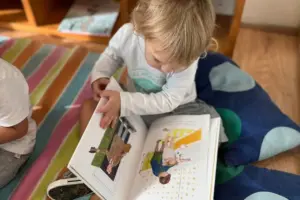
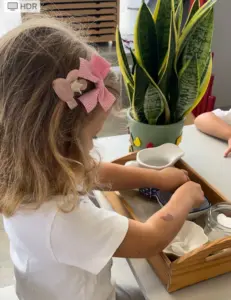
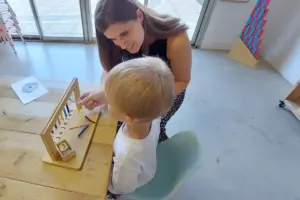
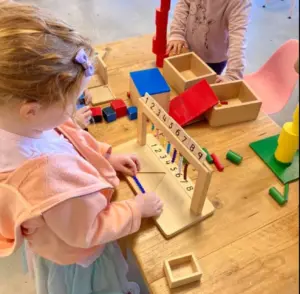
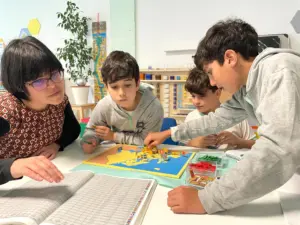
At IMS Sotogrande we use this same language in the classrooms, with materials at the child’s height and adults who observe before stepping in. If your family is relocating to the Campo de Gibraltar area, this consistency between home and school massively reduces friction.
Frequently asked questions
What are the principles of respectful parenting?
Respectful parenting rests on six principles: a secure bond, respect for the child’s development, firm yet kind limits, emotional validation, gradual autonomy and the adult’s example. It doesn’t remove authority, it turns it into partnership. The adult leads from connection, not fear.
Where can I find a PDF book about parenting styles?
You can find PDF material on parenting styles at public libraries, digital lending platforms and family association websites. Downloading the full PDF of a protected work is illegal and can contain dangerous files. For deep study, the printed or ebook version is still the best option.
What are some books on respectful parenting?
Key titles include Emmi Pikler’s work on free movement, Maria Montessori’s “What You Should Know About Your Child”, Faber and Mazlish’s “How to Talk So Kids Will Listen” and Jesús Garrido’s respectful parenting book. Each covers a different plane: movement, mind, communication and the overall frame of positive discipline.
What are the 4 pillars of positive parenting?
The four pillars of positive parenting are attachment, respect, boundaries and autonomy. Attachment brings security, respect brings dignity, boundaries bring structure and autonomy brings confidence. They are held up by the adult’s example, modelling the behaviour you want to see in your child.
If this read gave you clarity, the next step is seeing how it lives in a prepared environment. Book a personalised school visit and bring your parenting questions, we’ll work through them together.