
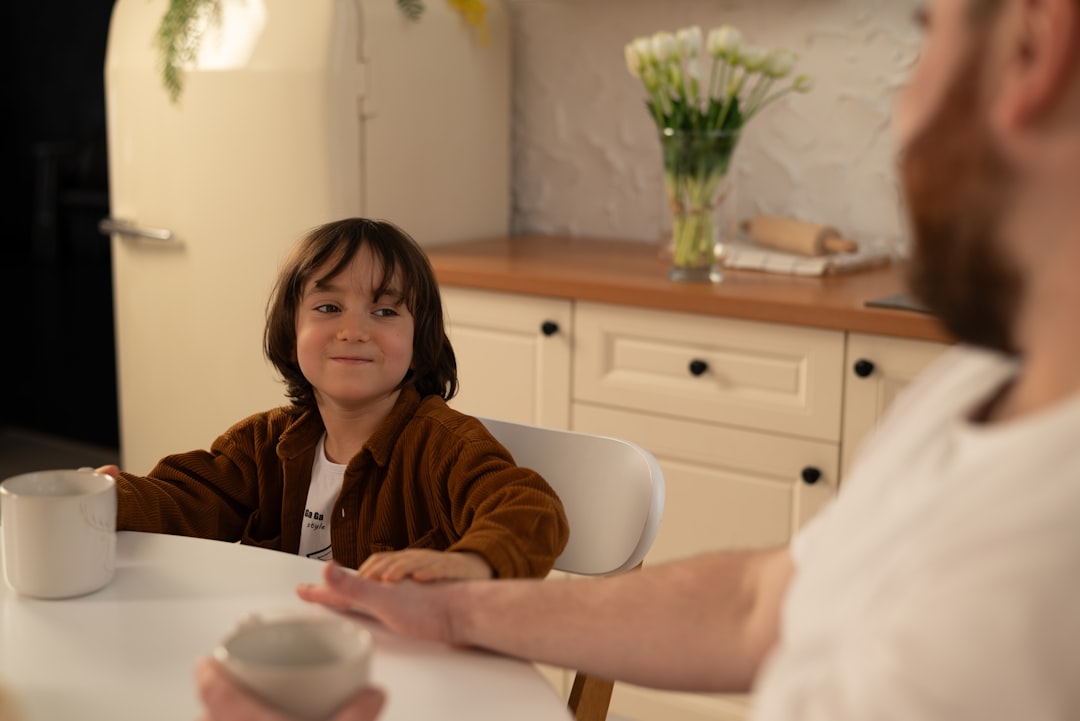
Positive Discipline Without Punishment: A Guide for Expats in Sotogrande

Practicing positive discipline without punishment doesn’t mean letting your child do whatever they want. It means guiding their behavior with respect, clarity, and firmness, building a relationship based on trust instead of fear. At IMS Sotogrande, we see every day how children who grow up with clear, respectful boundaries develop real self-discipline.
- Key Points of Positive Discipline
- What Does Positive Discipline Really Mean?
- Why Punishment Doesn’t Teach What We Think
- Practical Strategies for Setting Limits Without Yelling
- The Role of the Prepared Environment at Home
- How to Manage Your Own Emotions as a Parent
- Frequently Asked Questions About Positive Discipline
- Key Takeaways on Positive Discipline
Key Points of Positive Discipline
- Positive discipline is based on connecting with the child before correcting them.
- Setting clear, consistent limits is more effective than rewards or threats.
- A parent’s emotions need space too. You can’t guide effectively when you’re overwhelmed.
- A prepared environment (at home and in the classroom) reduces conflicts before they happen.

What Does Positive Discipline Really Mean?
The word “discipline” comes from the Latin disciplina, meaning teaching. It has nothing to do with punishment. When you practice positive discipline, you are teaching your child to understand their emotions, make responsible choices, and repair their mistakes. It is not a soft method. It is a firm, respectful approach that demands more presence and consistency from the adult. When it comes to positive discipline without punishment, it pays to listen to what families and lead guides actually report.
In the Montessori approach we follow at our school, the key is to offer freedom within clear limits. The child knows what they can and cannot do, and understands why. This gives them security, not confusion. Daily practice with positive discipline without punishment reveals nuances no handbook fully captures.

Why Punishment Doesn’t Teach What We Think
When you punish a child, you teach them to obey out of fear of the consequence, not to understand why their behavior was inappropriate. A study published by the American Academy of Pediatrics (AAP) confirms that repeated punitive methods can increase aggression and reduce empathy in children. The punished child learns to avoid the punishment, not to self-regulate. Understanding positive discipline without punishment from inside the classroom reshapes everyday decisions.
Furthermore, punishments break the connection between parent and child. And without connection, there is no guidance. If your child doesn’t trust you when they make a mistake, they will hide their errors from you instead of asking for help.

Practical Strategies for Setting Limits Without Yelling
1. Connect Before Correcting
Before discussing the behavior, approach your child calmly. Get down to their level, look them in the eyes, and name what you see: “I see you’re angry because your brother took your toy.” This emotional validation opens the door to cooperation. You are not rewarding the behavior. You are acknowledging the emotion behind it.
2. Offer Choices Instead of Commands
Children get frustrated when they feel they have no control. Instead of “Pick up your toys now!”, try: “Would you prefer to pick up the blocks first or the cars?” You deliver the same message (the toys get tidied), but you give them agency in the decision. This fosters autonomy, a central pillar of Montessori parenting.
3. Use Natural and Logical Consequences
This isn’t about inventing a disguised punishment. A natural consequence is direct: if they don’t wear their coat, they’ll feel cold. A logical consequence is related: if they throw the crayons, they pick them up before painting again. The difference from punishment is that a consequence teaches, while punishment only penalizes. In our Children’s House classroom at IMS, we apply this every day with consistency and care.
4. Be Consistent, Not Rigid
Consistency is the foundation of positive discipline . If yesterday they could have cookies before dinner and today they can’t, you need a clear explanation. Changing limits generate anxiety. But being consistent doesn’t mean being inflexible: if one day your child is having a major emotional meltdown, you can adapt your response without losing sight of the limit.
The Role of the Prepared Environment at Home
Many conflicts are avoided before they happen simply by designing the space better. In Montessori pedagogy, we call a “prepared environment” a space designed so the child can act with autonomy and safety. At home, this translates to low shelves with few choices visible, a low coat hook for their jacket, or a small table where they can eat without depending on you for everything.
When the environment cooperates with the child, power struggles decrease. You don’t need to yell “Don’t touch that!” if fragile items are out of reach and play materials are organized at their level. This principle is one we apply in our Nido (0-3 years) and Children’s House (3-6 years) classrooms at IMS Sotogrande.
Book a personal tour of the schoolHow to Manage Your Own Emotions as a Parent
You cannot teach self-regulation if you are in reactive mode yourself. When you feel your patience running out, take a deep breath and give yourself permission to pause. It’s not abandoning the situation. It’s modeling what you want your child to learn: that intense emotions can be managed without causing harm.
At IMS we offer workshops like “Acompañando-té” and “La familia en tribu”, precisely so parents have tools and space for this work. Because parenting isn’t meant to be done alone, and seeking support is not a weakness.
Frequently Asked Questions About Positive Discipline
At what age can you start positive discipline?
You can start from birth. Babies don’t understand words, but they do pick up on tone, consistency, and the adult’s sense of security. From 12-18 months, when the child begins to explore with more autonomy, clear, respectful boundaries become essential. It is never too early to build a relationship based on mutual respect.
Isn’t this method too soft? Won’t my child take advantage?
Positive discipline does not mean an absence of limits. It means limits are communicated with firmness and respect, without humiliation or threats. Children raised with this approach develop better self-control and empathy, according to research compiled by the Association Montessori Internationale (AMI). Firmness does not need punishment to be effective.
What do I do if my child has a tantrum in public?
Stay calm and accompany the emotion without giving in to the whim. Approach, validate what they feel (“You’re very angry because you want to stay”) and offer alternatives when they calm down. Don’t try to reason during a full emotional crisis: the child’s brain cannot process logic in that state. Stay close, with firmness and without shame. Tantrums are normal. Your response defines them.
How does this approach affect the relationship with grandparents or other caregivers?
It is essential to share your philosophy with everyone who cares for your child. It’s not about imposing, but about explaining why you choose this path and offering them concrete tools. Consistency between environments gives the child security. At IMS, we work as a team with families precisely so that boundaries are consistent between home and the classroom.
Key Takeaways on Positive Discipline
Positive discipline without punishment is not a passing trend. It’s a long-term investment in your relationship with your child and their capacity for self-regulation. Clear limits, emotional connection, and daily consistency are its three pillars. You don’t need to be a perfect parent, just a present and consistent one.
If you’d like to see how we apply these principles in the daily classroom life, we invite you to visit us. Book your personal tour at IMS Sotogrande and discover an environment where your child grows with autonomy, respect, and joy.









