
Montessori School Guide: How Respectful Education Works in Sotogrande & Campo de Gibraltar | IMS Sotogrande
In short
Montessori School Guide: Choosing your child's school is one of those decisions that keeps you up at night. You want a place where they feel safe, respected, and happy, but also where they truly learn. A Montessori school turns traditional education on its head: here, the child is the protagonist, and learning stems from their natural curiosity, not a textbook.
Choosing your child’s school is one of those decisions that keeps you up at night. You want a place where they feel safe, respected, and happy, but also where they truly learn. A Montessori school turns traditional education on its head: here, the child is the protagonist, and learning stems from their natural curiosity, not a textbook. In this guide, we explain what makes it different, how it works in practice, and why families from Sotogrande, Algeciras, Gibraltar, and Estepona trust IMS Sotogrande, a Montessori school accredited by AMI and NEASC. In this article we explore Montessori school Costa del Sol in depth with practical examples.
- What Is a Montessori School?
- The Pillars of the Montessori Method You’ll See Daily
- Montessori Levels: From Nido to Elementary
- Montessori School in Sotogrande: IMS Sotogrande, An International School for Expat Families
- Why Families Choose a Montessori School
- Frequently Asked Questions About Montessori Schools
- Key Takeaways
What Is a Montessori School?
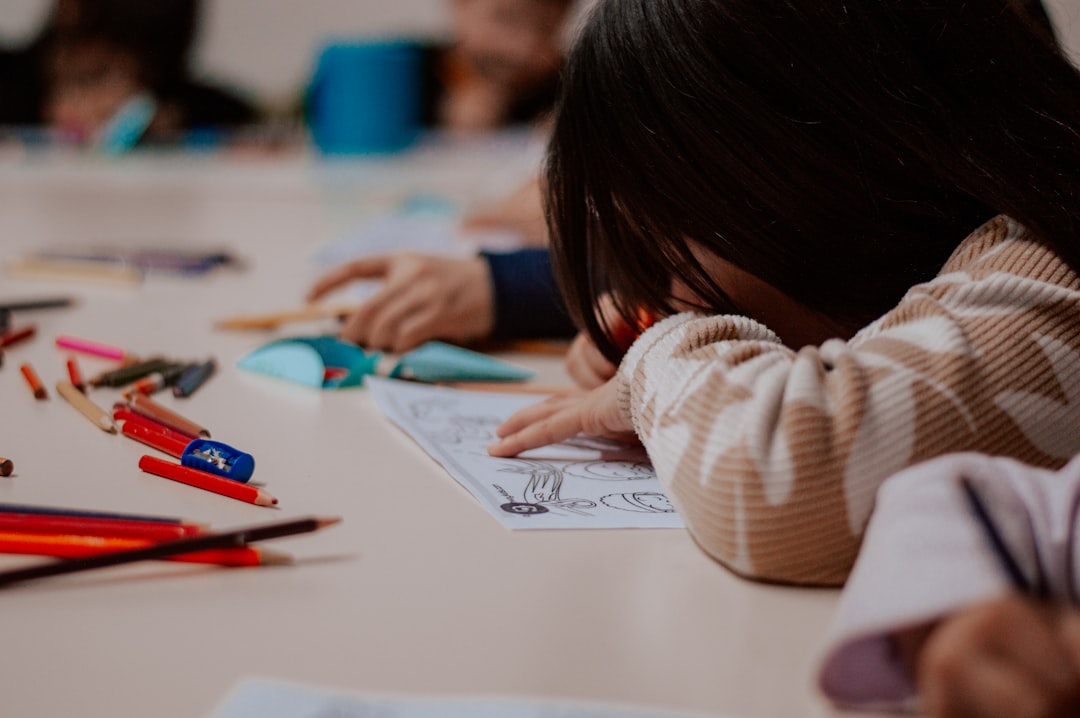
A Montessori school is a space where the pedagogy created by Dr. Maria Montessori in the early 20th century is applied. Its foundation: respecting each child’s own pace. Instead of lectures, the classroom is organized into prepared environments with hands-on materials that invite exploration. The guide (what we call teachers) observes, offers guidance, and accompanies, but does not direct. Each child progresses according to their own developmental plane, whether in the sensory, language, or math area. When it comes to Montessori school Costa del Sol, it pays to listen to what families and lead guides actually report.
The clearest difference from a traditional school is autonomy. There are no exams, grades, or homework. The child chooses their work and repeats it until they internalize it. This builds lifelong self-confidence. Additionally, classrooms group children of mixed ages (3-6, 6-9, etc.), fostering collaboration and natural peer mentoring. Daily practice with Montessori school Costa del Sol reveals nuances no handbook fully captures.
The Pillars of the Montessori Method You’ll See Daily
To understand a Montessori school, you need to know four principles that uphold it. The prepared environment is the classroom itself: child-sized furniture, materials neatly arranged on open shelves, and a calm, aesthetic atmosphere. The guide acts as a scientific observer who connects the child with the right material at the right moment. The absorbent mind, a concept Dr. Montessori described, explains how children from 0 to 6 absorb everything around them without conscious effort. And the sensitive periods: windows of opportunity when the child is especially receptive to learning something (language, order, movement…).
At IMS Sotogrande, for instance, you see these pillars in action every morning. A young child in Children’s House might spend 40 minutes concentrating on pouring water with glass pitchers while another writes their first words with sandpaper letters. No one interrupts. That is Montessori “work,” and it has nothing to do with filling out worksheets.
Montessori Levels: From Nido to Elementary
A Montessori school is typically organized into cycles that respect the developmental planes of childhood and adolescence. At IMS Sotogrande, the program starts in the Infant Community (Nido, 0-3), where the youngest children work on motor skills, language, and autonomy in a prepared environment with specialized guides. They then move to Children’s House (3-6), where reading, writing, and mathematical thinking explode through sensory materials. Next, the Elementary program (6-12) deepens abstract reasoning and collaborative projects, always with the international and national curriculum in the background.
All our programs include bilingual immersion in Spanish and English, music, yoga, and mindfulness. From Children’s House onward, children also begin French. It is not an extra. It is part of daily life. And to support work-life balance, the school day can optionally be extended until 5:00 PM.
For us, every transition between stages is a celebration, not an abrupt change. The child moves to a new environment when ready, not because the calendar says so. And they are always accompanied by guides who already know their journey.
Montessori School in Sotogrande: IMS Sotogrande, An International School for Expat Families
IMS Sotogrande is not your typical school. We are located in Sotomarket, above Mercadona, in a bright space filled with original Montessori materials, outdoor areas, and a lending library. We are accredited by the Association Montessori Internationale (AMI) and the New England Association of Schools and Colleges (NEASC), as well as by the Andalusian government. These international credentials commit us to a quality that is audited regularly and is evident in our team’s ongoing training.
Our faculty consists of guides and specialists with high average experience, led by head of studies Viviane Dumont and founder Olimpia Tardá. You will not find constant staff turnover here: relationships matter. And although our location is in Sotogrande, families come daily from La Línea, Gibraltar, Algeciras, Estepona, and Casares. The commute is worth it when education is the best gift you can give your child.
Why Families Choose a Montessori School
More and more neuroeducation research supports what Dr. Montessori observed over a hundred years ago: the brain learns by manipulating, moving, and connecting concepts. A study by Lillard & Else-Quest (2006) compared children in Montessori schools with those in traditional education and found significant advantages in social skills, executive function, and academic performance. It is not magic: it is respecting the child’s nature.
Families who come to IMS Sotogrande typically look for three things: a safe and respectful environment, real English (not a two-hour weekly subject), and an educational project that prepares for life, not just for the next exam. Many are expats settling on the Costa del Sol who want an international school near Gibraltar. Others are local families who have seen the results in friends’ children. In both cases, what they value most is the peace of mind that their child is happy going to school and that progress is measured in autonomy, curiosity, and joy.
Book a personalized visit to the school and discover the classrooms, meet the team, and resolve all your questions about daily life. Coming without rush is the best way to understand Montessori.
Frequently Asked Questions About Montessori Schools
How are children assessed in a Montessori school if there are no exams?
Assessment is continuous and based on direct observation by the guides. They keep a daily record of the materials each child works with, concentration time, social interactions, and developmental milestones achieved. This allows for a weekly report to families (at IMS we send one every Friday), periodic parent-teacher meetings, and much more detailed tracking than a number grade. In the end, progress is visible: the child who counts to 100 today wants to understand addition tomorrow, and a week later explains multiplication using the golden beads. There are no points, only real achievements.
Do I need to live in Sotogrande to enroll my child at IMS?
No. Our location is in Sotogrande, but more than half of our families live in nearby towns: La Línea de la Concepción, Algeciras, Estepona, San Roque, Casares… Even from Gibraltar and Marbella, some make the daily commute because the bilingual Montessori project with AMI accreditation is not available in their area. The A-7 and AP-7 highways make connections easy, and the extended hours help with scheduling. If you have concerns about logistics, we can guide you based on other families’ experiences.
Is the Montessori method compatible with bilingualism?
Absolutely. In fact, Maria Montessori spoke of the child’s absorbent mind as the perfect tool for acquiring languages naturally. At IMS Sotogrande, Spanish and English coexist in the classroom throughout the day, with native or bilingual guides. Additionally, French is introduced from Children’s House. There are no isolated language classes: bilingualism is integrated into classroom life. So a child might sort the binomial cube while listening to instructions in English and later plant seeds while the guide explains the flower cycle in Spanish.
What qualifications does the IMS Montessori team have?
All our guides hold an AMI diploma (or are in the process of obtaining one), which is the most rigorous international standard in Montessori pedagogy. Many also have degrees in Education, Psychology, or specializations in neuroeducation. The entire team, led by head of studies Viviane Dumont, engages in continuous training and meets weekly to analyze each child’s progress. No secrets: families receive weekly reports, at least three parent-teacher meetings per year, and direct access to guides via the school platform.
Does IMS offer any program for families moving from another country?
Yes. The international profile of Sotogrande and Campo de Gibraltar means we welcome many expat families. Our admission process is flexible and can be started at any time of the year. The team speaks English and German, and we are used to guiding families through local paperwork, housing, and adaptation. We have a strong bilingual program, NEASC accreditation (relevant for homologation), and a very diverse parent community. If you arrive with questions, write to [email protected], and we will accompany you through the process.
Key Takeaways
A Montessori school like IMS Sotogrande is not just another option in the educational landscape: it is a life project that respects each child’s uniqueness and prepares them for a rapidly changing world. Here, concentration, autonomy, collaboration, and the joy of learning are valued. There are no shortcuts: the method works because it aligns with science and human nature.
If after reading this you resonate with the idea of a school where your child is heard and accompanied without rush, book a no-obligation visit or call us at +34 653 04 17 39. Come, observe a classroom in action, and talk to the guides. There is no better way to decide than to see it with your own eyes.









