
Montessori School Costa del Sol: Embracing Mistakes as Learning
In short
How many times have you stopped your child just before they made a mistake? That protective impulse is natural, but embracing mistakes as learning isn’t just a motivational slogan: it’s the scientific foundation of how children build intelligence.

How many times have you stopped your child just before they made a mistake? That protective impulse is natural, but embracing mistakes as learning isn’t just a motivational slogan: it’s the scientific foundation of how children build intelligence. At IMS Sotogrande, an international school near Gibraltar, we’ve spent over two decades seeing how stumbles, when well-supported, become moments of the greatest growth. In this article we explore Montessori school Costa del Sol in depth with practical examples.
- A child’s brain learns more from getting it wrong than from getting it right the first time.
- In Montessori, a mistake is a piece of work material, not a failure.
- Adults are the main obstacle when we intervene too quickly.
- Allowing safe errors develops resilience and real autonomy.
- Why a Child’s Brain Needs to Make Mistakes
- How We Do It in the Montessori Classroom at Our Sotogrande School
- The 3 Mistakes Parents Make (and How to Avoid Them)
- Montessori Activities for Home: Mistakes as Teaching Material
- When a Mistake Needs Adult Intervention
- Frequently Asked Questions
- Key Takeaways
Why a Child’s Brain Needs to Make Mistakes
When a 3-year-old spills water outside the glass, their brain is processing dozens of simultaneous data points. Neuroscience confirms it: a mistake generates an electrical signal called Error-Related Negativity (ERN) that activates prefrontal and learning zones. Without that signal, the brain simply repeats what it already knows. When it comes to Montessori school Costa del Sol, it pays to listen to what families and lead guides actually report.
A study published in the Journal of Cognitive Neuroscience shows that children who make mistakes and receive corrective feedback retain information 40% more than those who succeed without effort. Using mistakes as learning isn’t philosophy: it’s applied biology. Daily practice with Montessori school Costa del Sol reveals nuances no handbook fully captures.

How We Do It in the Montessori Classroom at Our Sotogrande School
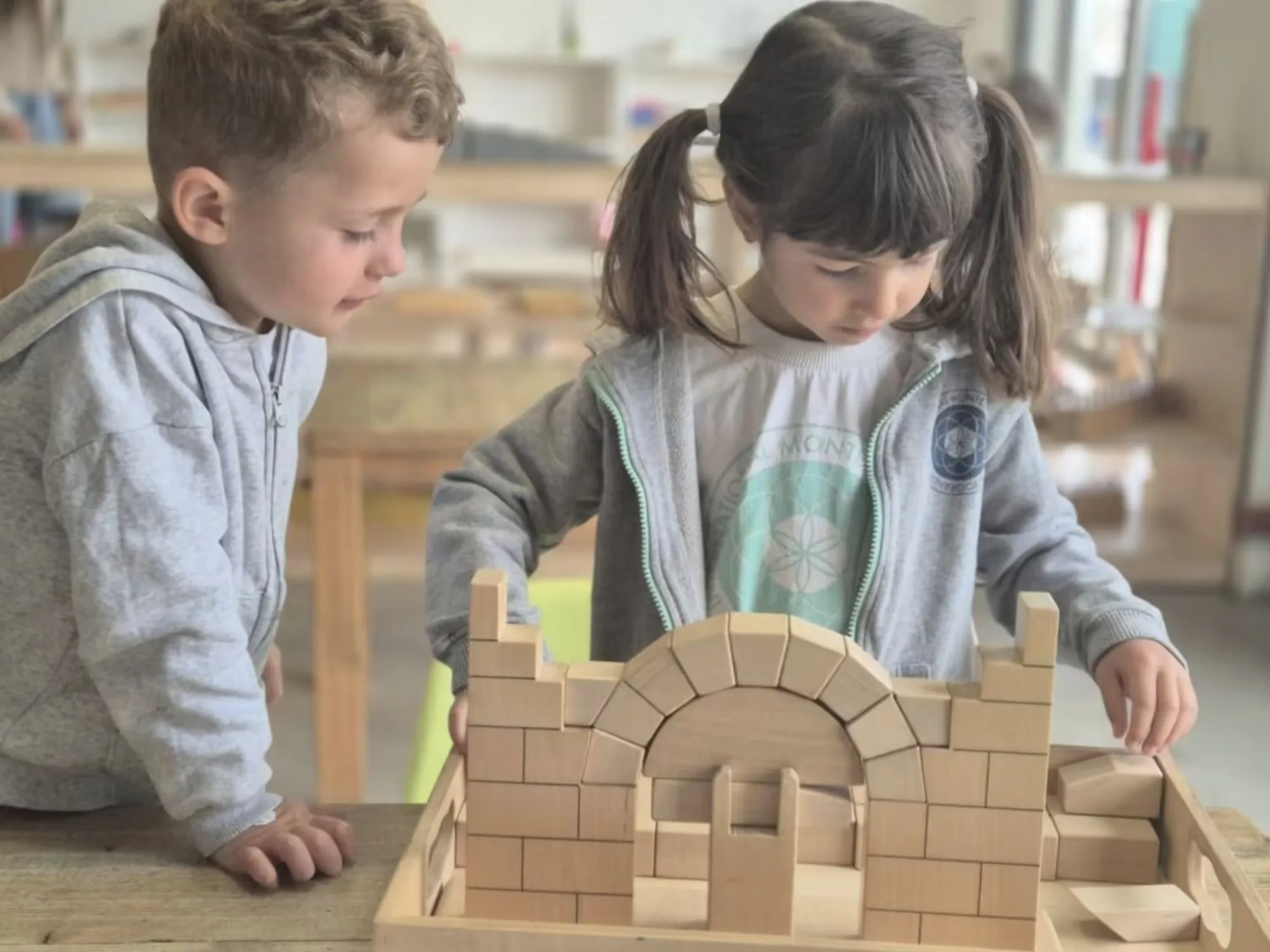
In our Nido (0-3 years), the materials are designed so the mistake is visible without anyone needing to point it out. The pink tower has only one possible order. If the child places the large block on top of the small one, the tower falls on its own. There is no punishment or adult correction: physics itself teaches the lesson. Understanding Montessori school Costa del Sol from inside the classroom reshapes everyday decisions.
In Children’s House (3-6 years), we work with practical life exercises. Pouring, buttoning, sweeping. Each activity has a built-in error control in the material. When Sara Martín, our Children’s House guide, sees a child repeat a failure three times, she doesn’t intervene. She waits. The fourth time, the child usually self-corrects. Concrete data on Montessori school Costa del Sol is worth reviewing before acting on assumptions.
In Elementary (6-12 years), mistakes become research. Javier Baena, our Elementary guide, poses open-ended problems where there isn’t a single answer. Eight-year-olds debate, try, fail, and adjust. That cycle is the engine of real scientific thinking.
Book a personalized visit to the school
The 3 Mistakes Parents Make (and How to Avoid Them)
Intervening Too Quickly
Your child is trying to button their jacket. They’ve been at it for 40 seconds. You’re in a hurry. You help them. That’s the adult’s mistake. In that gesture, you’ve said: “You’re not capable, I do it better.” Next time, count to 30 silently. If they don’t manage it, offer minimal help: “Do you want me to hold the button while you pull the loop?”
Turning a Mistake into Shame
“I told you so!” or “How many times have I told you?” are phrases that destroy a child’s relationship with failure. Mistakes as learning only work when the environment is emotionally safe. If your child spills milk, say: “Let’s find a cloth.” No drama. No sermon.
Only Rewarding the Result
“Well done!” is better than nothing, but it only reinforces the correct outcome. Try: “I see you tried three times until you got it.” That values the process, not the result. And the process is where real learning lives.

Montessori Activities for Home: Mistakes as Teaching Material
You don’t need to buy anything special. These activities use everyday objects and are designed for different ages.
- Pouring Water (18 months, 3 years): two small jugs and a tray. The child transfers water from one to the other. If they spill, the tray contains it. They repeat until they control the movement.
- Threading (3-5 years): thick cord and large beads. At first, they will fail. Each failure adjusts hand-eye coordination.
- Cooking Recipe (4-7 years): measuring ingredients. If they add too much flour, the dough doesn’t turn out. The natural consequence teaches more than any theoretical explanation.
- Open-Ended Project (6-12 years): building a cardboard bridge that holds a book. If it breaks, they redesign. If it holds, they test it with two books. The error is the engine of improvement.
When a Mistake Needs Adult Intervention
Not everything goes. There are errors that require the firm presence of an adult: those involving real physical danger, those that harm others, and those the child repeats many times without visible progress. In these cases, the Montessori intervention is clear: observe first, offer a new presentation of the material, and accompany without judgment.
At IMS, we have the Rainbow classroom, specializing in diversity and special educational needs, where Andrea Torres and her team work with adapted materials that turn repetitive errors into small, progressive victories. Each child has their own rhythm, and respecting it isn’t leaving them alone: it’s giving them the exact time they need.
Frequently Asked Questions
From what age can I let my child make mistakes on their own?
From birth. A 6-month-old baby trying to grasp an object and failing is learning. Mistakes as learning begin in the Montessori Nido (0-3 years), where materials are designed so the failure is safe and visible. Your role is to observe, not rescue.
Will my child get too frustrated if I let them make mistakes?
Moderate frustration is necessary for emotional development. A child who never gets frustrated doesn’t develop tolerance for difficulty. The key is to accompany without solving: “I see it’s hard. Do you want to try again?” If they cry, comfort them. But don’t remove the challenge.
What’s the difference between letting them fail and abandoning them to their fate?
The difference is presence. A child who fails with an available adult nearby learns that the world is safe and they can try again. A child who fails alone, without support, learns that the world is hostile. In Montessori, we never leave children alone: we give them space within a trusting relationship.
How do I apply mistakes as learning with a child who has low frustration tolerance?
Start with very small, very visible mistakes: a block tower that falls, a puzzle with an obvious piece. Celebrate the attempt, not the result. If your child has learning difficulties, consult specialists. At IMS, we offer support through our Rainbow classroom for families who need additional guidance.
Key Takeaways
Embracing mistakes as learning isn’t about letting your child fail. It’s about giving them a safe environment where stumbles are information, not tragedy. Montessori materials are designed exactly for this: so the child discovers the answer without anyone giving it to them. That autonomy is the foundation of a mind that solves problems, not one that avoids them.
If you want to see how this works in a real classroom, with AMI-certified guides and a bilingual Spanish-English environment, book a personalized visit at IMS Sotogrande. Families from La Línea, Algeciras, Estepona and all along the Costa del Sol visit us every week to see it for themselves.









