
Montessori Playground Near Me: A Guide by IMS Sotogrande

When your little one says “park, park” and you reach for your phone to search “ playgrounds near me ,” you’re not just planning an afternoon of fun. You’re choosing an environment that will directly influence their motor, social, and sensory development. From a Montessori perspective, a playground is not simply a place of entertainment: it is a living classroom where exploration, free movement, and contact with nature become the best teachers. In this article we explore Montessori playground near me in depth with practical examples.
As Montessori guides, we see every day how children who move freely outdoors gain confidence, coordination, and the ability to solve problems on their own. Searching for “ playgrounds near me ” can become an opportunity to give your child a space that truly nurtures their innate curiosity. In this article, we’ll tell you what a playground should have according to Montessori developmental stages and how you can replicate that environment even if you can’t find an ideal one near home.
- The Montessori perspective on outdoor play
- Key points for evaluating a playground according to development 0-6 and 6-12
- How outdoor play shapes your child’s brain
- Where to find playgrounds near me that meet these criteria?
- Free movement at IMS Sotogrande: more than a playground
- Alternatives when there are no playgrounds near me
- Frequently asked questions
- Key takeaways
The Montessori perspective on outdoor play
Maria Montessori emphasized that movement is the foundation of learning. It’s not just about burning energy, but about building the mind through the body. A playground can be much more than swings and slides: it can offer gradual challenges, varied textures, and the chance to interact with natural elements.
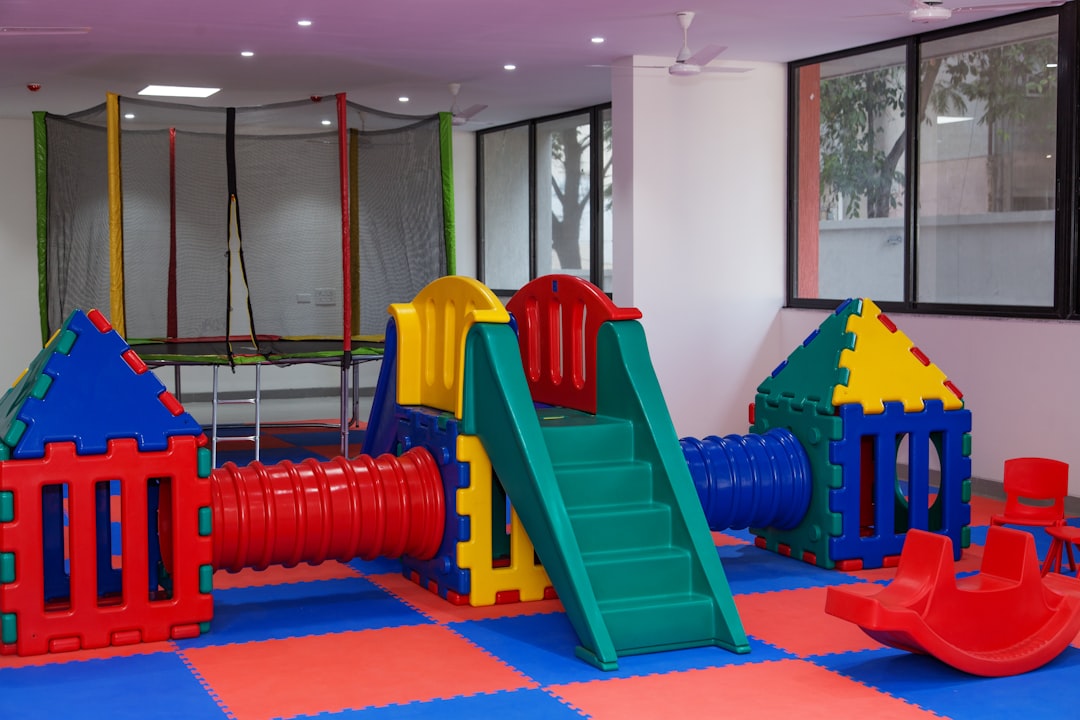
According to the Association Montessori Internationale (AMI), the outdoor environment should be considered an extension of the classroom. Instead of fixed structures that dictate how the child should play, Montessori advocates for open-ended elements that invite creativity: logs to climb, stones to jump on, sand to dig, hills to roll down. Nature provides the perfect sensory stimulation without the need for colored plastics or electronic sounds.
When you search for “ playgrounds near me ,” look at whether the design encourages free play or, on the contrary, forces a sequence of use that has little to do with a child’s spontaneity. A good playground is one that disappears as a stage and leaves room for the protagonist: the child.
If you’d like to see how we apply these principles in a real school environment, book a personalized tour of our school in Sotogrande. We’ll show you how our outdoor spaces are designed so each child can move freely, take measured risks, and connect with nature.
Key points for evaluating a playground according to development 0-6 and 6-12
Not all playgrounds are suitable for all ages. The developmental stage dictates very different needs. From a Montessori perspective, here are the aspects you should prioritize when you search “ playgrounds near me ”:
- For children 0 to 3 years old: The ground is the main laboratory. Look for soft surfaces, grassy areas or sand where they can crawl, stand, and take their first steps safely. A low log is more enriching than a swing.
- For children 3 to 6 years old: Purposeful movement is key. Value dirt hills, rope ladders, short tunnels, sandboxes with shovels and buckets, and elements that allow water transport. Children of this age need to work on coordination and motor planning.
- For children 6 to 12 years old: Social and physical challenge intensifies. Ideal are balance circuits, climbing structures, spaces for team games, and urban gardens where they can take on small responsibilities.
The American Academy of Pediatrics insists that outdoor play not only benefits physical health but also reduces stress and improves attention. Combining free play with nature is a formula that Montessori proposed over a century ago and that science now supports.
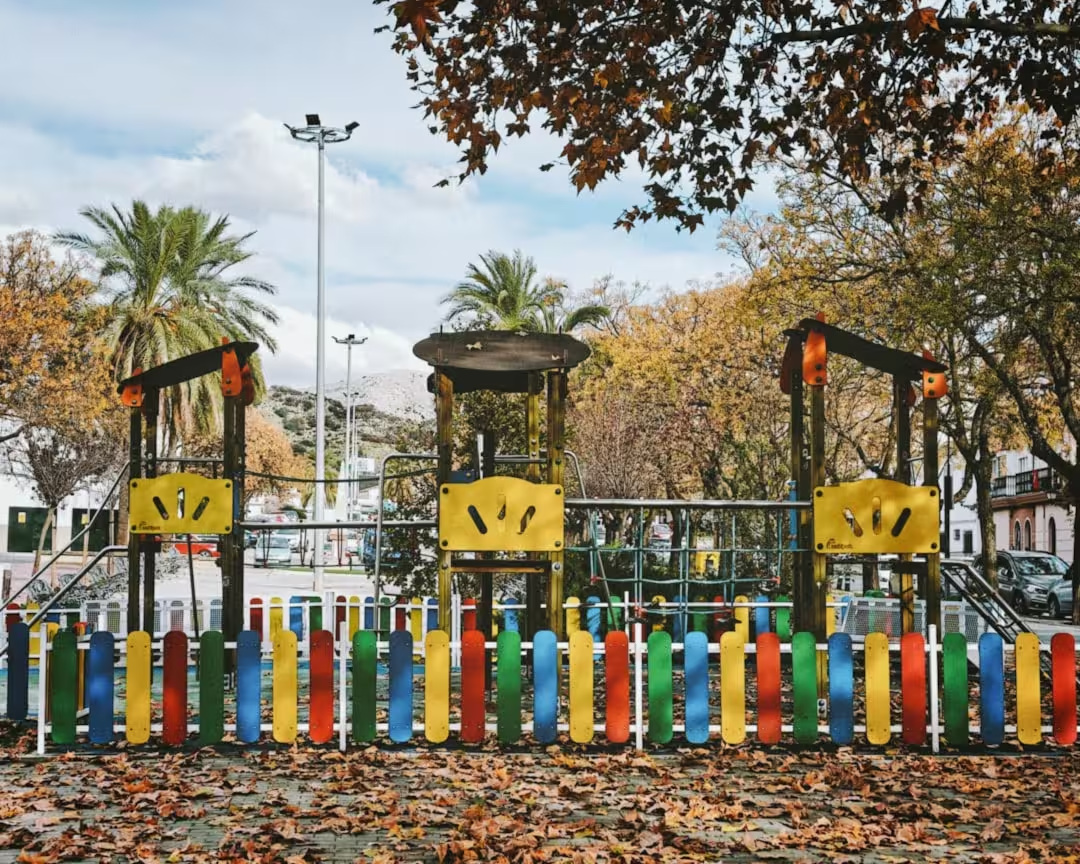
An important detail: avoid playgrounds with too many spring riders or mechanical attractions that limit movement to a single direction. A child bouncing on a spring toy is not exercising their sense of balance but rather being moved passively. On a low log, they can decide how to get on, how to get off, and even fall in a controlled way, learning from each attempt.
How outdoor play shapes your child’s brain
Neuroscience supports what Montessori observed empirically: free outdoor movement activates key brain areas for learning. When a child climbs, jumps, or swings, their vestibular system receives information that later translates into sustained attention and emotional regulation. Proprioception, that sixth sense that tells us where each part of the body is, develops when running barefoot on grass or crawling over rocks.
In a park with natural elements, children constantly solve motor problems: judging the height of a log, adjusting force to jump a ditch, or coordinating hands and feet to climb. Each of these micro-challenges sharpens executive functions, which are the foundation of later academic performance. So searching for “ playgrounds near me ” with a discerning eye is much more than a leisure option: it’s an investment in your child’s cognitive development.
Additionally, contact with natural light regulates circadian rhythms, improves sleep quality, and reduces childhood myopia. Children who spend at least two hours a day outdoors have a lower incidence of attention deficits and greater overall well-being. So the next time you use a map to find playgrounds near me , think about everything you’re cultivating.
Where to find playgrounds near me that meet these criteria?
In urban or peri-urban areas like Sotogrande, San Roque, Alcaidesa, or La Línea, the playground options vary widely in quality. When you search for “ playgrounds near me ” on your phone, you often find reviews that only mention swings and slides. But if you look closely, you can find real gems: parks with old trees, natural shade, well-maintained sandboxes, and little artificial maintenance that limits play.
In Campo de Gibraltar, we are fortunate to have a climate that allows outdoor play almost year-round. This multiplies the opportunities to go out and explore. Some public parks include natural features like rockeries or fountains that children use in unexpected ways. If you’re up for a trip, remember that the drive to a good park can be a family experience in itself: singing in the car, observing the landscape, stopping to see a flock of sheep… it all adds up.
That said, we also know that finding the ideal playground close to home isn’t always easy. That’s why in the section below we give you alternatives for when the results for “ playgrounds near me ” leave you with more questions than answers.
Free movement at IMS Sotogrande: more than a playground
At IMS Sotogrande, we do not have a public playground. Our outdoor spaces are designed as prepared environments that are part of the school day. Children in Toddler Community (0-3) and Children’s House (3-6) go outside daily to our outdoor areas, where they run, climb, transfer water, care for plants, and connect with the earth.
For many families living in Algeciras, Estepona, or Gibraltar searching for “ playgrounds near me ” of quality, our school becomes a reference for what a respectful outdoor environment should be. And although it’s not a public park, the philosophy that guides us is the same that will help you choose or adapt any play space for your child.
We use wooden logs, grass hills, sandboxes without plastics, and recycled water features. Children learn to assess risks, cooperate with each other, and respect boundaries without an adult constantly saying “be careful.” This autonomy is the foundation of self-confidence that they later take to any park or environment outside school.
Alternatives when there are no playgrounds near me
If the results for “ playgrounds near me ” disappoint you, don’t worry. You can create a movement corner at home or in the community garden with very few resources. An old tire hung from a branch, a sandbox made from recycled wood, or simply a blanket on the ground with baskets of natural objects (pinecones, stones, shells) can provide hours of sensory and motor play.
In the Montessori philosophy, the adult doesn’t need to know everything but to be present and observe. Sometimes the simple absence of fixed structures forces you to be creative with your child. A fallen log becomes a pirate ship, a puddle becomes an ocean. Don’t underestimate the power of simplicity.
Remember: if the search for “ playgrounds near me ” frustrates you, you can turn it into an opportunity to connect with your little one on a deeper level. Often the best childhood memories don’t happen in sophisticated playgrounds but in the forest, the beach, or grandma’s garden, with a bucket and a couple of spoons. Nature is the ultimate playground.
Frequently asked questions
At what age does Montessori recommend going to a playground?
From the time the baby moves on their own, around 8-9 months, they can already enjoy a natural park. Look for soft surfaces and simple stimuli: watch leaves move, listen to birds, touch grass. The key is freedom of movement, not age.
How do I know if a playground is safe without overprotecting?
A safe playground is not one without risk, but one that allows manageable risks. Observe platform heights, ground quality, and whether there is adequate supervision. But trust your child’s ability. Falling from a 30-cm log is a learning experience. Falling from a 3-meter slide is not.
What if I only find playgrounds near me with plastic and swings?
Use them with a creative eye. You can turn the sandbox into an archaeological dig, or the swing into a connection moment if you sit beside them and talk. What matters is not the playground itself but how you experience it with your child. If you can choose, always look for the most natural corner.
Does IMS Sotogrande offer visits for families looking for a school?
Yes, you can book a personalized tour on our website or call us at +34 653 04 17 39. During the tour, you’ll walk through our classrooms and outdoor areas, and we’ll answer all your questions about our bilingual Montessori program.
Key takeaways
The search for “ playgrounds near me ” doesn’t have to be a mechanical task. It can become a guide to offering your child spaces that truly nurture their development. The Montessori perspective teaches you to prioritize free movement, nature, and spontaneous play over rigid structures and colored plastics.
Whether you find the perfect park ten minutes from home or decide to create your own outdoor play corner, remember that what matters is an attitude of respect for children’s rhythms. At IMS Sotogrande, we live this philosophy every day, and if you ever need inspiration or want to see our prepared environment, we’d be happy to welcome you.









