Montessori Parenting in Marbella & Sotogrande: Real Family Experiences & Tips
In short
Montessori parenting in Marbella: real experiences, it may sound like something straight out of social media, but for many families on the Costa del Sol, it’s a daily reality. When you choose to educate your child following Maria Montessori ‘s principles, parenting becomes a conscious act.
![Criar hijos Montessori en Marbella experiencias reales [Sotogrande]](https://ims-sotogrande.com/wp-content/uploads/2026/06/post-479-img-1-1781036480503-35acade0.avif)
Montessori parenting in Marbella: real experiences, it may sound like something straight out of social media, but for many families on the Costa del Sol, it’s a daily reality. When you choose to educate your child following Maria Montessori‘s principles, parenting becomes a conscious act. You stop shouting, ‘Pick up your toys!’ because your child already knows that order is part of play. You stop punishing because you understand that mistakes are opportunities. And most importantly, you begin to trust that your child is capable. In this article we explore Montessori parenting Marbella in depth with practical examples.
At IMS Sotogrande, our international Montessori school accredited by AMI and NEASC, we welcome families from Marbella and other nearby areas. The 35-40 minute drive along the A-7 is an investment they make for their children’s education. But Montessori parenting doesn’t start or end at school, the real change happens at home. That’s why today we’re sharing real experiences and tips that any family in Marbella or the surrounding area can apply. When it comes to Montessori parenting Marbella, it pays to listen to what families and lead guides actually report.
- What Montessori Parenting Really Means in Marbella
- Montessori Parenting in Marbella: Real Family Experiences
- Montessori Parenting in Marbella: Why Sotogrande Is the Closest Option
- Practical Tips for Starting Montessori at Home in Marbella
- The Impact of Montessori on Family Life
- Frequently Asked Questions
- Key Takeaways
What Montessori Parenting Really Means in Marbella
Parenting the Montessori way goes beyond having wooden toys or low shelves. It’s based on a clear premise: the child is a competent being who needs a prepared environment and the freedom to explore within limits. In a city like Marbella, where the pace can be fast and educational options are often traditional, embracing Montessori requires intention. Daily practice with Montessori parenting Marbella reveals nuances no handbook fully captures.
It’s not about removing rules, but about changing perspective. For example, instead of imposing rigid schedules, you observe your little one to discover their times of greatest concentration. Instead of forcing them to share, you respect their timing and model generosity. This approach, backed by over a century of practice, aligns perfectly with the desire of many Marbella families to offer a more respectful childhood. Understanding Montessori parenting Marbella from inside the classroom reshapes everyday decisions.
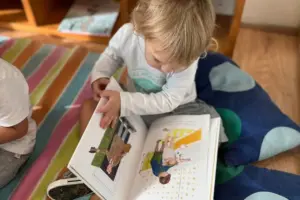
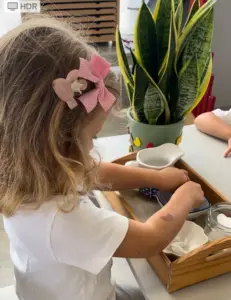
At home, the first step is to adapt the environment. You can start with a low kitchen where your child can serve water or prepare their own snack. Toys aren’t piled up, choose a few, made of natural materials, and place them on shelves at their height. This organization fosters independence and mental order. Children also participate in everyday tasks: setting the table, folding laundry, caring for plants. It’s not ‘help’, it’s their responsibility. Concrete data on Montessori parenting Marbella is worth reviewing before acting on assumptions.
Many families ask us if this works for active children or those with strong personalities. The answer is a resounding yes. We’ve seen how a structured environment with freedom within limits reduces tantrums and power struggles. A child who feels heard and participates in decisions (choosing between the red shirt or the blue one, for example) cooperates more and feels like an active part of the family.

Montessori Parenting in Marbella: Real Family Experiences
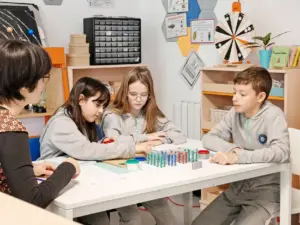
The families who choose us often arrive after searching for a school that respects their child’s pace. María, a resident of Marbella, told us that her older daughter had been labeled as ‘distracted’ at another school. When she started at IMS Sotogrande at age 5, we discovered she simply needed movement and choice. In six months, her concentration and self-esteem had a complete turnaround.
Another family, with two children ages 2 and 4, shared in a workshop that Montessori had brought back peace to their home. At first, they doubted because their house seemed chaotic. But after making small changes (a mirror at the children’s height, a low hook for their coats, a cozy reading corner), the little ones started self-regulating. ‘Now they pick up their toys without being asked, and they help each other,’ the father recounted.
These stories aren’t isolated. Neuroscience confirms that a child’s brain develops best in environments that promote autonomy and reduce stress. Sources like the Association Montessori Internationale and Montessori España compile research showing improvements in social, cognitive, and emotional skills.
What we observe daily at IMS Sotogrande is that Montessori parenting in Marbella, real experiences, doesn’t mean being perfect. It means sometimes making mistakes and apologizing. It means observing more and talking less. And above all, it means trusting that the child is born with an inner guide that deserves respect.

Montessori Parenting in Marbella: Why Sotogrande Is the Closest Option
If you live in Marbella and are looking for a Montessori school with AMI accreditation, you’ve probably noticed the lack of options in the city. Schools truly faithful to the Montessori method and internationally recognized are scarce. That’s why many families decide to make the 35-40 minute drive along the A-7 to our campus in Sotogrande.
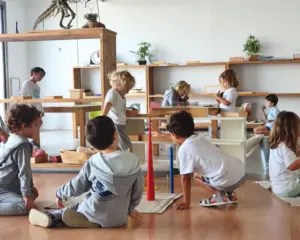
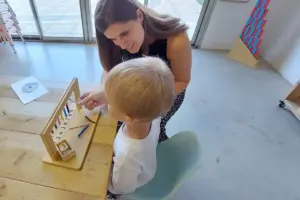
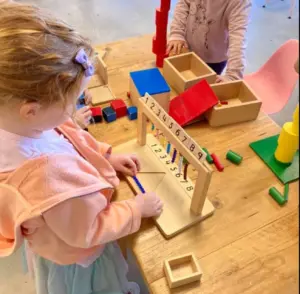
IMS Sotogrande is the only Montessori school in the area with AMI and NEASC accreditation. We offer a trilingual environment (Spanish-English-French) from the Children’s House onward and have a bilingual immersion program funded by the EU. Our spacious, bright classrooms are equipped with original Montessori materials and AMI-trained guides. We also offer extended hours until 5:00 PM, making it easier for commuting families.
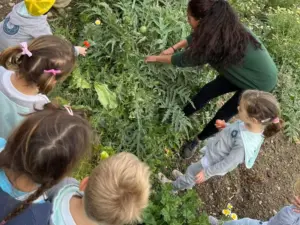
The safe, green environment of Sotogrande adds a bonus: children enjoy monthly nature outings, outdoor spaces, and a calmer pace of life compared to Marbella’s tourist bustle. The travel time is offset by an education that prepares them for life.
If you’d like to see it for yourself, book a no-obligation visit. Book a personalized school tour and discover why we are the choice of so many Marbella families.

Practical Tips for Starting Montessori at Home in Marbella
Here are five ideas any family can apply today, without spending money on special materials.
- Adapt the environment to their height. Place a low hook, an unbreakable mirror, and a floor bed. This way, your child can dress, comb their hair, and go to bed without help.
- Involve them in the kitchen. Ask them to wash fruit, mix ingredients, or set the table. These tasks develop coordination and a sense of belonging.
- Offer limited choices. ‘Do you want the red shirt or the blue one?’ ‘Do you want to bathe now or after dinner?’ Giving decision-making power reduces conflicts.
- Observe without intervening. When your child is concentrated, avoid distracting them with praise or corrections. Concentration is the greatest gift you can protect.
- Take advantage of Marbella’s natural wealth. Beach walks, countryside routes, or park visits are the best sensory laboratory.
The Impact of Montessori on Family Life
When the whole family adopts Montessori principles, the atmosphere transforms. Siblings collaborate instead of competing. Arguments decrease because everyone learns to express emotions and resolve conflicts respectfully. And best of all: parents feel less stressed because they stop constant control and become guides.
A University of Virginia study showed that Montessori-educated children display higher levels of creativity and social competence. These results are no accident: they come from an environment that values process over product.
At IMS Sotogrande, families actively participate in the school community through workshops, ongoing mentoring, and the Growappy platform. This close communication reinforces consistency between home and school, making Montessori parenting in Marbella a shared journey.
Frequently Asked Questions
Do I need to buy expensive Montessori materials?
No. With everyday objects and your respectful attitude, you’re already doing Montessori. You can make sorting trays with natural items, use real kitchen utensils in small sizes, and rotate toys to maintain interest.
At what age can I start Montessori at home?
From birth. In the first year, focus on free movement, secure attachment, and sensory stimulation. From 18 months, you can incorporate practical life activities like dressing, eating alone, and tidying up.
How can I tell if a Montessori school in Marbella is authentic?
Look for accreditations like AMI or NEASC, ask about guide training, and observe whether classrooms have complete Montessori materials and children working independently for 2-3 hour periods without interruption.
Does Montessori work for very active children or those with special needs?
Yes. The Montessori environment respects diversity and allows each child to progress at their own pace. At IMS Sotogrande, we have the Rainbow Classroom, specialized in supporting children with special educational needs, with a multidisciplinary team and small ratios.
Key Takeaways
Montessori parenting in Marbella: real experiences isn’t a utopia, it’s a daily decision that transforms your relationship with your children and the home environment. Families who entrust us with their children’s education at IMS Sotogrande confirm that, although the change requires effort, the results are worth it in terms of independence, emotional security, and holistic development.
If you live in Marbella or the surrounding area and want to take the step, we invite you to visit us. See our classrooms, talk to our guides, and discover why we are a Montessori benchmark in the Campo de Gibraltar. Request a visit today and start transforming your child’s education.
Article written by Viviane Dumont, Director of Studies at IMS Sotogrande.