
Montessori Independence: How to Foster It at Home Step-by-Step
When we talk about Montessori independence , we’re referring to something much deeper than teaching a child to get dressed alone. It’s about creating the conditions for them to discover, through their own experience, that they are capable. That they can choose, act, solve problems, and assume the consequences of their decisions. That confidence isn’t given. It’s built step by step.
Key Points
- Montessori independence is based on trusting the child and offering an environment adapted to their size and pace.
- It’s not about letting them do everything alone, but giving them real tools and opportunities to act independently.
- Each plane of development (0-3, 3-6, 6-12) requires different strategies to foster independence.
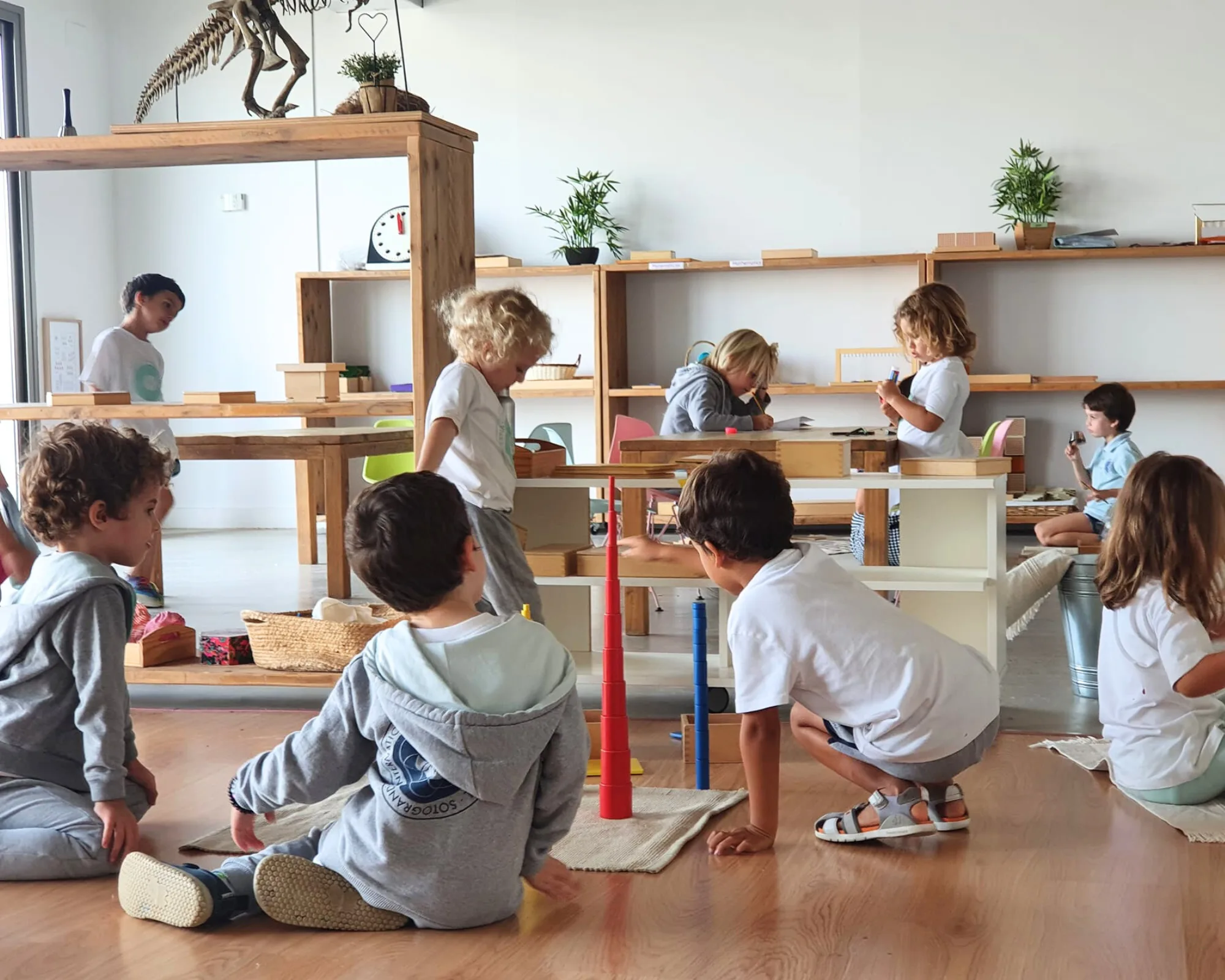
- At IMS Sotogrande, we design prepared environments where each child works at their own level without depending on the adult.
- The key lies in balance: observe, guide without intervening, and celebrate the effort, not just the result.
What Does Montessori Independence Really Mean?
Montessori independence is a child’s ability to act for themselves within a framework that gives them security. It’s not permissiveness or neglect. It’s a gradual process where the adult prepares the environment, offers limited choices, and then steps back so the child can experiment.
Maria Montessori put it clearly: “Never help a child with a task at which he feels he can succeed.” This phrase sums it all up. Independence grows when the child feels that their effort makes sense, when they see that their actions produce real results.
In practice, this translates into shoes they can put on themselves, shelves at their height, real-sized tools, and enough time to make mistakes without being rushed. It’s not about perfection. It’s about process.
How to Cultivate Independence at Each Stage of Development
0 to 3 Years: The Foundation of Trust
Between birth and three years, Montessori independence is worked on through free movement and sensory exploration. A baby who crawls toward an object that interests them is already exercising their independence. An 18-month-old who tries to eat with a spoon, even if they get messy, is learning that they can.
At home, you can facilitate this with a weaning table (low eating table), a mirror at floor level, and a wardrobe with accessible clothing. Avoid walkers and chairs that immobilize them. The little one needs to move to discover the world and themselves.
3 to 6 Years: The Age of Practical Independence
This is the golden age of Montessori independence. Between three and six years old, the child wants to do everything: sweep, wash dishes, set the table, get dressed without help. Their inner motto is “let me do it”.
At IMS Sotogrande, our Children’s House guides observe this daily. Materials are on open shelves, each activity has its place, and children choose what to work on during the work cycle. There are no rows or group instructions: each advances at their own pace.
At home, you can offer a low coat hook, a small vase with real flowers for them to water, a broom their size, and a tray with water for pouring. Don’t take away the opportunity to try because “it will take too long”. The child’s time is not ours.
Book a personalized school visit to see how our prepared environments foster independence in daily practice.
6 to 12 Years: Intellectual and Social Autonomy
In the Elementary program (6-12 years), Montessori independence takes a qualitative leap. It’s no longer just about practical skills, but managing projects, seeking information, organizing their time, and resolving conflicts with peers.
Children in this age group plan their own weekly work, research topics they are passionate about, and present their findings to the group. The adult is a guide who offers frameworks, not a boss who dictates tasks. This intellectual autonomy is the foundation of critical thinking and creativity they will need for life.
Common Mistakes When Trying to Foster Independence
The first is doing things for the child because “it’s faster that way”. Yes, putting cutlery in the dishwasher takes you 30 seconds and your four-year-old five minutes. But those five minutes are building their self-esteem.
The second is offering too many choices. Independence isn’t choosing between 20 T-shirts. It’s choosing between two or three. An excess of choices paralyzes rather than liberates.
The third, and perhaps most subtle, is excessive praise. A constant “well done!” turns independence into a search for approval. Better to describe what you observe: “You fastened all the buttons” or “You put the materials back in their place”. This way the child values their own effort, not your reaction.
The Role of the Prepared Environment at Home
A prepared environment doesn’t require renovations or expensive furniture. It requires observation. Watch how your child moves around the house: Do they need to ask for your help to reach something? Can they access their clothes? Do they have a defined place to play, eat, and rest?
Some simple changes transform the routine:
- A stable bench in the bathroom so they can wash their hands without depending on you.
- Drawers with visual labels where they store their clothes.
- A low shelf with activities arranged on trays.
- A weekly calendar where they mark their responsibilities with pictures.
At IMS Sotogrande, every classroom is designed with this principle: everything is within the child’s reach, nothing is purely decorative, and every material has a purpose. When you visit the school, the first thing you notice is the order, the calm, and the confidence. That doesn’t happen by chance: it happens because we trust children.
Montessori Independence and the Family Bond
Fostering independence doesn’t mean distancing yourself from your child. Quite the opposite. When a child knows they can count on you if they need to, but that you trust they can try it alone, the bond strengthens. You are not their servant nor their controller: you are their secure base.
Families who choose IMS Sotogrande, whether coming from La Línea, Algeciras, Estepona, or Gibraltar, often notice a change within weeks: children come home wanting to do more for themselves. Not because we demand it, but because at school they discovered they can.
That’s what happens when the environment respects the child’s pace. Independence isn’t imposed. It’s facilitated.
Frequently Asked Questions
At what age can you start working on Montessori independence?
From birth. A baby who has space to move freely is already developing independence. You don’t need to wait until age three: observation and adaptation of the environment start from day one.
What do I do if my child gets frustrated when trying to do something alone?
Frustration is part of learning. Don’t avoid it: accompany it. Validate their emotion (“I see this is hard and it makes you angry”) and offer minimal help only if they ask. If you do it for them, you send the message that they are not capable.
Does Montessori independence mean the child does whatever they want?
No. Independence within the Montessori method has clear limits: it respects others, respects the environment, and respects oneself. The child chooses from options that the adult has prepared beforehand. That structure is what gives true freedom.
Key Conclusions
Montessori independence isn’t a final goal: it’s a continuous process that adapts to each age and each child. From the crawling baby to the pre-adolescent managing their own project, the key is the same: trust, prepare the environment, and step back with patience.
If you want to see how this is lived in a real classroom, I invite you to visit IMS Sotogrande. Our doors are open to families from all over the area, from San Roque to Marbella. Request your visit here and see how a prepared environment changes your child’s relationship with the world.
Viviane Dumont, Director of Studies at IMS Sotogrande









