
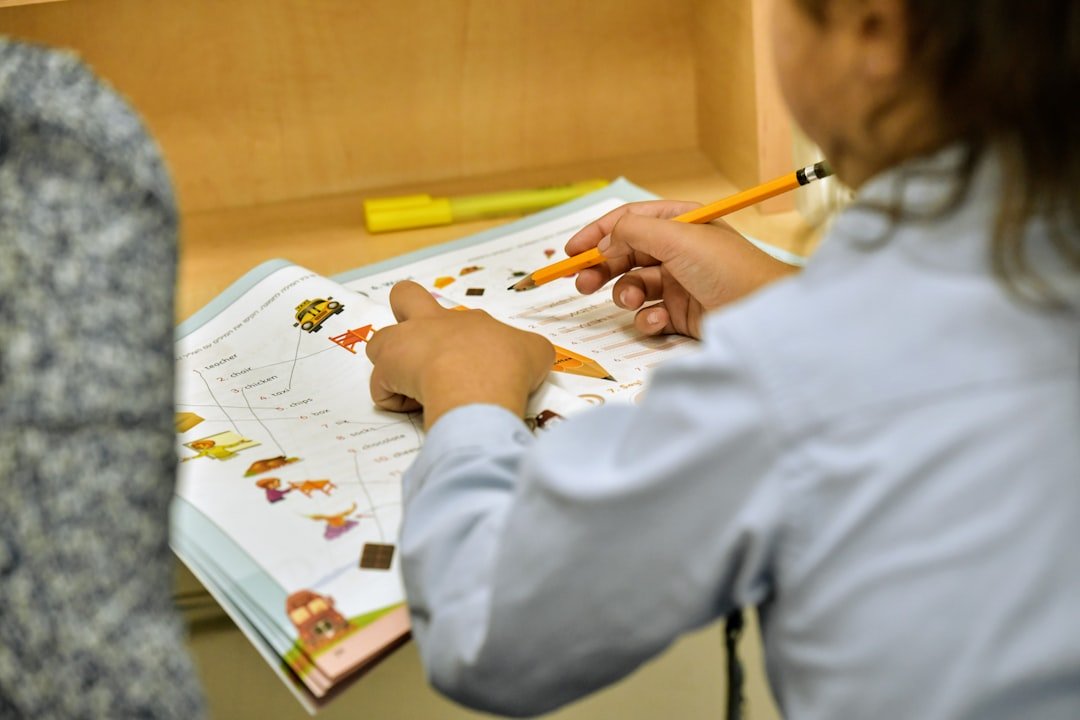
Montessori in the Classroom: How Children Learn in a Prepared Environment
In short
When you hear “ Montessori in the classroom,” it’s natural to wonder how that philosophy translates into children’s daily lives. It’s not an educational fad or a decorative label. Montessori pedagogy in the classroom is based on a prepared environment where every element is designed for the child to discover, explore, and learn at their own pace.

When you hear “Montessori in the classroom,” it’s natural to wonder how that philosophy translates into children’s daily lives. It’s not an educational fad or a decorative label. Montessori pedagogy in the classroom is based on a prepared environment where every element is designed for the child to discover, explore, and learn at their own pace. In this article we explore Montessori classroom in depth with practical examples.
- The Montessori classroom is an orderly, accessible space designed to the child’s size.
- Sensory materials allow learning abstract concepts through touch and manipulation.
- The Montessori guide observes and accompanies, rather than directing the class from a podium.
- Children work in three-year cycles that foster cooperation and confidence.
- What Montessori in the Classroom Means and Why It Works
- The Prepared Environment: Much More Than a Pretty Space
- The Role of the Montessori Guide: Observe, Don’t Direct
- The Three-Year Cycles: Why Children Learn from Other Children
- Montessori Materials: Learning with Your Hands
- How Montessori in the Classroom Is Lived at IMS Sotogrande
- Frequently Asked Questions
- Key Takeaways
What Montessori in the Classroom Means and Why It Works
Montessori in the classroom means the physical space, materials, and the adult’s attitude are all in service to the child’s development. Instead of lined-up desks and lectures, you’ll find low shelves with trays organized by areas of knowledge. Each material has a specific purpose, and the child chooses when to use it, within a clear framework of limits and respect.
This approach works because it respects the sensitive periods of development. A three-year-old who needs order and movement finds exactly that in the prepared environment. A six-year-old seeking to understand the world through reason has materials that allow them to explore geography, mathematics, or language with their hands before their head.

The Prepared Environment: Much More Than a Pretty Space
The prepared environment is the heart of Montessori in the classroom. Everything is designed for the child to be autonomous: furniture at their height, materials within reach, visible order, and beauty in every corner. It’s not decoration for decoration’s sake. Every shelf, every color, every texture serves a pedagogical function.
The Five Areas of the Montessori Classroom
In a Montessori classroom, five main areas are worked on. Practical Life includes everyday activities like pouring water, buttoning, or sweeping. The Sensorial Area develops perception through materials like the Pink Tower or cylinders. Language and Mathematics are presented concretely before moving to the abstract. And Culture encompasses geography, science, history, and art.
Each material is designed for self-correction. The child doesn’t need an adult to correct them: the material itself shows them if they’ve completed the task correctly. This reinforces their confidence and capacity for reflection.

The Role of the Montessori Guide: Observe, Don’t Direct
In Montessori in the classroom, the adult is not the center. The Montessori guide observes, presents materials when the child is ready, and protects their concentration. They don’t interrupt, don’t correct publicly, and don’t impose a group rhythm. Their job is to create the conditions for learning to happen naturally.
This doesn’t mean there’s no structure. Quite the opposite: the daily routine includes a three-hour work cycle where children choose their activities freely within clear limits. That cycle is sacred in Montessori pedagogy because it allows for repetition, deep concentration, and the internal satisfaction of a job well done.
Book a personalized school visit to see how Montessori in the classroom works with your own eyes.
The Three-Year Cycles: Why Children Learn from Other Children
One of the keys to Montessori in the classroom is grouping by three-year cycles. In Nido (0-3), Children’s House (3-6), and Workshop (6-12), children share space with peers of different ages. Older children reinforce their learning by helping younger ones. Younger children are motivated by observing what older ones are capable of doing.
This model creates community. The child doesn’t compete: they collaborate. They don’t seek the adult’s approval: they seek their own satisfaction. And during three years with the same guide, a relationship of trust is built that allows for deep and respectful accompaniment.
Montessori Materials: Learning with Your Hands
Montessori materials are not toys. They are scientifically designed tools that present an isolated concept. The Pink Tower, for example, works on dimensions, concentration, and coordination. Bead numbers introduce quantity before symbol. The Moveable Alphabet allows composing words before knowing how to write with a pencil.
Each material is presented in three periods: “this is…,” “show me…,” “what is?” This way, the guide verifies comprehension without exam or pressure. And the child can repeat as many times as needed until they feel secure.
How Montessori in the Classroom Is Lived at IMS Sotogrande
At IMS Sotogrande, Montessori in the classroom is a daily reality. Our school holds AMI (Association Montessori Internationale) and NEASC accreditation, which guarantees the pedagogy is applied with rigor and consistency. The classrooms are bright, materials are within each child’s reach, and the guides accompany with respect and professionalism.
Additionally, we offer a trilingual program with immersion in Spanish and English from Nido, and French starting in Children’s House. For international families relocating to the Costa del Sol, our community is a welcoming space where every child finds their place.
Frequently Asked Questions
What is the difference between a Montessori classroom and a traditional classroom?
In a Montessori classroom, children choose their activities within a structured framework, work with sensory materials, and share space with peers of different ages. In the traditional classroom, the teacher directs the lesson, everyone does the same thing at the same time, and the furniture is not adapted to the child’s autonomy.
From what age is Montessori applied in the classroom?
Montessori in the classroom is applied from birth. The Nido (0-3 years) is already a prepared environment where the baby moves with freedom and develops independence. The pedagogy continues in Children’s House (3-6) and Workshop (6-12), with materials and objectives adapted to each plane of development.
Don’t children in a Montessori classroom have limits?
They have very clear limits. Freedom in Montessori is freedom within a framework: the child chooses the activity but respects the material, doesn’t interrupt peers, and returns each tray to its place. Limits are lived with respect, not imposition, and the guide upholds them with firmness and affection.
How do I know if my child will adapt to a Montessori classroom?
The best way to find out is to visit the classroom. Every child is different, but the Montessori environment is designed to welcome different ways of learning. At IMS, we offer personalized visits where you can observe the classroom in action and resolve all your doubts.
Key Takeaways
Montessori in the classroom is not an abstract idea: it’s a coherent system where the environment, materials, and guide work together so each child develops their potential at their own pace. Evidence from over a century supports this approach, and organizations like the Association Montessori Internationale maintain quality standards that guarantee its rigorous application.
If you want to see how it’s lived at IMS Sotogrande, book a personalized visit. There’s no better way to understand Montessori in the classroom than to see it with your own eyes and ask the guides who accompany the children every day.
Viviane Dumont
Director of Studies, IMS Sotogrande









