
Montessori Games for 3-Year-Olds: Practical Life, Sensorial & Language Activities (2026 Guide)
In short
I've seen it dozens of times: a 3-year-old completely absorbed for 20 minutes passing lentils from one bowl to another with a spoon. It's not a waste of time. It's pure concentration. Montessori games for 3-year-olds don't need batteries, lights, or screens. They need a clear purpose and free hands to explore.
I’ve seen it dozens of times: a 3-year-old completely absorbed for 20 minutes passing lentils from one bowl to another with a spoon. It’s not a waste of time. It’s pure concentration. Montessori games for 3-year-olds don’t need batteries, lights, or screens. They need a clear purpose and free hands to explore. In this article we explore Montessori activities for 3 year olds in depth with practical examples.
- Why Play Is Learning: The Montessori Approach for 3-Year-Olds
- Practical Life Games for 3-Year-Olds: The Best Time Investment
- Sensorial Games for 3-Year-Olds: Refining the Senses
- Language Games for 3-Year-Olds: Building Words Through Play
- Outdoor Games for 3-Year-Olds: Movement and Nature Connection
- How to Set Up a Montessori Play Corner at Home
- Frequently Asked Questions
Why Play Is Learning: The Montessori Approach for 3-Year-Olds
In Montessori, we don’t separate play from learning. At age 3, children are in the middle of an explosion of language, movement, and independence. Every game you choose can help them master concrete skills. The trick is to present it with intention: few objects, one at a time, choosing calm moments. When it comes to Montessori activities for 3 year olds, it pays to listen to what families and lead guides actually report.
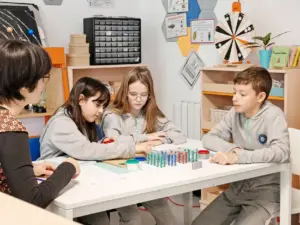
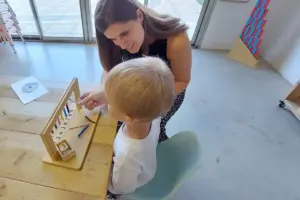
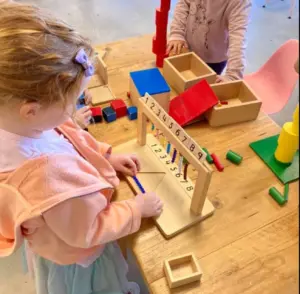
At our International Montessori School in Sotogrande, we’ve found that the simplest games have the greatest impact. That’s why you won’t find electronic toys or meaningless activities here. Everything is designed so that the child is the protagonist, not a spectator. Daily practice with Montessori activities for 3 year olds reveals nuances no handbook fully captures.
Practical Life Games for 3-Year-Olds: The Best Time Investment
We call “practical life” the everyday activities your child sees at home and wants to imitate. They’re not chores, they’re games that build autonomy and coordination.
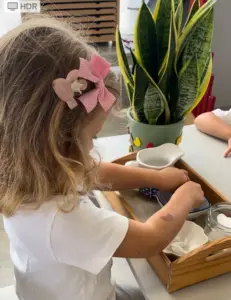
- Water pouring : a small pitcher, two glasses, and a little water (or rice). The challenge is not to spill. Concentration is maximum.
- Setting the table : with plates and utensils sized for them. At first it will be clumsy, but within weeks they’ll do it with pride.
- Washing fruit : a basin, a soft brush, and apples to clean. It activates the senses and logical sequence.
Last month, a mother from our parent group shared that her 3-year-old son, after practicing pouring at home, asked to serve water to the whole family. That’s self-esteem in action.
If you’re looking for more personalized ideas, you can reserve a visit to our school and see how we work with these games in the prepared environment.

Sensorial Games for 3-Year-Olds: Refining the Senses
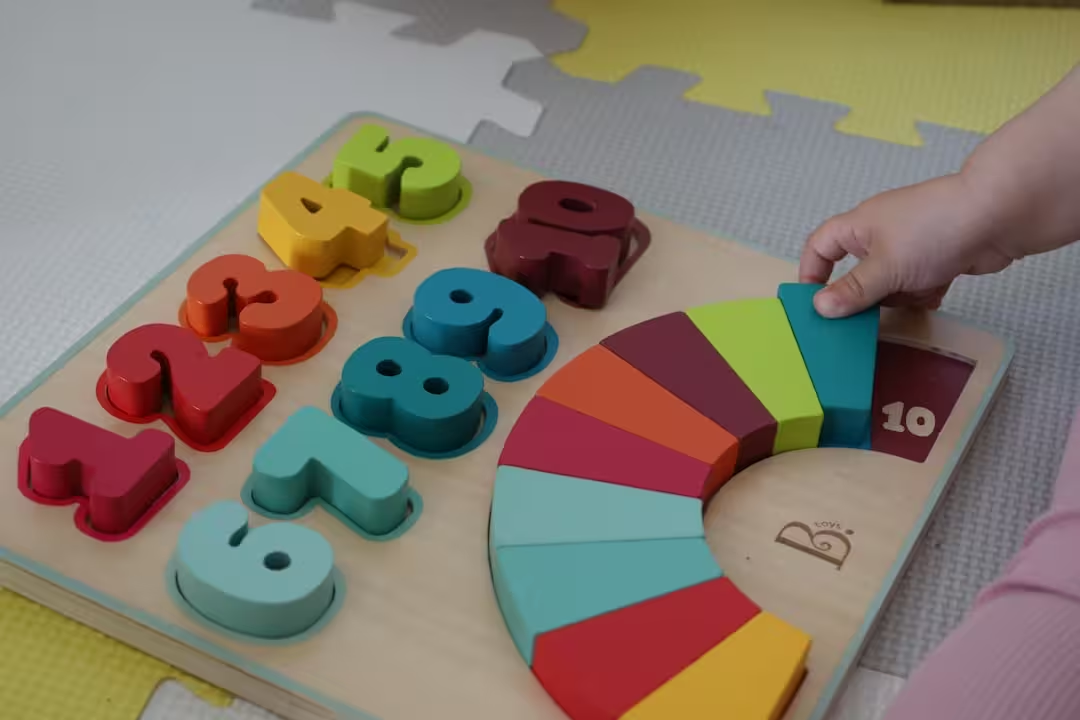
Montessori games for 3-year-olds that stimulate the senses lay the foundation for logical thinking. You don’t need to buy anything expensive. With everyday materials you can create surprising experiences.
Try matching sensory bottles: fill two identical ones with rice, another two with bells, another two with lentils. The game is to match them by sound alone. It seems simple, but it requires active listening that sharpens auditory discrimination.
Another option is the mystery bag. Put familiar objects (a small car, a spoon, a dry leaf, a pinecone) in a cloth bag. The child reaches in without looking and must guess by touch alone. In our Children’s House classroom, this game sparks wonderful conversations as children describe what they feel.
Language Games for 3-Year-Olds: Building Words Through Play
Around age 3, vocabulary grows rapidly. The language games we propose in Montessori are not letter worksheets, they are experiences that connect words to reality.
A favorite activity is sorting by initial sounds. Place small objects (ball, top, brush) and say, “Let’s find the ones that start with /b/.” No written letters, only sounds. This builds phonological awareness, key for later reading and writing.
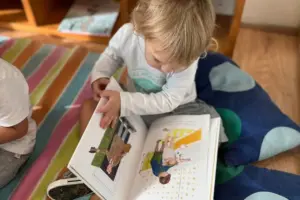
You can also play with Montessori nomenclature cards: pictures of animals, fruits, or household items with their names written below. First match with the real object, then with the card, and later with the word label. It’s a game that grows with the child, and at IMS Sotogrande we adapt it to Spanish-English-German trilingualism.
Outdoor Games for 3-Year-Olds: Movement and Nature Connection
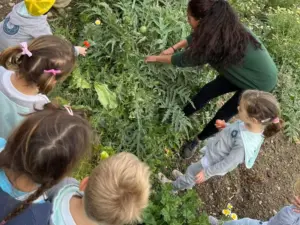
A game for 3-year-olds that never fails is a simple collecting walk. We go out with a basket and collect stones, leaves, and dry flowers. Back in class or at home, we sort the treasures. This combines gross motor skills, observation, and language.
Afternoons in Sotogrande offer a privileged environment for these activities. Many families living in Alcaidesa, San Roque, or La Línea come to our school precisely for the daily contact with nature we integrate into our playgrounds and outings. Instead of static swings, you have logs to climb, soil to dig, and plants to care for. It’s the natural gym a 3-year-old needs.
How to Set Up a Montessori Play Corner at Home
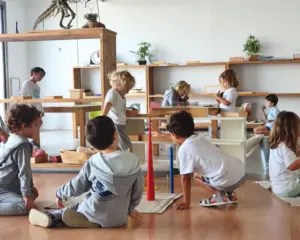
You don’t need a classroom. A low wooden shelf without doors, with 6-8 trays, is enough. On each tray, a single material or game. This way the child chooses without getting overwhelmed and learns to return the material before taking another. This external order builds mental order.
Rotate the games every week or two, based on interest. Don’t fill the shelf: less is more. Observe what they repeat, what they avoid. That observation will give you more clues than any manual.
Frequently Asked Questions
What’s the difference between a conventional toy and a Montessori game for 3-year-olds?
A conventional toy often does many things by itself. A Montessori game, on the other hand, requires the child’s action to work. So the child is the protagonist, not the object. A clear example: a simple wooden puzzle vs. an electronic one that claps when you get it right. In the first, the satisfaction comes from the child’s own achievement, not from external reinforcement.
Can I combine Montessori games with other methods?
Of course. Montessori is a way of looking at the child, not a closed list of activities. If you respect their pace, give them autonomy, and avoid interruptions, you’re close to the Montessori essence, whatever material you use. Many families in the Campo de Gibraltar mix Montessori ideas with local traditions and it works wonderfully.
Where can I find more game ideas for 3-year-olds?
In addition to this guide, I invite you to visit our school in Sotogrande. Seeing a Montessori environment in action answers many questions. You can also read about Montessori philosophy from sources like the Association Montessori Internationale (AMI) or the Montessori Foundation.
Play doesn’t need to be spectacular to be transformative. At age 3, every glass of water your child pours without spilling, every stone they sort, every word they discover, is a firm step toward independence. No apps, subscriptions, or noisy toys are needed. What is needed is presence, trust, and an adult who knows how to wait.
At IMS Sotogrande, we support families from all over the Costa del Sol, from Estepona, Gibraltar, San Roque, and Algeciras, who are looking for a respectful, bilingual education with 20 years of Montessori experience. If you feel your child deserves such an environment, I encourage you to come and meet us. Reserve your visit and let’s chat without obligation.