

Montessori Activities for 3-Year-Olds: A Practical Guide for Parents & Teachers in Sotogrande, Costa del Sol
In short
The other day in our Casa de Niños at IMS Sotogrande, a 3-year-old spent twenty minutes screwing and unscrewing bottle caps. He didn't even look up when a plane flew over the playground. That's not play. It's work. Montessori activities for 3-year-olds aren't just for entertainment. They are designed to build the human being.
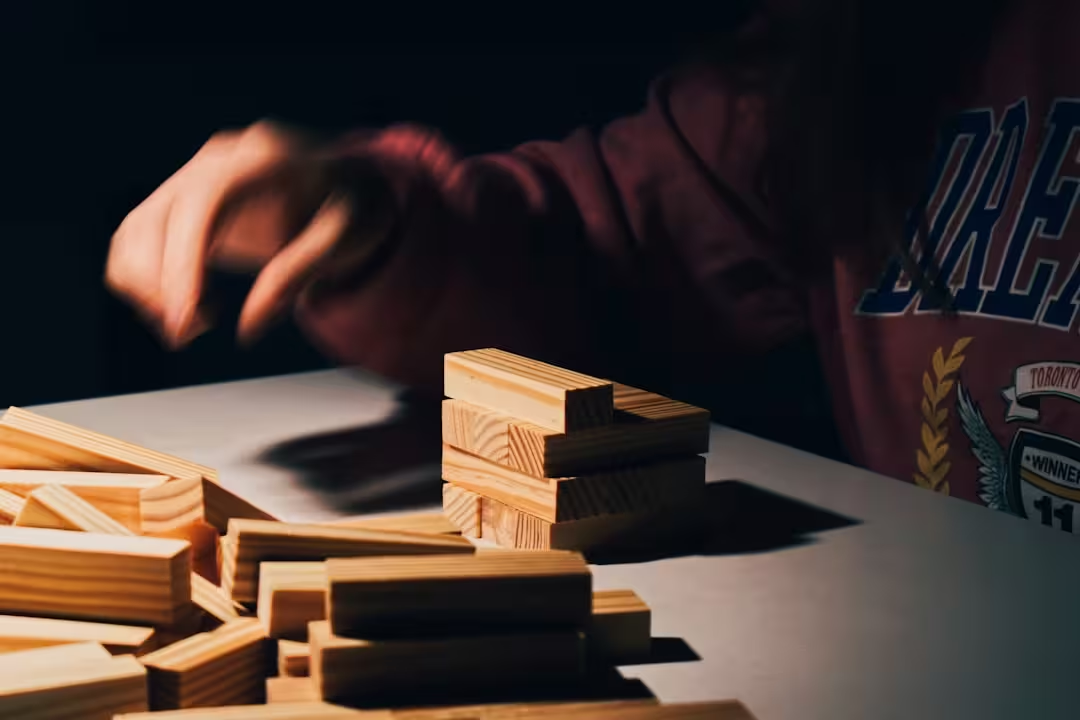
The other day in our Casa de Niños at IMS Sotogrande, a 3-year-old spent twenty minutes screwing and unscrewing bottle caps. He didn’t even look up when a plane flew over the playground. That’s not play. It’s work. Montessori activities for 3-year-olds aren’t just for entertainment. They are designed to build the human being.
If you’re looking for ideas that respect your child’s natural development, here is a practical guide with Montessori activities you can use at home or in the classroom.
- Why Montessori Activities for 3-Year-Olds Are Key
- What Makes an Activity Suitable for a 3-Year-Old?
- Montessori Activities for 3-Year-Olds: Practical Life
- Montessori Activities for 3-Year-Olds That Awaken the Senses
- Language and Mathematics Activities in Miniature
- How to Support Without Interfering
- Montessori Activities for 3-Year-Olds at Home: Prepare the Environment
- Frequently Asked Questions
- Conclusion
Why Montessori Activities for 3-Year-Olds Are Key
At age 3, the child enters what Maria Montessori called the “conscious mind.” No longer absorbing the environment without filter, they now begin to order, classify, and choose. Their need for independence explodes. Suddenly everything is “me do it.” Montessori activities for 3-year-olds must respond precisely to that need.
In Montessori, we don’t give coloring sheets or screens. We prepare the environment so the child can act upon it. The concentration that arises when a child repeats an activity until mastery is as fragile as a bubble. Interrupting that cycle breaks their process of self-construction.
What Makes an Activity Suitable for a 3-Year-Old?
Not everything works. A true Montessori activity has these characteristics:
- Isolates one difficulty: one challenge per activity. If you mix threading with color sorting, you lose focus.
- Allows self-correction: the material shows the error without an adult pointing it out. This builds real confidence.
- Is beautiful and fragile: a thin glass vase teaches more than an unbreakable plastic one. The child learns to care.
- Starts concrete: before counting with numbers on paper, the child counts beans.
A well-designed activity for a 3-year-old doesn’t have to be expensive. A bowl of chickpeas and a spoon for transferring is enough. The important thing is the intention.

Montessori Activities for 3-Year-Olds: Practical Life
Practical life activities are the heart of the 3-6 environment. They connect the child to their culture and satisfy their urge to contribute. They also hone fine motor coordination and sequencing.
Transferring and Pouring
Start with dry solids and small pitchers. Later introduce liquids with a sponge nearby. The control of error is the spilled water.
Personal Care
Brushing hair in front of a mirror, wiping their nose, dressing. A hook at their height with a light coat is already an activity. At IMS Sotogrande we see how, after weeks, the same child who didn’t want help enters the classroom, hangs up their backpack, and sits down to wait.
Food Preparation
Peeling a tangerine, cutting a banana with a dull knife. At 3, this is an achievement we adults underestimate. Families from Alcaidesa, Estepona, or La Línea: if your kitchen has a sturdy stool, you already have a prepared environment.
Don’t be afraid of mess. A cloth and bucket in their corner turn a spill into another activity.
Montessori Activities for 3-Year-Olds That Awaken the Senses
The 3-year-old refines their senses. Montessori sensory activities give them keys to order the world.
Color Matching
With clothespins and cardstock. Three pairs at first, then four. What looks like a memory game is a master class in visual discrimination.
Tactile Mystery Bags
Place everyday objects in an opaque bag: a wooden spoon, a smooth stone, a brush. The child reaches in and describes without looking. You can even use pinecones collected from the San Roque pine forest.
Scent Jars
With cotton balls soaked in natural extracts: vanilla, lemon, lavender. The goal is to match identical scents. At 3, smell still guides many of their emotions.
According to the Association Montessori Internationale (AMI), sensory refinement between ages 3 and 6 underpins later intelligence.
Language and Mathematics Activities in Miniature
At 3, they don’t yet write or add in notebooks. But their mind prepares through concrete experiences.
Nomenclature and Real Objects
Collect miniature animals, fruits, or vehicles. Match each object to a card. In Casa de Niños we start with the initial sound of each word. Language is built from sensory experience.
Counting to Where They Are
With shells, chestnuts, or bottle caps. Lay out a mat with numbers 1 to 5 and ask them to put the corresponding quantity. If they make a mistake, there’s too many or too few: self-correction.
At IMS we’ve seen that a child who manipulates quantities before seeing the numeral won’t fear numbers when they appear.
Book a personalized school visit to see these materials in action.
How to Support Without Interfering
The adult’s role in Montessori activities for 3-year-olds is the hardest: prepare, show, and step back. Don’t correct with words. If the pink tower falls, don’t say ‘that’s wrong.’ Tomorrow they’ll try again.
Some families from Gibraltar or Marbella ask me what to do if the child isn’t interested. The Montessori answer is to observe. Is the activity too easy? Too hard? Does the material appeal to them? Sometimes changing the color of the bowl is enough.
Montessori Activities for 3-Year-Olds at Home: Prepare the Environment
You don’t need a Montessori classroom. With four corners, your home transforms:
- A low shelf with 3 or 4 trays, each with one activity. Rotate weekly.
- A hook for their coat and a basket for shoes.
- A cloth and spray bottle for cleaning spills.
- Plants they can water with a small watering can.
Montessori activities for 3-year-olds at home take up no more than a meter and a half. The key is the order and beauty of the corner.
Frequently Asked Questions
How many activities should I offer a 3-year-old?
Between three and five on their shelf. Less is more. When they master one, replace it with another that offers a slightly greater challenge.
What if my child always repeats the same activity?
Let them. Repetition consolidates brain connections. If they transfer water for weeks, they’re not wasting time. They’re building precision in their hand.
Can I use plastic materials?
Avoid them whenever possible. A glass cup teaches care for fragile things. Plastic gives no feedback. If it breaks, we pick up the pieces together without drama. That builds responsibility.
At what age do letter and number activities start?
In Montessori, they are introduced in Casa de Niños around age 4, but all the previous sensory and practical work is the foundation. Without having ordered, classified, and poured, letters would be empty abstraction.
Conclusion
Montessori activities for 3-year-olds that respect their development don’t need technology or worksheets. They require an adult who observes, a prepared environment, and unhurried time. The rest the child does.
If you want your child to grow up in an environment where every tray, every pitcher, and every corner is designed for them, the Casa de Niños professionals at IMS Sotogrande are here to support you. Request an appointment and come see it.









