
Managing Toddler Tantrums & Anger: Montessori Strategies for Expat Families

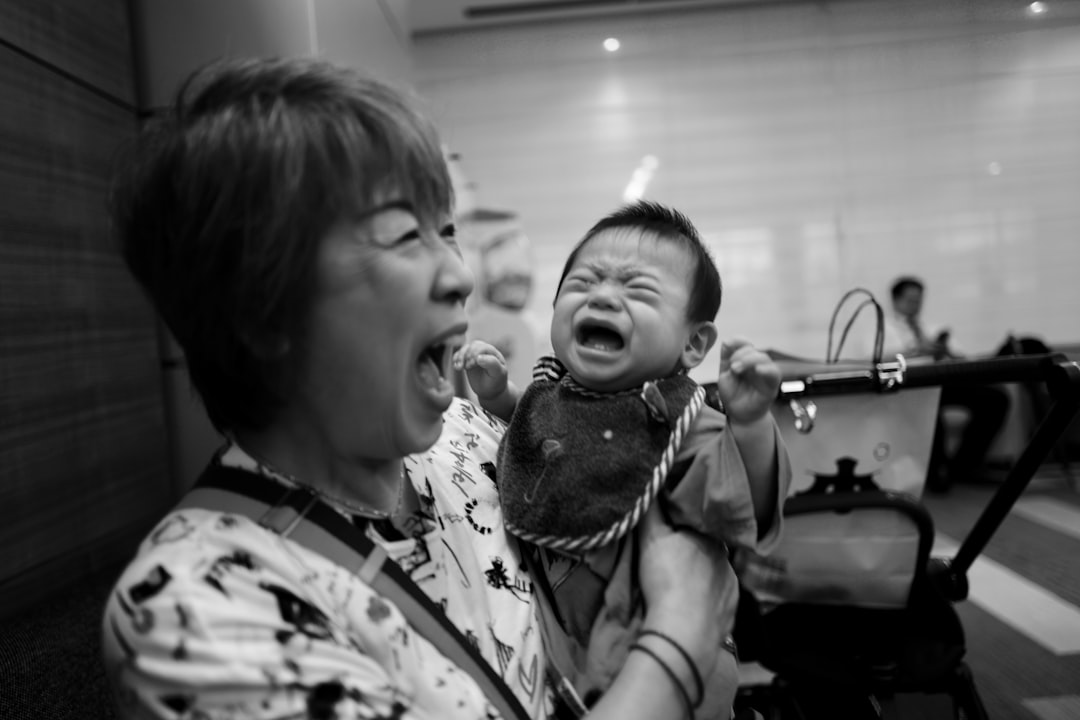
When your two-year-old throws themselves on the supermarket floor screaming because they don’t want to leave the cart, they aren’t being ‘bad’. They are experiencing an enormous emotion with a brain that still lacks the tools to regulate it. Managing anger in children doesn’t mean eliminating that emotion, but accompanying it without it destroying the child or those around them. In this article we explore Montessori anger management in depth with practical examples.
Key Points
- Anger is a healthy and necessary emotion that children need to learn to manage, not suppress.
- The young child’s brain (0-6 years) has not fully developed the prefrontal cortex, making tantrums neurologically normal.
- In Montessori, we use three key strategies: validating the emotion, offering safe physical alternatives, and modeling calmness.
- A prepared environment reduces the triggers of anger before they appear.
- Clear and respectful boundaries are the scaffolding that allows a child to feel safe even when furious.

Why Anger Isn’t the Enemy
Anger is a primary emotion that appears in all humans from the first months of life. It serves an adaptive function: it signals that something is wrong, that a boundary has been crossed, or that a need is not being met. Suppressing it teaches the child that their emotions are dangerous or unacceptable. When it comes to Montessori anger management, it pays to listen to what families and lead guides actually report.
What we can work on is managing anger : how to express that frustration without hurting themselves or others. This is precisely one of the fundamental goals of Montessori education from the Nido (0-3 years) to the Elementary level (6-12 years). Daily practice with Montessori anger management reveals nuances no handbook fully captures.
What Happens in a Child’s Brain
Until about age six, a child’s prefrontal cortex (the area that regulates emotions, plans, and controls impulses) is still developing. When the amygdala detects a threat (for a two-year-old, having their toy taken away IS a real threat), the brain enters survival mode: fight or flight. There is no possibility for reasoning. Understanding Montessori anger management from inside the classroom reshapes everyday decisions.
That’s why saying ‘calm down’ or ‘you have no reason to be angry’ to a child in the middle of a tantrum is useless. They literally cannot process those words. They first need someone to help them lower the intensity of that emotion, and then, little by little, they will learn to do it themselves. Concrete data on Montessori anger management is worth reviewing before acting on assumptions.

Montessori Strategies That Really Work
In our classrooms at IMS Sotogrande, from Nido to Casa de Niños, we work on anger management with concrete tools that any family can apply at home. These aren’t magic tricks: they are principles backed by educational neuroscience and Montessori pedagogy.
1. Validate Before Correcting
The first thing an angry child needs is to feel heard. Instead of ‘stop crying’ or ‘it’s not a big deal,’ try phrases like: ‘I see you are very angry because you wanted to keep playing’ or ‘I understand it bothers you that we can’t buy that.’ Validating isn’t giving in. It’s acknowledging that their emotion is real and legitimate.
This validation activates the connection between the amygdala and the prefrontal cortex, literally helping the child’s brain exit defensive mode. The studies of Daniel Siegel and Tina Payne Bryson explain this well: ‘connect before you correct.’
2. Offer Safe Physical Alternatives
The child needs to release the energy of anger somewhere. Instead of hitting their sibling or throwing objects, we offer alternatives: squeezing a stress ball, hitting cushions, taking deep breaths with the ‘smell the flower, blow out the candle’ technique, or going to a quiet corner with books and soft materials.
In our Casa de Niños classrooms at IMS, we have a specific space we call ‘the cloud,’ where each child can go when they need to calm down. It’s not a punishment: it’s a resource the child chooses. At home, you can create a similar corner with a small blanket, cushions, and a sensory object.
3. Model Calmness
Children learn more from what they see than from what they hear. If when you’re frustrated you yell, hit the table, or shut yourself away without speaking, your child internalizes that model. If, on the other hand, you take a deep breath, name your emotion (‘I’m tired and that makes me grumpy’), and look for a solution, you are giving them the best emotional intelligence workshop that exists.
This doesn’t mean being perfect. It means being honest. Even saying ‘Mom got angry and yelled, that wasn’t okay, I’m sorry’ is a powerful lesson.

The Role of the Prepared Environment
In Montessori, we say the environment is the third educator. A chaotic environment, with too many stimuli, irregular schedules, or expectations inappropriate for the child’s age, is a breeding ground for tantrums. Managing anger starts long before the anger appears.
Some simple changes that reduce triggers at home:
- Establish predictable routines (especially before bed and upon waking).
- Offer limited choices: ‘Do you prefer the red shirt or the blue one?’ instead of an open wardrobe.
- Anticipate transitions: ‘In five minutes, we’re going to tidy up’ works better than ‘Enough, tidy up now!’
- Respect basic needs: hunger, insufficient sleep, and lack of movement are the three biggest triggers of childhood anger.
If you want to see how we apply these principles in a real Montessori classroom, book a personalized school visit and discover how IMS’s prepared environment works with your own eyes.
Ages and Tantrums: What to Expect at Each Stage
The tantrum of an 18-month-old is not the same as the anger of an 8-year-old. Each plane of development has its particularities, and understanding them helps us respond appropriately.
0 to 3 Years: Primal Anger
At this age, anger manifests as intense crying, kicking, biting, and throwing themselves on the floor. The child doesn’t have language to express what they feel, so their body speaks for them. The most effective adult response is physical containment (a firm hug if they accept it), simple verbal validation, and a lot, a lot of patience. In IMS’s Nido, we work on exactly this: accompanying without judgment.
3 to 6 Years: Anger with Words
In Casa de Niños, the child starts to have an emotional vocabulary. They can now say ‘I’m angry’ or ‘that makes me mad,’ although they sometimes prefer to scream or hit. Here we can start teaching active strategies: using an ’emotion thermometer,’ practicing breathing, offering a ‘calm-down corner,’ and, little by little, helping them identify what triggered their anger and what they can do differently next time.
6 to 12 Years: Complex Anger
In Elementary (6-12 years), anger becomes more sophisticated. It’s not just tantrums: conflicts with peers, academic frustration, and a sense of injustice appear. The child needs conflict resolution tools, class meetings to express opinions, and adults who treat them with the respect they deserve. At IMS, we use Montessori class meetings as a safe space to manage these collective frustrations.
What DOESN’T Work (And Why We Keep Doing It)
It would be hypocritical not to admit that we’ve all fallen into some of these traps. I list them not to judge, but to make them visible:
- Giving in to a tantrum to make it stop. It works short-term, but teaches the child that anger is the most effective tool to get what they want.
- Punishing the emotion (‘if you keep this up, you’re going to your room’). The child learns that their feelings are grounds for rejection.
- Minimizing (‘it’s not a big deal,’ ‘big kids don’t cry’). It invalidates their experience and erodes trust.
- Reasoning in the middle of a crisis . The brain cannot process logic when in defensive mode. First connection, then correction.
Frequently Asked Questions
Is it normal for my 2-year-old to have so many tantrums?
Completely normal. At two, the child is in the full development of their autonomy but lacks the neurological and linguistic tools to manage their emotions. Tantrums are their way of communicating frustration. If they are very frequent, violent, or routinely last more than 25 minutes, consult your pediatrician to rule out other causes, but in most cases, it’s simply a developmental phase.
Can I use a ‘calm-down corner’ at home?
Yes, and it’s a fantastic tool if presented correctly. Prepare a cozy space with cushions, books, a sensory object (stuffed animal, stress ball), and give it a positive name: ‘the cloud,’ ‘our quiet corner.’ Never use it as punishment: ‘Go to your corner!’ Instead, offer it as an option: ‘I see you’re very angry, would you like to go to the corner to calm down for a bit?’ Over time, the child will go on their own initiative.
How do I differentiate a normal tantrum from a behavioral problem?
A normal tantrum is reactive: it arises from a specific frustration and resolves within a few minutes once the child calms down. A behavioral problem is more persistent, occurs very frequently, interferes in the daily life of the child and family, and does not respond to usual strategies. At IMS, we have the Rainbow Classroom, specialized in diversity and individualized support. If you have doubts, contact us at +34 653 04 17 39.
Key Takeaways
Managing anger is not a course you pass in a day. It is a long, repetitive, and sometimes exhausting process that requires from adults the same patience we ask of children. But every time you validate their emotion instead of punishing it, every time you take a deep breath before reacting, you are building the foundations of their emotional intelligence for life.
If you want to delve deeper into how we work with emotions in a Montessori environment, we invite you to book a visit to IMS Sotogrande. Seeing the tools in action is worth more than a thousand explanations. And if your child is going through a particularly difficult phase, email us at [email protected]: every family deserves real, not theoretical, support.









