
International Schools in Campo de Gibraltar: Guide for Expat Families | Montessori Sotogrande
In short
In the Campo de Gibraltar, demand for international schools has grown notably among families seeking a global education for their children. And it's no wonder. This region, with its blend of cultures and proximity to Gibraltar, attracts expatriates and Spanish parents who want to give their little ones a real competitive edge.
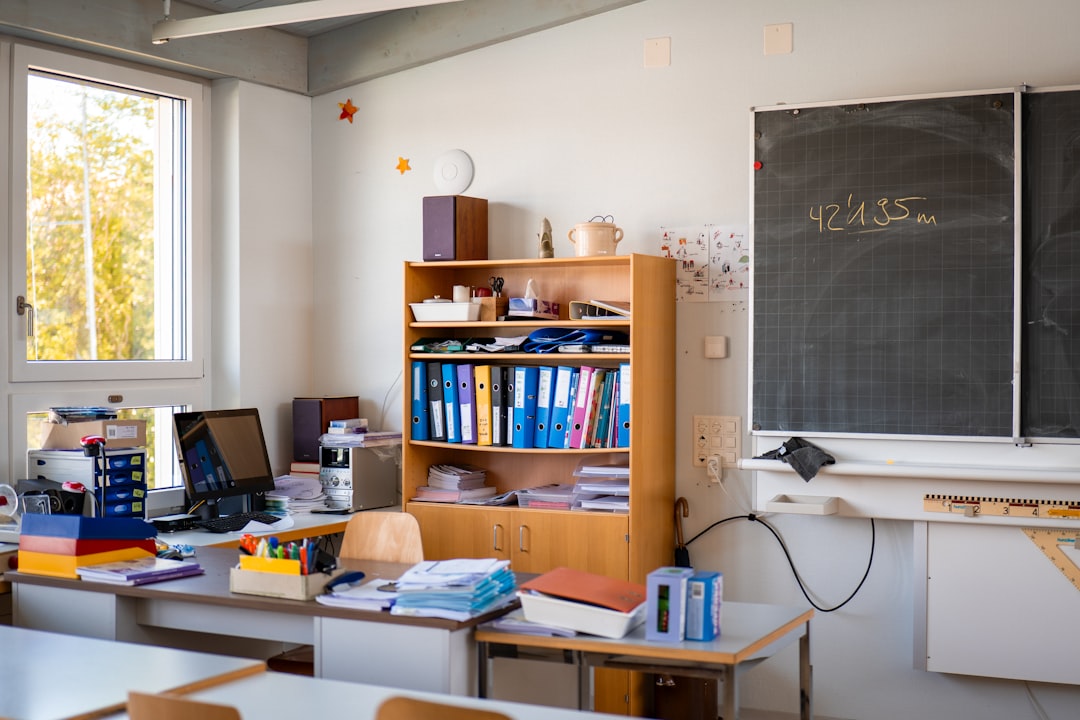
![Colegios internacionales en el Campo de Gibraltar [Guía]](https://ims-sotogrande.com/wp-content/uploads/2026/06/post-392-img-1-1780899640355-05e3511d.avif)
In the Campo de Gibraltar, demand for international schools has grown notably among families seeking a global education for their children. And it’s no wonder. This region, with its blend of cultures and proximity to Gibraltar, attracts expatriates and Spanish parents who want to give their little ones a real competitive edge. But be careful: not everything that glitters is gold. Choosing a school that truly delivers on its promises requires looking beyond the brochure. In this article we explore international schools Campo de Gibraltar in depth with practical examples.
I’ve accompanied many families in this search and I know the decision can be overwhelming. So I’ve prepared this clear, no-nonsense guide. Here you’ll understand what makes a school international, what aspects you must evaluate, and why International Montessori School (IMS) Sotogrande has become a benchmark for those of us living in this corner of Cádiz. When it comes to international schools Campo de Gibraltar, it pays to listen to what families and lead guides actually report.
- What Defines an International School?
- Real Advantages of an International Education in Campo de Gibraltar
- How to Choose an International School in Campo de Gibraltar
- IMS Sotogrande: A Benchmark Among International Schools in Campo de Gibraltar
- School Life in an International School: What Happens Beyond the Classroom
- Frequently Asked Questions About International Schools in Campo de Gibraltar
- Key Takeaways
What Defines an International School?
An international school is not simply one that teaches English classes. The label is earned when the curriculum transcends borders, the teaching staff has a global mindset, and the environment breathes linguistic and cultural diversity every day, not just during English hour. Daily practice with international schools Campo de Gibraltar reveals nuances no handbook fully captures.
Let’s take concrete examples. A truly international school typically offers programs with recognition beyond Spain (such as the IB or, in our case, a worldwide pedagogy like Montessori). Moreover, most interactions, assemblies, instructions, games, take place in multiple languages. It’s not about translating, but about living in two or three languages naturally. Understanding international schools Campo de Gibraltar from inside the classroom reshapes everyday decisions.
And then there’s the student body. In these schools, children of different nationalities coexist. This daily melting pot teaches empathy and mental flexibility long before any geography lesson. Concrete data on international schools Campo de Gibraltar is worth reviewing before acting on assumptions.

Real Advantages of an International Education in Campo de Gibraltar
Living in Campo de Gibraltar is already a privilege: beach, mountains, and a strategic location. But when you add an international education to the equation, the doors multiply. These are the advantages I observe daily in our own school and that families choosing us from Algeciras, La Línea, or even Estepona endorse:
- Functional bilingualism or trilingualism. Your child doesn’t just pass Cambridge exams. They learn to think in another language. At IMS, for example, English and Spanish coexist organically from age 0, and German is added from Casa de Niños (3-6 years).
- Global curriculum. Montessori is not tied to any single country’s syllabus. It follows human development stages, which facilitates international mobility. If your family relocates, your child can continue seamlessly at another AMI school worldwide.
- Open-mindedness. Sharing a classroom with peers from different cultures reduces prejudice and creates more tolerant adults. It’s not theory: you can feel it during recess and group projects.
But there’s more. In an international environment, children learn to resolve conflicts using tools that don’t depend on their mother tongue, strengthening their emotional intelligence. And in a hyperconnected world, that’s pure gold.

How to Choose an International School in Campo de Gibraltar
To avoid getting lost among the many options, and the occasional empty promise, here’s a checklist I personally use when advising parents:
- International accreditations. Look for seals like AMI (Association Montessori Internationale) or NEASC (New England Association of Schools and Colleges). Without them, the word “international” is just marketing. AMI guarantees the school follows María Montessori’s original standards worldwide.
- Real language immersion. Ask how many hours per day each language is spoken and whether the guides are native or bilingual. The difference between “English class” and “living in English” is huge.
- Diverse school community. A hallway where accents and surnames from half of Europe mingle enriches more than the best textbook.
- Evidence-based educational project. Montessori, for instance, has over a hundred years of neuroscience evidence. It’s not a passing fad.
- Connection with families. A truly international school integrates parents through workshops, frequent meetings, and transparent communication platforms.
If after reviewing these points you feel that an evidence-based international education could be what you’re looking for, I invite you to discover in person how we work. Book a personalized visit to IMS Sotogrande and tour our classrooms in full activity.

IMS Sotogrande: A Benchmark Among International Schools in Campo de Gibraltar
I’ll be straightforward. I work here and I am convinced that IMS is a gem. But it’s not just me saying it. We hold the two international accreditations I mentioned: AMI and NEASC, plus authorization from the Junta de Andalucía. Few schools in Spain can boast this triple validation. And in Campo de Gibraltar, we are the only school offering the Montessori method with immersion in English and Spanish, plus French from age 3.
Our approach has nothing to do with lectures. Here, the child is the protagonist. We work with prepared environments and manipulative materials that respect each child’s pace. And we do it in vertical groups (0-3, 3-6, 6-9, and 9-12 years), allowing older children to teach younger ones and the younger ones to learn by imitation. The guide observes, connects, and accompanies. They do not dictate.
A Trilingual Environment That You Can Feel from the Entrance
From Nido (0-3 years) to Taller (6-12 years), children hear Spanish and English daily. They are not separated by language: guides address each child in their mother tongue or second language naturally. Additionally, French enters Casa de Niños as a living third language, with songs and routines. All this has been reinforced by a bilingual program funded by European grants, allowing us to further train our team.
Pedagogy Supported by Neuroscience
María Montessori designed her method by observing how the brain learns. Today, studies from universities like Harvard confirm that movement, free choice, and multisensory learning consolidate neural connections. In our classrooms, a child who multiplies using the bead board doesn’t just memorize. They truly understand what they are doing. And that deep understanding will stay with them forever.
School Life in an International School: What Happens Beyond the Classroom
A truly international school doesn’t limit itself to school hours. The educational experience continues with activities that broaden horizons. At IMS, for example, we offer extracurricular activities like Aikido, dance, and music (at additional cost). And once a month we organize educational outings called Learning Walks: beach, countryside, museums… always with the participation of volunteer parents. These outings connect learning with real life and reinforce the sense of community, another fundamental pillar for us.
Additionally, every summer we hold the MIMS Kids Summer Camp at our Sotogrande campus. Throughout July, children aged 3 to 12, coming from Algeciras, Gibraltar, San Roque, or La Línea, enjoy a bilingual Montessori environment with sports, art, and music. Places are limited and usually fill up fast, so if you’re interested, it’s best to write soon to [email protected] or call +34 653 04 17 39. The camp is only at our campus, we don’t run editions elsewhere, but many families from the area choose us because they are here in minutes via the A-7.
Frequently Asked Questions About International Schools in Campo de Gibraltar
Are all international schools in Campo de Gibraltar equally rigorous?
No, and this is one of the questions I repeat most. The difference lies in accreditations. A school with the AMI or NEASC seal has undergone serious pedagogical audits. Others use the word “international” merely as a marketing ploy. So before enrolling, ask to see certifications and ask how many real hours of exposure to other languages the child has each day.
How much does an international school in the area cost?
It varies a lot depending on the project and services. At IMS we don’t publish rates because we prefer to explain in person what each program includes and how it adapts to your family situation. What I can tell you is that our fee covers high-quality Montessori materials, language immersion, yoga, music, and family workshops. For specific figures, visit our admissions page or schedule an interview.
Does my child need to know English before entering an international school?
Not at all. At IMS we welcome children with any language level. Immersion does the job. The youngest ones absorb the second language like sponges within weeks. Older children, with the support of the guide and peers, integrate quickly. What matters is the family’s attitude and the consistency of the environment.
Key Takeaways
Choosing among international schools in Campo de Gibraltar is not a decision to be taken lightly. Look for real accreditations, authentic language immersion, and a scientifically based educational project. And above all, visit the schools. A brochure will never show what it feels like to walk through a door and see twenty children working focused, happy, and respected in their individuality.
If you think this approach fits what you dream for your son or daughter, I encourage you to get to know us. Schedule an appointment, tour our classrooms, and talk to our team. We assure you that you’ll leave with more clarity, no matter how old your child is. Because at IMS, we don’t educate for the test. We educate for life.









