Educational strike: pedagogical principles that defend childhood
In short
Since May 11, non-university teachers in the Valencian Country have been on an indefinite strike. Beyond labor demands, the educational community has brought fundamental pedagogical principles to the table: equity, inclusion, democratic participation, and respect for learning rhythms. These values are not new: they are the same ones that have underpinned Montessori pedagogy for over a century.

What pedagogical principles does the educational strike defend?
Since May 11, non-university teachers in the Valencian Country have been on an indefinite strike. Beyond labor demands, the educational community has brought fundamental pedagogical principles to the table: equity, inclusion, democratic participation, and respect for learning rhythms. These values are not new: they are the same ones that have underpinned Montessori pedagogy for over a century. The current educational strike is a reminder that education should focus on the child, not on bureaucratic standards. In this article we explore educational strike in depth with practical examples.
For example, the Association of Infant and Primary School Directors has denounced that current ratios exceed UNESCO recommendations by 40%. This prevents the individualized attention each student requires. In Montessori, constant observation by the guide is possible thanks to small groups (maximum 26 students in 3-6, with two guides). The educational strike highlights that this model should not be a luxury.

Real equity: beyond rhetoric
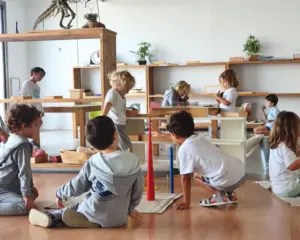
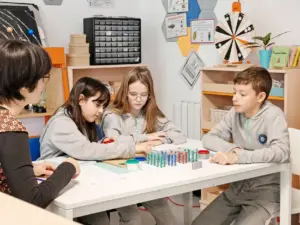
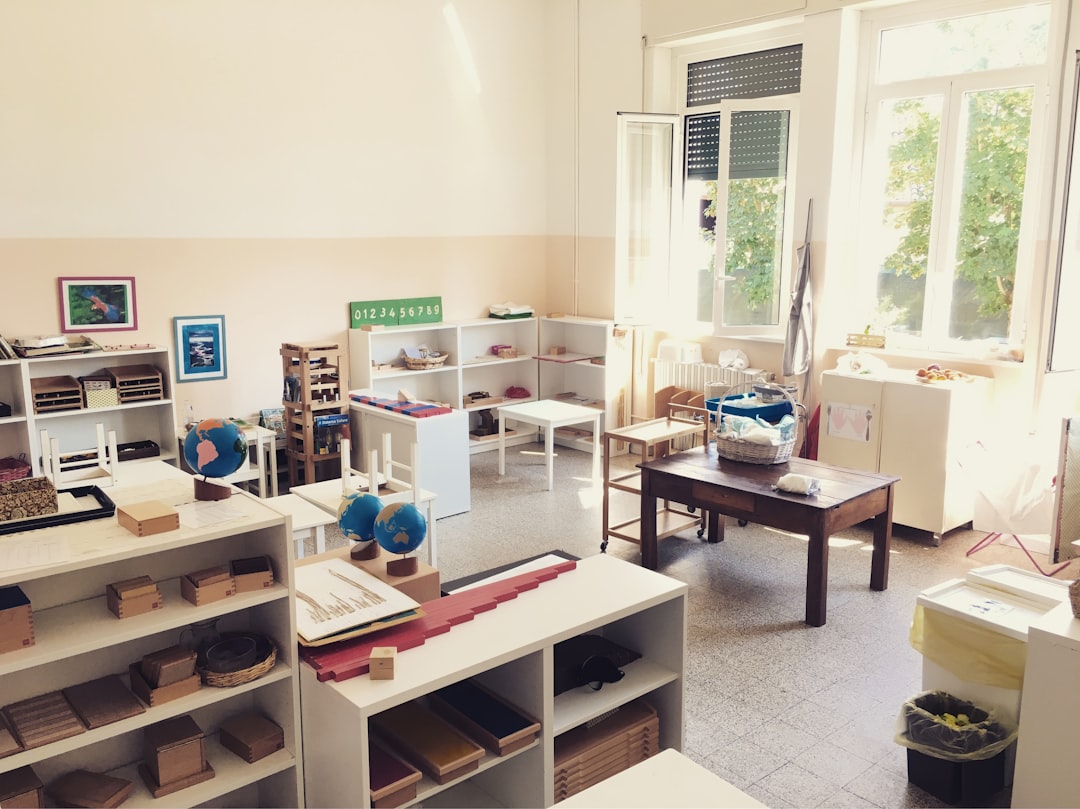
The strike denounces that high ratios and budget cuts prevent personalized attention. In a Montessori classroom, equity is not a slogan: it is a daily practice. With small groups and a prepared environment, each child receives what they need at each moment. At IMS Sotogrande, our classroom ratios are significantly lower than public ones, allowing the guide to observe and accompany individually. This, combined with our trilingual approach (Spanish, English, German), ensures that each student develops their potential without labels or exclusion.
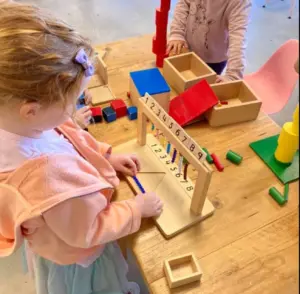
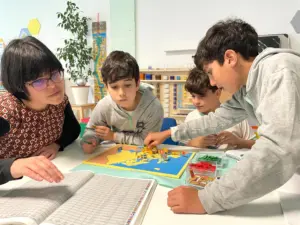
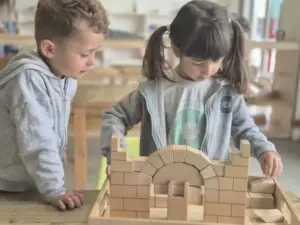
A study from the University of Virginia (2016) showed that children in classrooms with reduced ratios (1:10) achieved better results in self-regulation and social skills. The educational strike calls precisely for that: investment in staff so that each child has their place. In Montessori, equity also means materials adapted to each stage. For example, the cylinder blocks allow a 2-year-old to practice fine motor skills while their 4-year-old classmate works with the number rods. No one is left behind because there is no single rhythm.
The role of the guide in equity
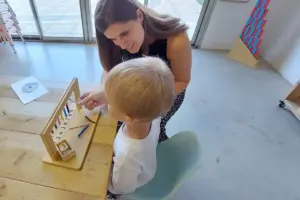
The Montessori guide is not a transmitter of information, but an observer and facilitator. During the strike, teachers have demanded pedagogical autonomy to adapt to classroom needs. At IMS Sotogrande, our AMI-certified guides record daily observations on platforms like Growappy, detecting difficulties or talents early. This personalized attention is impossible in overcrowded classrooms. The educational strike reminds us that equity begins with respecting each child’s time.

Democratic participation: the community as engine
Another pillar of the protest is family involvement in school life. Montessori has always defended collaboration between home and school. At IMS, we put this into practice with monthly Learning Walkswhere parents accompany and observe the classroom, the Accompanying Tea workshops, and the Growappy platform that maintains fluid communication. The school is not a closed building: it is an educational tribe.
The educational strike has made visible how lack of participation generates mistrust. According to a CEAPA survey, 78% of families would like greater involvement in school decisions. In Montessori, the classroom assembly is a space where children also participate, setting rules and solving conflicts. For example, in our 6-12 class, students organize a weekly meeting where they propose changes to the environment. This fosters civic responsibility from an early age.
The open school model
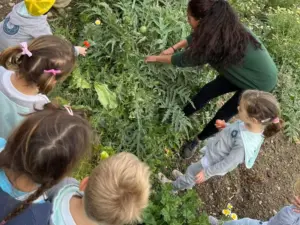
The educational strike also demands that schools open up to their surroundings. At IMS Sotogrande, we take weekly trips to the garden, beach, or local market. Children help clean the playground and care for plants. It is not just a field trip: it is real learning. The learning community extends beyond the classroom walls.
Respect for the child’s rhythm
Valencian teachers ask for pedagogical autonomy to avoid subjecting children to constant evaluative pressure. Montessori is clear: learning is not a race. Sensitive periods and developmental planes (0-3, 3-6, 6-12) mark the path. In our classrooms, the child chooses their work, repeats until mastery, and builds their knowledge without haste. This approach, backed by neuroscience, reduces anxiety and fosters deep concentration.
A study from the University of Bologna (2019) found that children in Montessori environments have lower cortisol levels (the stress hormone) compared to those in traditional schools. The educational strike points out that pressure from standardized exams is harming children’s mental health. At IMS Sotogrande, there are no homework or exams in Infant. Work is assessed through observation and portfolios. Each child progresses at their own pace.
Error as opportunity
Montessori considers error part of learning. In the classroom, materials have built-in error control, like the pink tower that only fits in one order. The child self-corrects without external judgment. The educational strike advocates for formative, non-punitive assessment. Therefore, in our classrooms, there are no grades until age 12. The process is valued, not the result.
And in Cádiz? Education as an act of trust
At IMS Sotogrande we are not on strike, but we share the same conviction: education must be an act of trust in the child’s ability. Our Semillas (0-3 years, €500/month) and Casa de Niños (3-6 years, from €650/month) programs prioritize autonomy and respect. In contrast to standardization, we offer a living curriculum, including music, yoga, and mindfulness. Because quality education should not be a privilege, but a guaranteed right.
The educational strike in Valencia has sparked a debate on education funding. At IMS, we opt for transparency: our fees include materials, insurance, and integrated extracurricular activities. Additionally, we offer partial scholarships based on socioeconomic criteria. We believe that an education based on solid pedagogical principles is possible if the community gets involved.
Frequently asked questions
What relation does the educational strike have with Montessori?
The principles the strike defends, equity, participation, respect for rhythm, are inherent to Montessori philosophy. That is why at IMS Sotogrande we have applied them since 2001, with AMI, NEASC, and Junta de Andalucía accreditations.
How can I visit the school to see these principles in action?
You can request an individual visit by calling +34 653 04 17 39 or writing to [email protected]. You can also book an appointment on our Calendly.
What are the fees for the 2026-2027 programs?
Our prices are transparent. For example, the Raíces program for Casa de Niños (9:00-14:00) costs €650/month, and the Alas program (9:00-15:00) costs €750/month. Check all programs on our website.
Does the educational strike affect private schools?
Not directly, but the strike highlights systemic problems that also concern us. At IMS, we maintain low ratios and continuous training, aspects the strike defends for public schools.
Key conclusions
The strike in Valencia reminds us that education is a political and pedagogical act. Defending reduced ratios, family participation, and child autonomy is non-negotiable. At IMS Sotogrande we do it every day, with a team of AMI-certified guides and a prepared environment that respects childhood. If you believe your child deserves such a school, we invite you to get to know us. The education you defend exists.