
Baby Massage at Home: When to Start, Which Oil to Use and a Simple Age-by-Age Routine

Baby massage is a gentle, slow, rhythmic touch technique that parents use to calm their child, strengthen the bond and create a predictable routine. You can start in the first few weeks, once your paediatrician has checked that your baby is well. Sessions of 5 to 15 minutes are enough, with a calm and alert baby, warm hands and an unscented vegetable oil. You don’t need any course to take the first step: you need to watch your child.
Baby Massage at a Glance
- Start with 5-minute sessions and extend up to 15 only if your baby enjoys it.
- Choose a calm moment, around 30-45 minutes after a feed and never when your baby is very hungry or very sleepy.
- Use unscented vegetable oil and test a drop first on the inside of the thigh.
- Ask for permission, watch his or her signals and stop if your baby turns their head, cries or tenses up.

What Baby Massage Gives Your Baby and Your Family
Its main benefit is bonding. You learn to read your child through your hands, and your child learns that touch is safe. That is why many families include it in the bedtime routine, right after the bath. Your child recognises the sequence and anticipates what comes next. By contrast, when the day has no fixed points, sleep often becomes harder.

Before You Start: Timing, Space and Oil
Preparation determines half of the result. A baby massage with a hungry or exhausted baby will end in tears, however perfect the technique.
Look for the “Calm Alert” State
The best moment comes when your baby is awake, relaxed and looking at you. Child development professionals call this state “calm alert”. It often appears after a nap or after a bath. For example, at three months many babies have a window of calm of about twenty minutes at the end of the afternoon. Make the most of it.
The space matters as much as the timing. Choose a warm room, free of draughts, with soft light. Lay a towel on the floor or on the bed, sit comfortably and have the oil within reach before you undress your baby. That way you won’t have to get up halfway through.
Which Oil to Use for Baby Massage
The simplest choice is a cold-pressed vegetable oil with no fragrance or essential oils. Many families use sunflower or sweet almond oil. However, if there is a nut allergy at home, avoid almond oil and ask your paediatrician first. Always do a patch test: one drop on the thigh and wait a day. Mineral oils and perfumed oils add nothing and may also irritate the skin.
On the other hand, there are days when it is best to skip the session:
- If your baby has a fever or is clearly unwell.
- In the 24-48 hours after a vaccination, at least over the injection site.
- If the skin has wounds, irritated eczema or an undiagnosed rash.
- If on that day your baby rejects contact, however much they loved it yesterday.
For any health concern, your paediatrician has the final word. The American Academy of Pediatrics also publishes practical information for families on sleep, development and infant care.

How to Give a Baby Massage Step by Step
A full baby massage begins with the legs, the least invasive area, and moves towards the tummy, arms, face and back. First, rub your hands with oil in front of your baby and ask: “Shall I give you a massage?”. Even if they can’t speak yet, that gesture tells them what is coming. Over time they will answer with their whole body.
- Legs and feet: slide your hands from thigh to ankle with gentle pressure, then stroke the sole of the foot with your thumbs.
- Tummy: draw circles in a clockwise direction, which follows the path of the intestine.
- Chest: open your hands from the centre towards the shoulders, as if smoothing the pages of a book.
- Arms and hands: repeat the leg movements and open each little finger one at a time.
- Face: with your thumbs, draw a smile along the lip and smooth the eyebrows outwards.
- Back: with your baby lying face down across your legs, slide your palm from the neck to the bottom.
A common scene: Lucy is three months old and cries every evening at seven. Her mother tries five minutes of legs and feet after the bath, without moving on to the rest. In the first week, Lucy only tolerates her feet. By the third week, she stretches her legs when she sees the oil bottle. The full sequence comes after a month, not on the first day.
The Most Common Mistake (and How to Avoid It)
The typical mistake is finishing the whole sequence even when the baby protests. Many parents carry on because “only the back is left”. However, if your child turns their head, arches their body or cries, they are telling you that is enough. The solution is simple: stop, pick your baby up and try again another day with just one area. Two minutes they accept are worth more than fifteen they endure.
Massage for Children Aged 1 to 12: Change the Form, Not the Purpose
Baby massage doesn’t end after the first year. Massage for older children, however, needs to adapt to their need to move and to make choices. An 18-month-old won’t lie still for ten minutes. But they will accept a foot massage while you tell them a story.
Ages 1 to 3: Short and With a Song
At this stage, accompany the touch with a short song that is always the same. For example, three minutes on the back before bed, with the lights already dimmed. Repetition gives them security and helps them move from play to rest.
Ages 3 to 6: Massage Becomes a Game
From the age of three, your child wants to take part. You can play “making a pizza” on their back: roll out the dough, spread the tomato, sprinkle the cheese. At this age they also learn to ask for and give a massage, always asking first. That “Can I?” is their first lesson in consent.
Picture a family who has just moved from London to Sotogrande, with a four-year-old who every night gets out of bed and wanders into the living room. A move, a new school, another language: too many changes at once. The parents swap the after-dinner tablet for five minutes of “pizza” on the back. After two weeks, going to bed stops being a negotiation. The bad days don’t disappear, but now the child has a ritual that anchors them.
Ages 6 to 12: Hands, Back and Independence
Between 6 and 12, children can learn to massage their own hands and feet, or offer a massage to a sibling. It works very well after a day of sport or before an exam. For example, one minute of pressure on the palm while breathing slowly. Keep in mind that massage for children this age should respect their privacy: at nine, many prefer hands or head rather than a bare back.
What the Montessori Approach Brings to Touch
From a Montessori perspective, massage fits well when it respects the child as a person: you ask permission, you observe and you let them take part. Maria Montessori insisted on following the child, and touch is no exception. The Association Montessori Internationale, which she founded herself in 1929, maintains that respect for development from birth. Likewise, UNESCO regards early childhood as a decisive stage for later well-being.
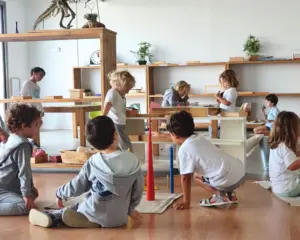
Massage also fits with order and independence. The oil bottle always in the same place, the same towel, the same song. That is why a child in a Children’s House can prepare their own calm corner before bed. For many expat families on the Costa del Sol and in the Campo de Gibraltar, this fixed ritual helps a great deal in the first months after moving.
At IMS we do not run baby massage courses. However, yoga and mindfulness are part of all our programmes, and the Acompañando-té and La familia en tribu workshops are our meeting spaces for mothers and fathers.
Frequently Asked Questions
From what age can you give a baby massage?
You can start with a gentle massage from the first few weeks of life, once the umbilical cord stump has healed and your paediatrician has no objection. Begin with legs and feet for a few minutes and watch their signals. There is no upper age limit: primary school children enjoy it too, only the format and duration change.
What oil is best for massaging a baby?
The most recommended choice is a cold-pressed vegetable oil with no fragrance or essential oils, such as sunflower oil. Before using it, apply a drop to the thigh and wait 24 hours to rule out redness. Avoid mineral and perfumed oils. If there are allergies in the family, check with your paediatrician first to choose the safest option.
How long should a baby massage last?
Between 5 and 15 minutes, although at first two or three minutes on a single area is enough. Your baby sets the real length: if they stretch their legs, look at you and relax, you can continue; if they turn their head, cry or tense up, stop and cuddle them. If they fall asleep, that’s perfect: finish gently and let them rest.
Can massage help with baby wind?
It can help. Gentle circles on the tummy, clockwise, together with bringing the knees up towards the belly, can help many babies pass wind and relax. It does not replace your paediatrician’s assessment: if the crying is intense or persistent, or if there is fever or vomiting, see your doctor as soon as possible.