
Is Your Child Bored? Why It’s Good & Montessori Tips for Parents | IMS Sotogrande

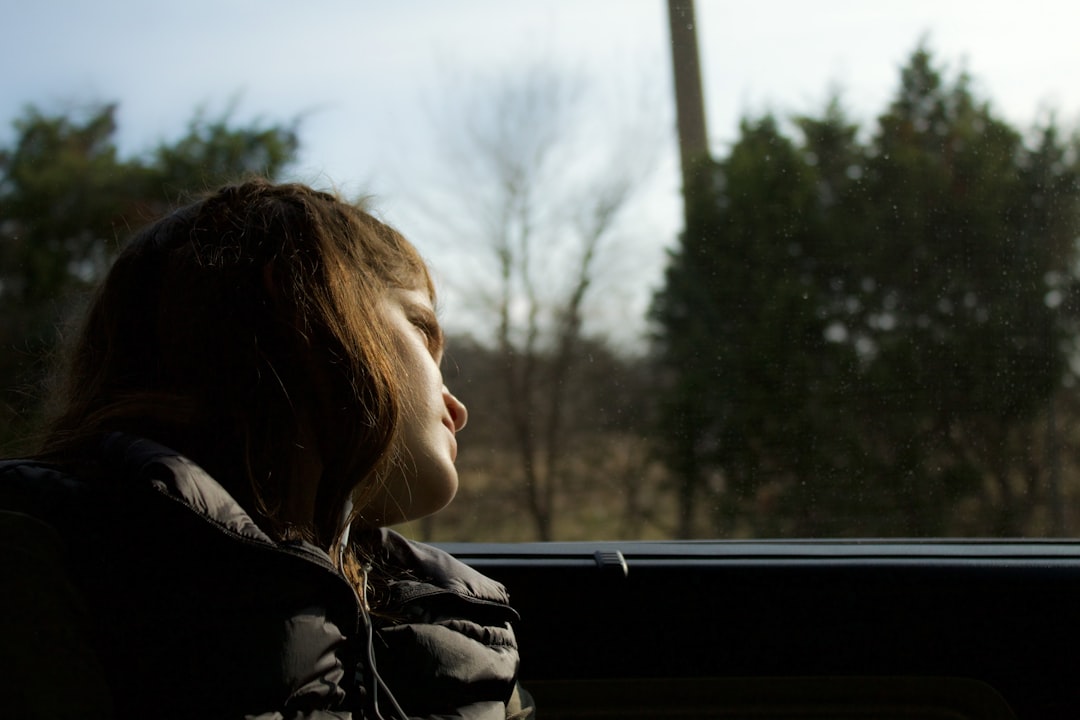
Your child comes home, flops on the sofa, and says the phrase that exhausts every parent: “I’m bored.” The immediate temptation is to pull out a new toy, turn on a screen, or suggest an activity. But a child’s boredom is not an emergency . It is, in fact, one of the best learning opportunities a child can have. In this article we explore child boredom benefits in depth with practical examples.
Key Takeaways
- Boredom activates creativity and problem-solving when the child has the space to manage it.
- Intervening too quickly prevents a child from developing autonomy and frustration tolerance.
- In Montessori pedagogy, periods without external stimulation are essential for deep concentration.
- You don’t need an activity plan every time your child says “I’m bored.” Sometimes, the best thing is to do nothing.

Why Isn’t Boredom the Enemy?
Neuroscience confirms it: when the brain doesn’t receive constant external stimuli, it activates the default mode network . This network is responsible for imagination, planning, and internal reflection. In other words, when a child is bored, their brain is working in the background. When it comes to child boredom benefits, it pays to listen to what families and lead guides actually report.
A study published by the American Academy of Pediatrics indicates that unstructured time is fundamental for cognitive and social development in early childhood. Children who have space to be bored develop a better ability to invent games, create stories, and self-manage. Daily practice with child boredom benefits reveals nuances no handbook fully captures.
The problem isn’t boredom itself. It’s the adult belief that a child always has to be doing something productive. In Montessori, we call this “the interfering adult.” When we fill every minute, we steal the child’s opportunity to discover what they want to do for themselves. Understanding child boredom benefits from inside the classroom reshapes everyday decisions.

How a Montessori Child Responds to Boredom
In a Montessori environment, children work with long cycles of free work. There are no recesses every 45 minutes or constant task changes. There is a three-hour work period in which each child chooses what to do, for how long, and with whom. Concrete data on child boredom benefits is worth reviewing before acting on assumptions.
At first, some children wander. They don’t know what to do. They seem bored. But the Montessori guide doesn’t intervene with a suggestion. They observe. Because that moment of “not knowing what to do” is exactly the starting point of authentic concentration.
Something similar happens at home when your child has a prepared space: a shelf with accessible materials, a reading nook, paper and colors within reach. If the environment invites, the child finds. If the environment is saturated with electronic toys and screens, boredom becomes dependency.
Book a personalized school visit to see how our prepared environments work in Nido, Children’s House, and Workshop.
The Work Cycle in Children’s House (Ages 3-6)
At three or four years old, many children arrive at school not knowing how to choose. They sit, look at the guide, and wait for instructions. The guide offers them an individual presentation, but doesn’t tell them what to do next. That empty space is boredom in its purest form. And it is there where initiative is born.
Within a few days, the child starts choosing for themselves. They repeat the activity that interests them. They perfect it. Then they move on to another. The initial boredom transforms into a cycle of concentration that Maria Montessori called “normalization.” It’s not a pretty term, but it describes something powerful: a child who feels at peace with themselves and chooses their own path of learning.

What NOT to Do When Your Child Says “I’m Bored”
The most common reaction is to offer an immediate solution. However, there are three interventions that usually make things worse:
- Turning on a screen. Digital overstimulation doesn’t solve boredom, it masks it. The child doesn’t learn to manage emptiness. They only learn that emptiness is filled with blue light.
- Suggesting an activity every time. If you are always the one who suggests what to do, the child never develops their own capacity for initiative. They become passive and dependent on external proposals.
- Feeling guilty. Your child isn’t bored because you’re doing something wrong. They’re bored because they’re human and their brain needs that space to create. It’s not a parental failure.
Instead, validate their emotion: “I understand you feel that way. What comes to mind?” And then, wait. Give them time. If they don’t know what to do, say: “You can stay here for a bit while you think.” That “bit” might be the beginning of something you wouldn’t have imagined.
Preparing the Home Environment for Fertile Boredom
You don’t need to buy expensive Montessori materials. What you do need is an accessible, organized space with real choices. Here’s what works:
- A low shelf with 6-8 varied activities: puzzles, books, art materials, simple constructions.
- A reading nook with cushions and natural light. No screens.
- Real-life materials: a small pitcher for pouring water, a cloth for wiping, a laundry basket for folding. Children aged 2 to 6 love to imitate what they see at home.
- Time without extracurriculars every day. If your child has activities every day of the week, they have no space to be bored or discover what they like for themselves.
The key is to offer without imposing. The child chooses. You observe. If for a month they always repeat the same thing, perfect. Repetition is the natural form of learning in childhood.
For Families in La Línea, Algeciras, and the Campo de Gibraltar
In our area, many families live in urbanizations with gardens and pools. That’s great, but it doesn’t replace a prepared interior. Children need indoor spaces where they can manipulate, create, and concentrate without distractions. A garden invites movement; a well-organized interior invites sustained attention.
If you come from La Línea de la Concepción or Algeciras, the journey to IMS in Sotogrande takes between 15 and 25 minutes via the A-7. Many families from the area choose us precisely because they value an authentic Montessori environment, accredited by AMI and NEASC, where the child’s rhythm is truly respected.
Boredom as a Gateway to Creativity in Adolescence
This isn’t just a topic for young children. Adolescents in the Workshop (ages 6-12 in Montessori, but the principle extends) experience boredom differently: with irritation, with the need for an immediate external response. Social pressure and networks amplify that feeling.
However, adolescents who have grown up with space to be bored have more internal tools. They know how to be alone. They know how to start a project without anyone asking them to. They better tolerate uncertainty. These are skills not taught in a subject, but cultivated from the earliest years.
If your child is between 6 and 12 years old and is in a traditional school, boredom will likely arrive at home. Don’t see it as a failure. It’s an opportunity to open a real space for creation for them.
Frequently Asked Questions
Is it bad for my child to be bored?
No. Boredom is a natural and necessary emotion. When a child experiences boredom without an adult intervening immediately, their brain develops the capacity for self-management, creativity, and solving problems on their own. It’s not something to avoid, but something to accompany with presence and without quick fixes.
How long should I let a child be bored?
There’s no exact time. It depends on the child’s age and temperament. A three-year-old might need 10-15 minutes to find something to do. An eight-year-old might manage half an hour without issue. The important thing is that you are available but not directing. If the child gets very frustrated, validate their emotion and offer them a concrete space: “You can go to the art corner.”
What’s the difference between boredom and lack of stimulation?
Boredom is internal: the child feels that nothing interests them at that moment. Lack of stimulation is external: the environment doesn’t offer anything suitable. In a Montessori environment, stimulation is always available. What varies is the child’s internal motivation. That’s why it’s so important that the environment is rich but not saturated, and that the child has real freedom to choose.
My child asks for screens every time they’re bored. What do I do?
Establish a clear screen schedule and stick to it without exceptions. When your child asks for a screen outside that schedule, acknowledge their desire: “I know you want to watch something, but it’s not screen time right now.” Then, point out real choices. At first, there will be resistance. It’s normal. In one or two weeks, the child starts to look for alternatives on their own. Consistency is key.
Key Conclusions
A child’s boredom isn’t a problem to solve, but an opportunity to seize. When a child has space to feel bored and an environment to create, they develop autonomy, concentration, and an imagination that no screen can replace. Montessori pedagogy has been proving this for over a century.
Your role as a parent isn’t to eliminate boredom, but to trust that your child can manage it. Prepare the environment, offer presence without directing, and observe what happens. If you’d like to see how this works in a real Montessori environment, book a visit to IMS Sotogrande. We’ll be delighted to show you how we cultivate childhood, one child at a time.









