
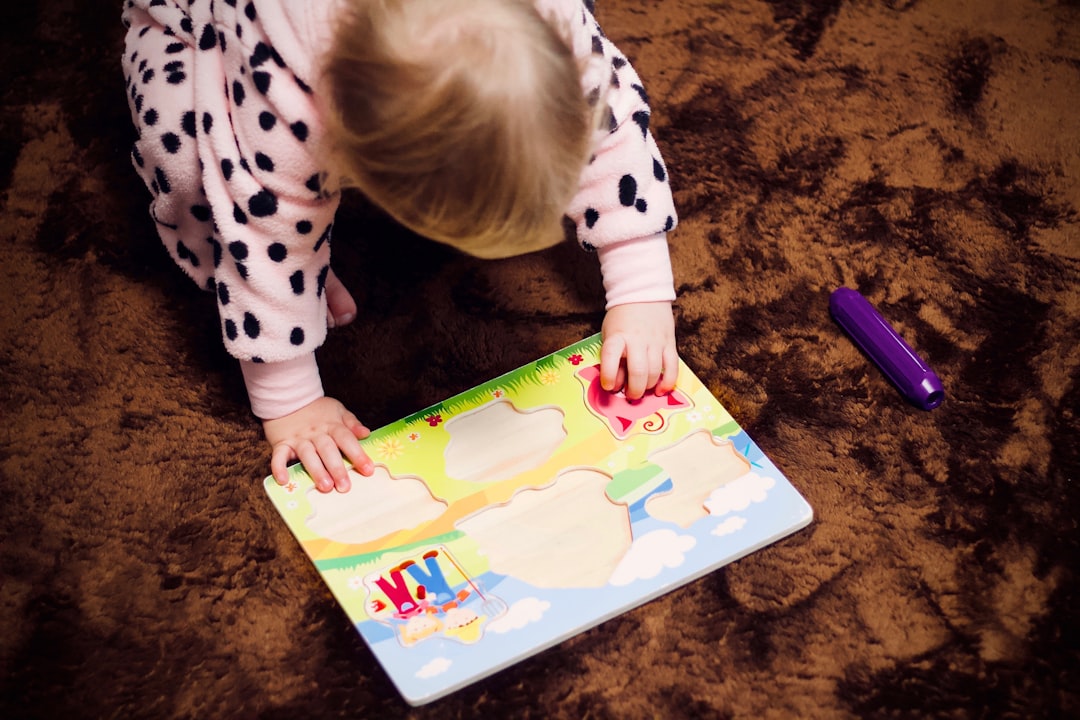
Sensory Board for Kids: Montessori Ideas for Home & Classroom in Sotogrande

A sensory board is a board with different textures, shapes, colors, or mechanisms that invites a child to explore with their hands, sight, and hearing. At IMS Sotogrande, we use it daily in our Nido (0-3 years) and Casa de Niños (3-6 years) environments because each touch opens a new door in a young child’s brain. If your child is between 0 and 6 years old, this resource can make a real difference in their coordination, concentration, and language skills. In this article we explore sensory board Montessori in depth with practical examples.
- Develops fine motor skills by manipulating hinges, locks, and textures.
- Promotes concentration and independence: the child works at their own pace.
- Integrates sensory and cognitive learning without screens or battery-operated toys.
- Adapts to each developmental stage: from crawling babies to 6-year-old children.
- What is a sensory board and why does it work?
- The sensory board in a Montessori classroom: How we use it at IMS
- How to create a sensory board at home step by step
- 5 sensory board ideas you can build today
- Common mistakes when using a sensory board
- Benefits of the sensory board according to child development
- Frequently Asked Questions
- Key Takeaways
What is a sensory board and why does it work?
A sensory board is, in essence, a vertical or horizontal board where elements of different natures are attached: sandpaper, fabric, wood, metal, mirrors, hinges, locks, bells. The child touches, turns, pushes, and listens. Each action generates a distinct sensory response that their brain registers, compares, and classifies. When it comes to sensory board Montessori, it pays to listen to what families and lead guides actually report.
The magic is that it requires no instructions. The child approaches out of curiosity, explores for pleasure, and repeats because they want to. This cycle of initiative-purpose-repetition is exactly what Maria Montessori described as the engine of learning in the early years. Daily practice with sensory board Montessori reveals nuances no handbook fully captures.
According to the Association Montessori Internationale (AMI), sensory materials are one of the pillars of the prepared environment for 0-6 years because they connect the hand with the mind. A study published by the American Academy of Pediatrics (AAP) in 2024 also confirms that free tactile play reduces stress and improves self-regulation in early childhood. Understanding sensory board Montessori from inside the classroom reshapes everyday decisions.

The sensory board in a Montessori classroom: How we use it at IMS
In our Montessori Nido (0-3 years), each board is at the height of a baby who is starting to pull to stand. We place soft textures (cotton, felt, sponge) next to smooth and rough surfaces. The baby passes their hand, discovers the difference, and, little by little, begins to name with gestures what they feel. Concrete data on sensory board Montessori is worth reviewing before acting on assumptions.
In Casa de Niños (3-6 years), the sensory board includes more complex elements: key locks, bolts, chains, gears, large buttons, Velcro, magnets, and small bells. The goal changes: now the child coordinates their fingers to open and close, follows a logical sequence, and develops the sustained concentration they will later apply to reading and mathematics.
Our guides, such as Sara Martín and Vanessa Coso in Casa de Niños, observe how each child interacts with the board. If a child repeats the same hinge action twenty times, they are consolidating a motor skill. If they move from one texture to another without stopping, they are comparing sensations. There is no correct way to use it: there is an internal process that we respect.
Book a personalized school visit and see our sensory boards in action.

How to create a sensory board at home step by step
You don’t need to buy an expensive board. With a 40×60 cm wooden plank, strong glue, and small screws, you can assemble a homemade board in an afternoon. Choose the elements according to your child’s age.
Simple materials for babies 0 to 18 months
For the youngest ones, glue pieces of fabric with different textures: velvet, plush, linen, terry cloth. Add a silicone teether, a safety mirror, and a fabric ball tied with ribbon. Everything should be soft, washable, and without parts that can come loose.
Elements for children 18 months to 3 years
From 18 months, children want to manipulate mechanisms. Incorporate a small hinge, a doorknob that goes up and down, a bicycle bell, a piece of sandpaper next to a sponge. The texture differences and cause-effect (pressing, ringing) keep attention focused for long minutes.
Advanced options for children 3 to 6 years
At this stage, the child enjoys challenges: a key lock, a number combination lock, plastic gears that turn, a wire bead maze, a large button for fastening. Add labels with the name of each element in Spanish and English to reinforce bilingualism, something we practice from the early years at IMS with our dual immersion program.

5 sensory board ideas you can build today
- Kitchen board: colander, ladle, slotted spoon, screw-top jar lid, and fridge magnet. The child fits, turns, and discovers sizes.
- Natural textures board: pinecone, tree bark, cork, polished stone, and cotton. Ideal for the garden or terrace.
- Sounds board: jingle bell, doorbell, wooden rattle, tube with rice, and tube with chickpeas. Shake and compare.
- Fasteners board: zipper, Velcro, snap button, belt buckle, and ribbon tie. Works fine motor skills to the full.
- Visual board: mirror, colored cardstock, aluminum foil, kitchen mesh, and bag with glitter. A feast of contrast for the eyes.
Common mistakes when using a sensory board
The first mistake is overloading the board. If you glue twenty elements together, the child becomes overwhelmed and doesn’t choose. Less is more: between five and eight well-spaced pieces are sufficient.
The second mistake is directing the activity. Don’t say “touch here” or “look at this.” Let them explore freely. In Montessori, the adult observes and only intervenes if the child asks for help or if there is a safety risk.
The third is forgetting the presentation. Before making the board available, show it to them once with slow movements: run your hand over a texture, open a hinge, press a bell. Then step back. That brief presentation gives the child a mental map of the material without imposing a script.
Benefits of the sensory board according to child development
Between 0 and 3 years, the sensory board stimulates neurological development. Each new surface the baby touches sends signals to the brain that strengthen synaptic connections. This is what neuroscientists call “windows of opportunity”: the richer the sensory environment, the more robust the brain architecture.
Between 3 and 6 years, the board shifts from being an exploratory resource to a concentration tool. The child who repeats a sequence of fasteners for ten minutes is training sustained attention, the same they will later use to read an entire story or solve a math problem. Montessori pedagogy calls this the “period of concentration” and considers it the foundation of all subsequent learning.
If your family lives in the Campo de Gibraltar or the Costa del Sol and you are looking for a school that applies these principles every day, at IMS Sotogrande we accompany each child with a prepared environment and guides certified by the Association Montessori Internationale.
Frequently Asked Questions
At what age can I introduce a sensory board to my child?
You can start from 4-6 months, when the baby can sit with support and shows interest in touching surfaces. At that age, two or three soft textures fixed to a low board are enough. As they grow, you add more complex mechanisms like hinges, locks, and bells that require fine coordination.
Do I need to buy special materials for a sensory board?
No. Most of the elements you have at home: jar lids, pieces of fabric, ladles, colanders, Velcro, magnets, and safety mirrors. The important thing is that each piece is securely attached, has no sharp edges, and offers a clearly distinct sensory experience from the previous one.
Does a sensory board replace other toys?
It doesn’t replace, it complements. A sensory board takes up little space and offers a concentrated, autonomous play experience. But the child also needs to move freely, play outdoors, and manipulate everyday objects like spoons, boxes, and fabrics. The combination of all these resources is what generates complete sensory development.
How do I clean and maintain a homemade sensory board?
Wipe with a damp cloth and neutral soap once a week and check that all pieces remain firm. Fabric elements can be detached and machine washed. It’s good to dry metal mechanisms well to prevent rust. If any element comes loose, remove it immediately until it can be repaired.
Key Takeaways
A sensory board is one of the simplest and most powerful tools to support your child’s development between 0 and 6 years. It combines free exploration, fine motor skills, and concentration without the need for screens or battery-operated toys.
Start today: choose a board, gather five materials from home, and dedicate ten minutes to presenting the board to your child calmly. If you want to see how we integrate it into the Montessori environment at IMS Sotogrande, book your personalized visit and discover a space designed for each child to grow at their own pace.









