

Montessori Activities for 5-Year-Olds: Practical Guide for Expat Families in Sotogrande & Costa del Sol
In short
Finding Montessori activities for 5-year-olds that truly connect with their curiosity and desire to do everything themselves isn't always easy. At this age, children experience one of the most intense periods of cognitive, social, and motor development. And the Montessori method offers a clear roadmap to support them.
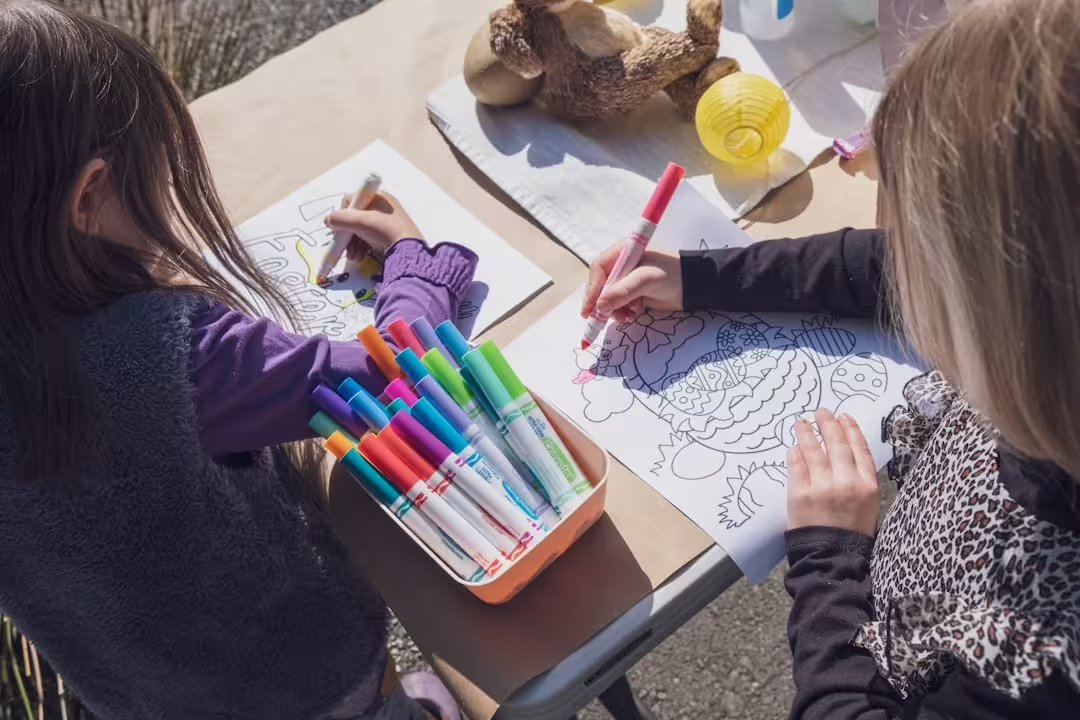
Finding Montessori activities for 5-year-olds that truly connect with their curiosity and desire to do everything themselves isn’t always easy. At this age, children experience one of the most intense periods of cognitive, social, and motor development. And the Montessori method offers a clear roadmap to support them.
In this guide, we’ll explore what kinds of Montessori activities for 5-year-olds make the most sense within the method, why they work, and how to set them up at home without overwhelm. You’ll also see how we apply them daily at IMS Sotogrande with our Children’s House (3-6 years) students.
- Why Montessori Activities for 5-Year-Olds Are Important
- Montessori Activities for 5-Year-Olds That Boost Development
- Practical Life: The Heart of Montessori Activities for 5-Year-Olds
- Sensory and Language Activities: How to Leverage the 5-Year-Old Sensitive Period
- Movement and Free Play: Also Montessori Activities for 5-Year-Olds
- How to Choose Montessori Activities for 5-Year-Olds Without Overstimulation
- Frequently Asked Questions
- Key Takeaways
Why Montessori Activities for 5-Year-Olds Are Important
Age 5 marks the transition between the absorbent mind (0-6) and the beginning of the reasoning mind. According to Maria Montessori, children in this stage passionately explore language, numbers, logic, and social relationships. That’s why the activities you offer can make a huge difference in their confidence.
I’m not talking about worksheet packets or repetitive drills. I’m talking about purposeful tasks that allow them to handle real objects, solve problems, and make decisions. For example, peeling a carrot, sorting books by size, or making up a story out loud. These are Montessori activities for 5-year-olds that strengthen sustained attention and hand-eye coordination, skills that later support reading, writing, and math.
Additionally, at this age many children seek “being with others.” Socialization becomes more reciprocal, and group activities, like cooking together or tending a garden, teach them to negotiate, wait, and collaborate.
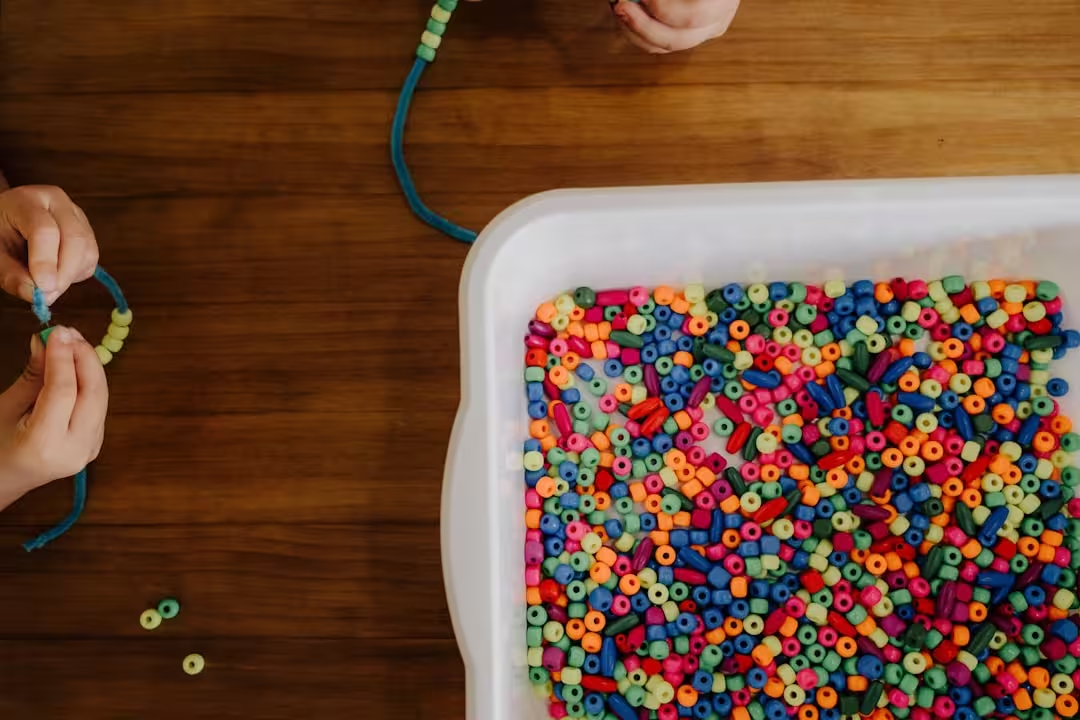
Montessori Activities for 5-Year-Olds That Boost Development
The Montessori classroom for ages 3 to 6 (which we call Children’s House) is organized into four areas: practical life, sensory, language, and math. At home, you can replicate this structure with simple materials.
Here are some ideas that typically fascinate 5-year-olds:
- Practical life: Preparing their own breakfast (with supervision), sewing a button, sorting and organizing tools, sweeping, or cleaning a mirror.
- Sensory: Mixing colors with watercolors, sorting objects by temperature (warm-cold), identifying spice odors with eyes closed.
- Language: Writing letters to a family member, creating a personal journal with drawings and sentences, playing rhyming games and tongue twisters.
- Math: Measuring ingredients in the kitchen, dividing objects among siblings (“one for you, one for me”), sorting coins by value.
The important thing is that the child can manipulate real objects and repeat the activity as many times as they want. Repetition isn’t boredom. It’s building brain connections. And when they correct their own mistakes without an adult pointing out “that’s wrong,” they build rock-solid self-esteem.

Practical Life: The Heart of Montessori Activities for 5-Year-Olds
Montessori called “practical life” all those everyday tasks that adults sometimes rush through, but that give children concentration and a sense of belonging. At age 5, a child can take on full responsibilities: setting the entire table, caring for a plant for weeks, or packing their school bag.
At IMS Sotogrande, Children’s House children take turns watering classroom plants, serving breakfast to classmates, or preparing materials before starting. These aren’t decorative “helping tasks”. They take real turns and understand that their contribution is needed for the community. These types of Montessori activities for 5-year-olds later translate into real independence outside school.
Want to try at home? The trick is to prepare the environment: trays with just the right materials, child-sized utensils, and a clear sequence. For example, for breakfast, leave a small plate, a cup, and a bowl of cereal in an accessible spot. Initially, they’ll need reminders, but in a few weeks, they’ll do it alone.
If you’d like to see how our prepared environment works in Children’s House, book a personalized school visit. Our AMI-trained guides will explain how each work area translates into the children’s daily life.
Sensory and Language Activities: How to Leverage the 5-Year-Old Sensitive Period
Between ages 3 and 6, two key sensitive periods open: sensory refinement and language. At 5, children sharpen their discrimination of sounds, shapes, and textures, and their vocabulary explodes. That’s why Montessori activities for 5-year-olds must feed both channels.
Foolproof sensory ideas:
- Mystery bag: Put everyday objects (key, spoon, pinecone) in a cloth bag and ask them to recognize them by touch alone.
- Sandpaper boards: Gently sand a wooden surface while describing the texture (rough, smooth, bumpy).
- Nature sounds: Go to the garden or park and record different sounds (birds, wind, water) with a phone. Then play a game to identify them.
In language, many 5-year-olds are in full swing with reading and writing. In Montessori, we don’t force early reading, but we offer rich opportunities: sandpaper letters, movable alphabet, nomenclature cards, spontaneous writing of lists and notes, and stories they create themselves.
One exciting resource is “silent dictation”: the child writes words you whisper in their ear using the movable alphabet letters. No pressure, no comparisons, just the joy of building words. In our bilingual classroom at IMS, this work is done in both English and Spanish, respecting each child’s pace.
According to the Association Montessori Internationale (AMI), language is acquired naturally when adults provide an environment rich in vocabulary, authentic conversations, and multilingual materials. That’s why at IMS Sotogrande we live bilingualism through immersion, not as a separate subject.
Movement and Free Play: Also Montessori Activities for 5-Year-Olds
Montessori spoke of the “embodied absorbent mind”: children learn with their whole bodies. At 5, they need large doses of free movement, outdoors whenever possible. Climbing, running, jumping, carrying heavy objects (logs, stones) under supervision, hanging from a branch, all of this builds gross motor skills and confidence in their own strength.
At IMS Sotogrande, we protect generous outdoor time every day, rain or shine. Children have access to outdoor materials: wooden crates, fabrics, ropes, sand. Sometimes they build circuits. Other times they just lie down and watch clouds. Both activities are equally valuable.
A tip for home: Instead of padded playgrounds, look for natural spaces with slopes, rocks, and logs. A 5-year-old needs real physical challenges to calibrate risk and feel competent. Accompanying without constantly intervening is one of the greatest gifts you can give. And if you see them climb a tree that seems tall, trust them: they’re calculating every step more precisely than you imagine.
How to Choose Montessori Activities for 5-Year-Olds Without Overstimulation
We live in a society that pushes children toward screens, endless extracurriculars, and a myriad of noisy toys. A 5-year-old’s childhood doesn’t need more stimulation. It needs less, but deeper. Montessori called this “polarization of attention”: when a child chooses an activity that challenges them just enough, their attention focuses like a laser and learning becomes unforgettable.
So when choosing Montessori activities for 5-year-olds, ask yourself:
- Does it involve intentional movement or fine motor control?
- Does it allow repetition and self-correction?
- Does it connect with their daily life and real interests?
If the answer is yes, you’re on the right track. If the activity requires an adult to explain it for ten minutes and the child just copies, it might not be the best fit right now.
It’s also important to respect moments of “doing nothing.” Boredom is the fertile soil of creativity. Sometimes the best activity for a 5-year-old is lying on the sofa, staring at the ceiling, and daydreaming.
Frequently Asked Questions
How long should a Montessori activity for a 5-year-old last?
There’s no fixed rule. Some practical life activities (like peeling a vegetable) can last a focused 15 minutes. Others, like building towers with sensory materials, can be repeated for 30-45 minutes if the child is concentrated. The key is not to interrupt when you see them absorbed.
Do I need expensive Montessori materials?
Not at all. In fact, Montessori started with handmade materials. At home, you can use real kitchen utensils (wooden hammer, mortar, blunt knives), natural objects, and lots of imagination. The essential is the prepared environment, not the price of the material.
Should Montessori activities for 5-year-olds always be done alone?
Not necessarily. At 5, they start to really enjoy small group work. In the Montessori classroom, it’s common for two or three children to organize an activity together, like setting the table or creating a mural.
Key Takeaways
Montessori activities for 5-year-olds aren’t just time-filling entertainment. They’re the door to real independence. When you choose purposeful tasks, adapted to their size and interests, you’re telling your child, “I trust you.” And that trust becomes the engine of all their future learning.
If you want to see how we apply this philosophy at an AMI- and NEASC-accredited Montessori school, I invite you to visit IMS Sotogrande. In our Children’s House (3-6 years), every corner is designed so your child can find their own Montessori activities for 5-year-olds in a bilingual, nature-rich environment. Book an appointment at admissions or call +34 653 04 17 39. We look forward to welcoming you with open classrooms.









