
Montessori Sensitive Periods: Keys to Child Development

What Are Montessori Sensitive Periods?
Montessori sensitive periods are phases of special receptivity during which the child easily absorbs specific skills. Maria Montessori described them as ‘windows of opportunity’ that appear and disappear naturally. Identifying them allows the adult to prepare an environment that responds to those needs without pressure.
A child in the midst of the sensitive period for order, for example, will show distress if objects are not in their place. On the other hand, if that sensitivity is respected, they develop an organized mind. This is not a whim: it is biology. The brain is programmed to optimize certain learning at specific times.
Current neuroscience confirms what Montessori observed a century ago: during these periods, neural connections form at an extraordinary speed. For example, during the sensitive period for language, the baby’s brain can discriminate all phonemes of all languages up to 6 months, then specializes in those heard daily. That is why it is so important to offer a rich and varied environment from the beginning.

The Main Montessori Sensitive Periods
Montessori identified several Montessori sensitive periods that occur from birth to six years, although some extend beyond. The best known is language (0-6 years), where the child absorbs any language effortlessly. Also movement (0-4), order (1-4), sensory refinement (2-5), and social aspects (2.5-6). Each has a peak and a natural decline.
The Montessori Sensitive Period for Language
From the womb, the fetus recognizes the mother’s voice. At birth, it discriminates phonemes of any language. By 12 months it starts babbling and at 3 years it speaks fluently. This Montessori sensitive period explains why early immersion is so effective. At IMS Sotogrande we take advantage of this window with a trilingual program: Spanish, English, and German from the early years. Our guides always speak in their mother tongue, offering a rich and constant model.
The Montessori Sensitive Period for Movement
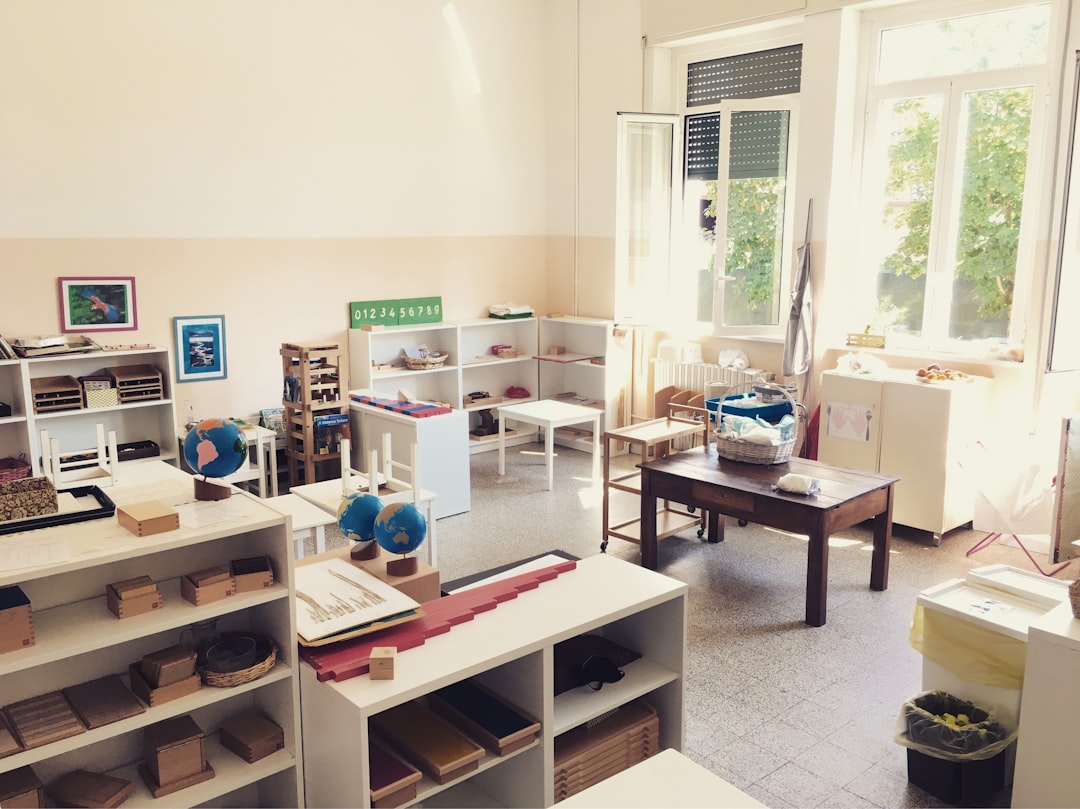
Between 0 and 4 years, the child develops muscle control and coordination. First head control, then turning, sitting, crawling, walking, and running. Each motor achievement responds to an internal need. That is why in the Montessori classroom we do not force sitting or walking; we offer free and safe spaces for the child to move according to their impulse. Furniture at their height, bars to hold onto, and objects that invite manipulation are key.
The Montessori Sensitive Period for Order
From 1 to 4 years, the child seeks an external order that later becomes internalized as mental order. They become distressed if things change place. At home, establishing routines and a fixed place for each object helps them develop security and autonomy. In the classroom, materials are always presented in the same place, clean and complete. Order is not rigidity: it is a scaffolding for the mind.
The Montessori Sensitive Period for Sensory Refinement
From 2 to 5 years, the senses are especially sharp. The child classifies sizes, colors, sounds, smells, and textures. Montessori sensory materials (pink tower, knobbed cylinders, bells, etc.) are designed to channel this sensitivity and build a foundation for mathematics, music, and language. When a child matches sounds with bells, they are not only training their ear: they develop the discrimination ability that they will later apply to language sounds.
The Montessori Sensitive Period for Social Aspects
Around 2.5 years, the child begins to take an interest in others. They want to imitate, share, follow social norms. It is the time to offer an environment where they can interact with children of different ages, as in the 3-6 Montessori classroom. Here they learn to ask for help, respect others’ work, resolve conflicts peacefully. The guide’s role is key in modeling social behavior.

How to Accompany Montessori Sensitive Periods at Home and in the Classroom
The first step is observation. Without observation we cannot detect which Montessori sensitive period is active. Then, prepare the environment: offer concrete, orderly, and accessible materials. If the child is in the order period, establish routines and a fixed place for each object. If in the movement period, allow them to crawl, walk, climb without unnecessary restrictions.
In the Montessori classroom, sensory materials like the pink tower or knobbed cylinders are designed to channel these sensitivities. A child classifying by size is not only learning math: they are satisfying their internal need for order and sensory refinement.
At home, we can offer practical life activities: washing dishes, folding napkins, watering plants. These tasks take advantage of the movement and order periods, and also develop concentration and hand-eye coordination. The key is to follow the child: if they show interest in an activity, repeat it as many times as needed; if they lose interest, offer a new one. At IMS Sotogrande, guides record each child’s daily choices to adjust the environment to their sensitivities.
Signs That a Montessori Sensitive Period Is Active
- Intense and repetitive concentration on an activity. The child may spend half an hour aligning stones or washing the same leaf.
- Absorbing interest that does not seem to tire the child. They are not distracted, they show joy in doing it.
- Frustration when something interrupts the activity. If forced to stop, they may cry or get angry.
- Rapid and seemingly spontaneous progress. Suddenly, a child who barely crawled stands up and walks.
If you see these signs, do not interrupt. That child is building their intelligence. At IMS Sotogrande we train our guides to recognize these moments and protect them from external noise. For example, a guide observed that a 2-year-old repeated the same knobbed cylinder exercise twenty times. Instead of offering another material, they allowed him to continue; on the fifth day, the child moved on to a more complex activity with complete naturalness.
The Importance of Respecting Individual Rhythm
Each child has their own timetable. Montessori sensitive periods are not activated by exact age but by neurological maturation. Forcing learning outside its window is counterproductive. That is why in Montessori there are no rigid programs or uniform demands. The guide offers individual lessons when they observe the child is ready.
At IMS Sotogrande we work with small ratios and personalized follow-up. Each child has a development plan based on daily observation. This is possible thanks to a team of AMI-certified guides who understand the foundations of the pedagogy. A few weeks ago, a family told us that their 3-year-old daughter began reading on her own after weeks of observing other children in the classroom. Simply, her sensitive period for language was activated and the prepared environment did the rest.
There is no rush. Each achievement is the result of an internal need, not an external demand. Trusting the child is the first step.
Frequently Asked Questions
How long do sensitive periods last?
They vary depending on the type. Language spans approximately 0 to 6 years with a peak between 1.5 and 3 years. Order is shorter: 1 to 4 years. When the period ends, the interest disappears and the child no longer learns that skill with the same ease. It is important not to confuse a sensitive period with a passing fancy: in the period, the child learns deeply and stably.
What happens if a sensitive period is missed?
It is not entirely lost, but learning will require more conscious effort. For example, an adult can learn a language, but rarely achieve native fluency. The window partially closes. That is why it is crucial to offer appropriate stimuli at the optimal time. However, it is never too late to enrich the environment; the brain remains plastic throughout life.
How do I know which sensitive period my child is experiencing?
Observe their dominant interests. If they obsessively organize toys, they are in the order period. If they repeat sounds or words, in the language period. If they fall again and again while walking, in the movement period. At IMS Sotogrande we offer workshops for families where we learn to read these signs. We also have guides available for personalized consultations.
Are sensitive periods the same in all children?
No. The sequence is similar, but intensity and duration vary. Some children pass quickly through the order period, others need more time. Environment and experiences also influence. That is why individualized observation is key: each child is unique, and the accompaniment must be flexible.
Key Conclusions
Montessori sensitive periods are the basis of natural learning. Respecting them means trusting the child and their inner drive for development. At IMS Sotogrande we have designed our programs so that each stage is accompanied with professionalism and care. If you would like to see how we work, we invite you to schedule a visit.
Our 2026-2027 fees for the Seeds 0-3 program are €500/month (9:00-12:00) and for Children’s House 3-6 from €650/month. They include bilingual immersion, emotional intelligence, yoga, and much more. Get in touch without obligation by calling +34 653 04 17 39 or writing to [email protected].
Remember: the best gift we can give a child is a prepared environment that responds to their sensitive periods. At IMS Sotogrande we make it possible every day.









