
Work-Life Balance: How Montessori Pedagogy Helps Families

Work-life balance is a challenge that all families eventually face. When children come along, workdays stretch out, school schedules don’t always match work schedules, and typical solutions—grandparents, daycare, part-time work—fall short or create new conflicts. Montessori pedagogy, with its focus on autonomy and the child’s natural rhythms, offers a framework that eases many of these tensions.
- Montessori and Work-Life Balance: An Alliance That Respects Rhythms
- The Role of Grandparents and Other Support Networks
- School Schedules That Adapt to Families
- What to Consider When Choosing a School for Work-Life Balance
- Frequently Asked Questions About Work-Life Balance and Montessori Schools
- Key Takeaways
Montessori and Work-Life Balance: An Alliance That Respects Rhythms
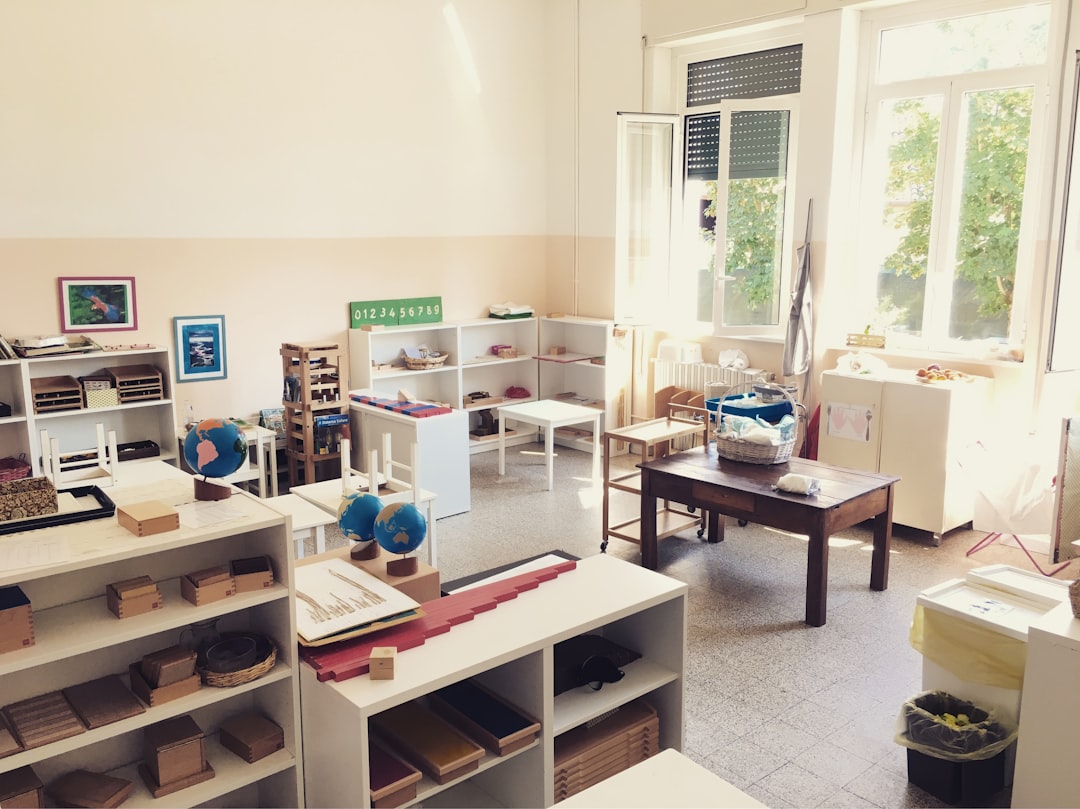
One of the pillars of Montessori is respect for the child’s periods of activity and rest. In a prepared environment, children work independently for extended blocks (up to three hours), reducing the need for constant transitions and allowing families to better organize their day. It’s not the same as having to pick up a child every hour versus leaving them in an environment where they can concentrate until their natural cycle ends.
Last week, a mother told us that since her 4-year-old can concentrate on his work without interruptions, afternoons at home are calmer. This is possible because in Montessori, children choose their activity and stick with it until completion, reducing the need to switch tasks every few minutes. Furthermore, Montessori routines—predictable and clear—make it easier for children to collaborate at home: dressing themselves, setting the table, tidying up. That frees up adult time. Therefore, work-life balance is not just about external schedules, but how we educate in autonomy.
Autonomy and Routines That Lighten the Load
When a three-year-old dresses himself because there’s a hook at his height and a visual routine, parents gain minutes each morning. When a six-year-old packs his backpack with a checklist, families avoid rushing. Montessori not only raises independent children; it also builds less stressed homes. That is real work-life balance.

The Role of Grandparents and Other Support Networks
Many families turn to grandparents to fill the gaps. It’s a common solution, but not always sustainable: grandparents get tired, have their own plans, or live far away. Montessori does not replace family support, but offers alternatives: extended hours, extracurricular activities within the same center, and school communities where parents help each other. In an informal survey among IMS Sotogrande families, 70% said that the parent support network has allowed them to reduce dependence on grandparents. They organize pick-up swaps, shared dinners, and playgroups. Thus, the school community becomes a pillar of work-life balance.

School Schedules That Adapt to Families
Rigid schedules are one of the biggest obstacles to work-life balance. Many schools end at 2:00 PM, leaving a gap until parents finish work. Montessori schools, especially those offering extended programs, can be a real solution.
IMS Sotogrande Programs to Facilitate Work-Life Balance
At IMS Sotogrande we offer flexible schedules according to the stage and family needs. For example, for Children’s House (3-6 years), you can choose the Roots program (9:00-2:00 PM) for €650/month or Wings (9:00-3:00 PM) for €750/month, with the possibility of extending until 5:00 PM (€910/month). For Workshop 1 (6-9 years), the base schedule is 9:00-4:00 PM for €850/month (extendable to 5:00 PM for €930/month). There is also a Breakfast Club option from 8:00 AM for €30/month. All without losing Montessori pedagogical quality. Work-life balance doesn’t have to be at odds with excellent education.
- Seeds 0-3: 9:00-12:00, €500/month
- Nest/IC Roots: 9:00-1:00 PM, €600/month
- Nest/IC Wings: 9:00-3:00 PM, €700/month (until 4:00 PM €780, until 5:00 PM €860)
- Children’s House Roots: 9:00-2:00 PM, €650/month
- Children’s House Wings: 9:00-3:00 PM, €750/month (until 4:00 PM €830, until 5:00 PM €910)
- Workshop 1 (6-9): 9:00-4:00 PM, €850/month (until 5:00 PM €930)
- Workshop 2 (9-12): 9:00-4:00 PM, €900/month (until 5:00 PM €980)
All programs include English immersion, emotional intelligence, yoga, music, and health education. The family admission fee is €550 (one-time) and annual enrollment €500. There are sibling discounts (10%, 15%, 20%) and full annual payment before July.
Quality Time Beyond the Hours
It’s not enough to have extended hours: the time the child spends at the center must be quality time. In a Montessori environment, every moment is educational: children explore nature, participate in art workshops, practice yoga, and develop social skills. This prevents the day from becoming mere daycare. For example, at IMS Sotogrande, children have access to a garden, music classes, and science projects. Work-life balance is achieved when parents know their children are learning and enjoying, not just waiting for the day to end.
What to Consider When Choosing a School for Work-Life Balance
Not all schools that offer extended hours care for the quality of time the child spends there. A child who is at a center for eight hours needs a prepared environment, trained professionals, and an approach that respects their development. Montessori, with its prepared environments and AMI guides, ensures that every minute is educational. Furthermore, the school community—parents, teachers, children—becomes a support network that goes beyond the schedule.
When evaluating a school, ask yourself: Is the extended schedule part of the educational project or just an add-on? Do children have freedom to choose activities? Are there outdoor spaces? Is autonomy encouraged? At IMS Sotogrande, the answer is yes to all. Work-life balance is not an extra; it’s part of the model.
Frequently Asked Questions About Work-Life Balance and Montessori Schools
How does Montessori help with work-life balance?
Montessori promotes child autonomy (dresses himself, prepares his materials, organizes his time), which reduces the burden on parents. Additionally, extended hours and after-school programs within the same center avoid commuting and routine disruptions.
Are there Montessori schools with extended hours?
Yes. Many Montessori schools, like IMS Sotogrande, offer hours until 5:00 PM with a breakfast option from 8:00 AM. These schedules are integrated into the pedagogical project, not mere daycare.
Is a Montessori school expensive?
It depends on the center and services. At IMS Sotogrande, fees for the 2026-2027 school year start at €500/month for the Seeds program (0-3) and go up to €900/month for Workshop 2 (9-12). They include bilingualism, emotional education, and all activities. There are sibling discounts and advance payment options. Considering the services included, it is an investment in comprehensive development.
What sets a Montessori school apart from a daycare with extended hours?
The difference is the method. In a daycare, extended hours are usually a custodial service. In a Montessori school, every hour is designed to foster independence, concentration, and a love of learning. Children work with specific materials, receive individual lessons, and develop social skills in a prepared environment. Work-life balance is achieved not just with more hours, but with quality hours.
Key Takeaways
Work-life balance is not solved by schedules alone: it is built with an education that fosters autonomy, a community that supports, and a school that understands the real needs of families. Montessori, applied both at home and at school, provides concrete tools for children and adults to live with less stress and more quality time.
If you are looking for a school that helps you balance work and family without sacrificing educational quality, we invite you to learn about IMS Sotogrande. You can request a visit at 653 04 17 39 or at [email protected]. At IMS, your child will grow up feeling heard, valued, and safe, ready to transform the world with their own voice.









