
Montessori Prepared Environment: Keys to Autonomous Development

The prepared environment is the heart of Montessori pedagogy. It is not simply an orderly classroom: it is a meticulously designed space to unleash the child’s potential. Every shelf, every material, every chair has a purpose: to invite autonomous action. In a prepared environment, the child does not passively receive instructions; they explore, choose, and learn at their own pace. And that is the true gift: confidence in their own abilities.
- What Makes an Environment "Prepared" According to Montessori?
- The Physical Elements of the Prepared Environment
- The Role of the Guide in the Prepared Environment
- Concrete Benefits of the Prepared Environment
- How to Create a Prepared Environment at Home
- The Connection with Neuroscience
- Frequently Asked Questions
- Key Takeaways
What Makes an Environment “Prepared” According to Montessori?
Maria Montessori observed that children learn best in environments adapted to their physical and psychological needs. Therefore, the prepared environment must meet five fundamental requirements:
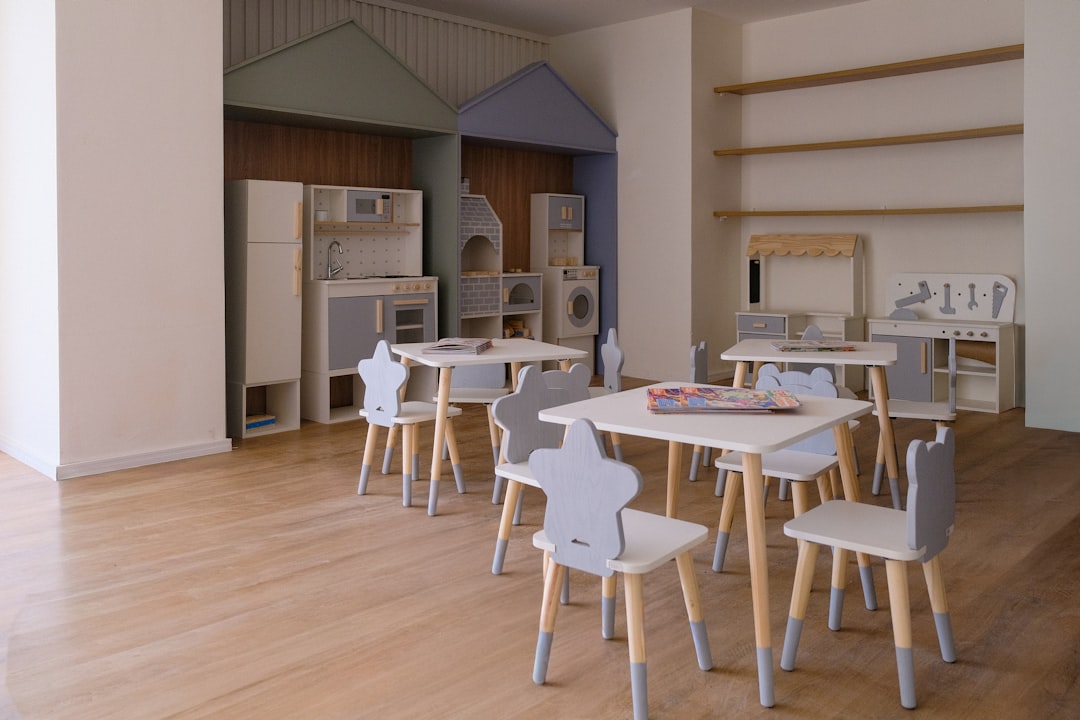
- Proportionality: furniture and materials at the child’s height, so they can access everything without help.
- Order and aesthetics: each object has a fixed place; the space is clean, bright, and attractive. External order promotes internal order.
- Freedom within limits: the child can move freely, but within a clear framework of respect and responsibility.
- Sensory and self-correcting materials: each material isolates one quality (color, weight, sound) and allows the child to detect their own error.
- Clear roles: the guide prepares the environment and then observes, intervening only when necessary.
At our school, International Montessori School Sotogrande, we apply these principles from early childhood. Each classroom is designed so that the child feels in charge of their learning. Because when the space respects the child, the child respects the space.

The Physical Elements of the Prepared Environment
Children’s Furniture: A Tool for Autonomy
Light tables and chairs that children can move, open shelves at their height, accessible hooks: everything invites them to do things for themselves. In the Nido classroom (0-3 years), for example, children roll up their rug, set out their snack tray, and put away their work. This routine builds concentration and mental order.
Clearly Defined Work Areas
The environment is organized into areas: practical life, sensorial, language, mathematics, and culture. Each with specific materials that progress in difficulty. The child chooses freely, but the guide has previously presented each material. Thus, freedom is supported by knowledge.
Montessori Materials: Design and Function
The materials are sequential. For example, the pink tower (sensorial) indirectly prepares for mathematics by working on visual discrimination of size. The materials are self-correcting: the child knows if they have succeeded, without needing an adult to say “right” or “wrong.” That strengthens self-esteem and responsibility.

The Role of the Guide in the Prepared Environment
The guide is not the center of attention. Their main task is to prepare and maintain the environment. They observe, take notes, and decide when to present a new material. They do not interrupt concentration. If a child is engrossed in work, the guide protects that moment. At IMS Sotogrande, our guides receive ongoing training from the Association Montessori Internationale (AMI) to perfect this observation.
The guide also models behaviors: speaks softly, respects turns, takes care of materials. The children absorb that attitude. Therefore, any adult entering the classroom must follow the same rules: speak softly, move calmly, do not interrupt.
Concrete Benefits of the Prepared Environment
Neuroscience studies confirm what Montessori observed a century ago: when the child has control over their environment, brain circuits of intrinsic motivation are activated. Some documented benefits:
- Self-discipline: the child learns to manage their time and respect group limits.
- Prolonged concentration: by being able to repeat an activity without interruptions, they achieve a state of “flow.”
- Problem-solving: the freedom to make mistakes and correct them fosters critical thinking.
- Self-confidence: each achievement is the result of their own effort, not an external reward.
In our Casa de Niños (3-6 years) and Taller (6-12 years) classrooms, we see every day how children become autonomous learners. The prepared environment is not a luxury: it is an educational necessity.
How to Create a Prepared Environment at Home
You don’t need to buy expensive materials. The essential thing is attitude. Here are practical guidelines:
- Reduce clutter. Fewer toys, higher quality. Rotate them every few weeks to maintain interest.
- Adapt spaces. A small stool at the sink, a small pitcher for them to pour water, hooks at their height.
- Facilitate autonomy. Place their clothes within reach, let them pack their backpack. Accept that they do it at their own pace (and sometimes make mistakes).
- Limit screens. The prepared environment is sensory and real. Screens are passive and isolating. Better an art corner or a tray of experiments.
- Be a model. Organize your things, speak calmly, show respect for objects. The child will imitate you.
At school we offer workshops for families (“Accompanying-Tea” and “The Family in Tribe”) where we delve deeper into these strategies.
The Connection with Neuroscience
The prepared environment respects the sensitive periods of development. Between 0 and 6 years, the child absorbs order, language, and movement. If the environment offers appropriate stimuli, neural connections strengthen. Child neuroplasticity is at its peak; therefore, every detail matters.
Recent research from the University of Virginia confirms that children in Montessori environments show greater activation of the prefrontal cortex, associated with executive control. It is not magic: it is intentional design.
Frequently Asked Questions
Does the prepared environment work for all ages?
Yes, but it adapts. In 0-3 years, it prioritizes safety and sensory stimulation. In 3-6 years, order and concrete materials. In 6-12 years, tools for abstraction and research are introduced. At IMS Sotogrande, each level has its own environment adjusted to the developmental plane.
Is it very expensive to implement a prepared environment at home?
No. What is expensive is not the material, but the time and consistency. You can start with little: a low shelf with three or four activities, a plant, a rug. What matters is the quality of interaction. If you want materials, on our website we recommend AMI-approved suppliers.
What is the difference between a prepared environment and a traditional classroom?
Everything. In the traditional classroom, the adult is the center: decides what to do, when, and how. Children sit at fixed desks, facing forward. In the prepared environment, the child is the protagonist: they choose their work, move freely, collaborate with others. There are no textbooks; there are manipulative materials. There are no exams; there is continuous observation by the guide.
Key Takeaways
The prepared environment is not a pretty stage: it is a powerful pedagogical tool. When the environment respects the child, the child develops concentration, autonomy, and a love for learning. Every piece of furniture, every material, every corner is at the service of their development. It is not about filling the space with things, but about offering just the right possibilities for the child to construct their own knowledge.
If you want to see firsthand how a prepared environment works, we invite you to visit our facilities in Sotogrande. You can request an appointment by calling +34 653 04 17 39 or writing to [email protected]. You can also book an online visit at our calendar. We look forward to showing you how we cultivate childhood, day by day.









