
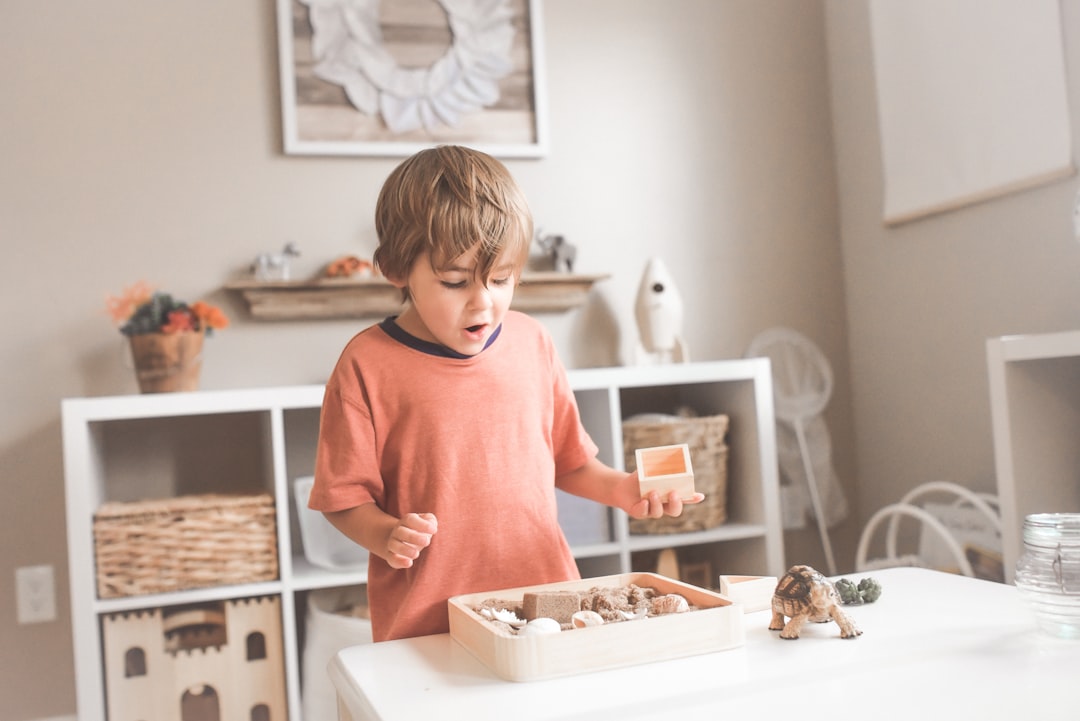
Prepared Montessori Environments 3-6: Keys to Child Development
The Montessori 3-6 prepared environment is much more than an orderly classroom; it is a space meticulously designed to meet the developmental needs of the child during this crucial stage. Maria Montessori discovered that the physical environment has a direct impact on a child’s ability to concentrate, be autonomous, and learn. Therefore, creating an environment that invites exploration and independence is fundamental. According to the Association Montessori Internationale (AMI), more than 22,000 schools worldwide apply this method, and studies show that children in prepared environments achieve higher levels of self-regulation and social skills. In this article we explore Montessori prepared environment 3-6 in depth with practical examples.
What is a Montessori 3-6 Prepared Environment?
A Montessori 3-6 prepared environment is an organized, aesthetic, and accessible space where each material has an educational purpose. It is divided into work areas (practical life, sensorial, language, mathematics, and culture), with child-height furniture and materials arranged on open shelves. The key is that the child can freely choose their activity, move with autonomy, and repeat exercises until mastery. In the classroom, children work individually or in small groups, respecting their own pace. This design is not accidental: it responds to the sensitive periods of the age, such as order, language, and sensory refinement. When it comes to Montessori prepared environment 3-6, it pays to listen to what families and lead guides actually report.
At International Montessori School Sotogrande, our Casa de Niños (3-6 years) embodies this philosophy perfectly. Located in the heart of Sotogrande, our bright, welcoming classrooms feature authentic AMI-approved materials, natural light, and child-sized furniture. Our AMI-certified guides—Sara Martín, Vanessa Coso, Jesica Jiménez, Lola Horas, Paula Collado, and Verónica Kundomal—create a nurturing atmosphere where each child feels valued and empowered. The trilingual immersion in Spanish, English, and German further enriches the prepared environment, allowing children to absorb languages naturally through their daily interactions.
Essential Characteristics
- Order and structure: Each material has a fixed place, providing security and facilitating orientation. For example, the button frames are always on the same shelf, in the same tray.
- Freedom of movement: The child moves without restrictions, choosing their own work. Light tables and chairs allow for rearrangement of the space according to activities.
- Self-correcting materials: Allow the child to detect errors on their own, fostering self-evaluation. The pink tower, for example, only fits correctly if arranged from largest to smallest.
- Aesthetic care: Neutral colors, natural light, plants, and natural elements create a welcoming environment. Excessive stimuli that distract are avoided.
- Proportionality: Tables, chairs, shelves, and utensils are adapted to the child’s size. Shelves are low so they can reach everything without help.
- Trilingual immersion: At IMS Sotogrande, the environment is enriched with Spanish, English, and German, reflecting our commitment to multilingual education from the earliest age.
Key Materials in the 3-6 Environment
Within the Montessori 3-6 prepared environment, sensory materials such as the pink tower, binomial cube, or color tablets help refine the senses. Practical life materials (pouring, washing, threading) develop fine motor skills and concentration. Language is supported by sandpaper letters and movable alphabets, while mathematics uses number rods and beads. Each material isolates one quality: the pink tower isolates size; the color tablets isolate hue. This allows the child to focus on a single characteristic without distractions. Additionally, all materials are designed to be manipulated repeatedly, promoting the repetition that leads to mastery. Daily practice with Montessori prepared environment 3-6 reveals nuances no handbook fully captures.
At IMS Sotogrande, we use only genuine AMI materials, ensuring the highest quality and authenticity. Our Casa de Niños classrooms are arranged in distinct areas: practical life, sensorial, language, mathematics, and culture. Children rotate through these areas freely, guided by their inner teacher. The low student-to-teacher ratio (1:8) allows guides to observe and support each child’s unique developmental journey, offering individualized lessons when needed.
Benefits of the Montessori 3-6 Prepared Environment
When a child develops in a well-designed Montessori 3-6 prepared environment, their development is naturally enhanced. The benefits are observable in the short and long term. Research from the University of Virginia (2017) indicates that Montessori students show better results in problem-solving and creativity compared to traditional education. A 2021 study published in Frontiers in Psychology found that children in Montessori classrooms demonstrate stronger executive functions, including working memory and cognitive flexibility.
Autonomy and Inner Order
By being able to access everything on their own, the child gains confidence in their abilities. The external order of the classroom becomes internalized, helping to organize thoughts and emotions. This reduces frustration and promotes self-regulation. For example, a 4-year-old who learns to put on their shoes alone develops not only motor skills but also the satisfaction of self-efficacy. In the classroom, after using a material, they must return it to its place, learning responsibility. At IMS Sotogrande, we see this daily: children confidently choose their work, complete it, and restore the materials, building a strong sense of order that carries into their academic and personal lives.
Deep Concentration
The absence of interruptions and the ability to repeat activities allow the child to reach a state of flow or deep concentration. Montessori called this process ‘polarization of attention.’ In a prepared environment, children can work uninterrupted for extended periods—often 2-3 hours—developing intense focus. This deep concentration is a precursor to higher-level thinking and academic success. IMS Sotogrande’s Casa de Niños schedule includes a three-hour uninterrupted work cycle each morning, enabling children to engage fully with materials and ideas.
The Montessori 3-6 Program at IMS Sotogrande
International Montessori School Sotogrande offers a fully accredited Casa de Niños program for children aged 3 to 6 years. Our program is grounded in the principles of Maria Montessori and delivered by a team of AMI-trained guides. Children benefit from a low ratio of 1 adult to 8 children, ensuring personalized attention. The curriculum is trilingual: Spanish, English, and German, with French introduced from Casa de Niños onward. Our school is located in Sotogrande, Cádiz, in a warm, family-oriented community. Facilities include bright, spacious classrooms with direct access to outdoor play areas, a dedicated art room, a library, and spaces for music and movement. We also offer yoga, mindfulness, and emotional intelligence as part of our holistic approach.
The Casa de Niños program runs from September to June, with flexible schedules: Raíces (9:00-14:00) or Alas (9:00-15:00), with extended hours available until 17:00. Lunch is provided on-site, with a focus on healthy, balanced meals. In addition to the core Montessori curriculum, children participate in weekly music sessions with Tatiana Gavira and Adrián Rodríguez, physical education with Alejandro Ledesma, and gardening activities. Our Rainbow Classroom supports neurodivergent learners, ensuring an inclusive environment for all.
Why Choose IMS Sotogrande for Your Child (3-6 Years)?
IMS Sotogrande is the only school in the Campo de Gibraltar region accredited by AMI, NEASC, and the Junta de Andalucía. Our founder, Olimpia Tardá, established the school in 2001 with a vision of liberating each child’s potential. Our four pillars—Community, Autonomy, Educational Innovation, and Responsibility—guide everything we do. Families become part of a supportive tribe, with regular workshops, family events, and open communication through platforms like Growappy and ClickEdu. Our graduates transition seamlessly to our Elementary and Secondary programs, continuing their Montessori journey through age 15.
Testimonials from parents highlight the transformation: children emerge confident, curious, and compassionate. As Olimpia Tardá says, “In IMS your child will grow up feeling heard, valued, and safe, ready to transform the world with their own voice.”
At IMS Sotogrande
We invite you to experience our Montessori 3-6 prepared environment firsthand. Our Casa de Niños program is designed to nurture your child’s independence, curiosity, and love for learning. Below are our 2026-2027 tuition fees for reference:
- Nido/Toddler (0-3 years): Approximately €10,500/year (full-day, includes all services)
- Casa de Niños (3-6 years): Approximately €11,500/year (full-day, includes all services)
- Primary (6-9 years): Approximately €12,500/year (full-day, includes all services)
- Secondary (9-12 years): Approximately €13,500/year (full-day, includes all services)
- One-time Family Admission Fee: €1,500 (non-refundable)
- Annual Materials Fee: €700
Fees are payable over 10 monthly installments from September to June. Sibling discounts apply: 10% for first sibling, 15% for second, 20% for third. Early payment discount of 5% if full year is paid before July. To schedule a visit, contact us at +34 653 04 17 39 or email [email protected]. We look forward to welcoming your family to our community.









