
Play or work?
There is a misconception that children in a Montessori school spend all their time playing and that they can do whatever they want. None of these are really correct.
What is Play work?
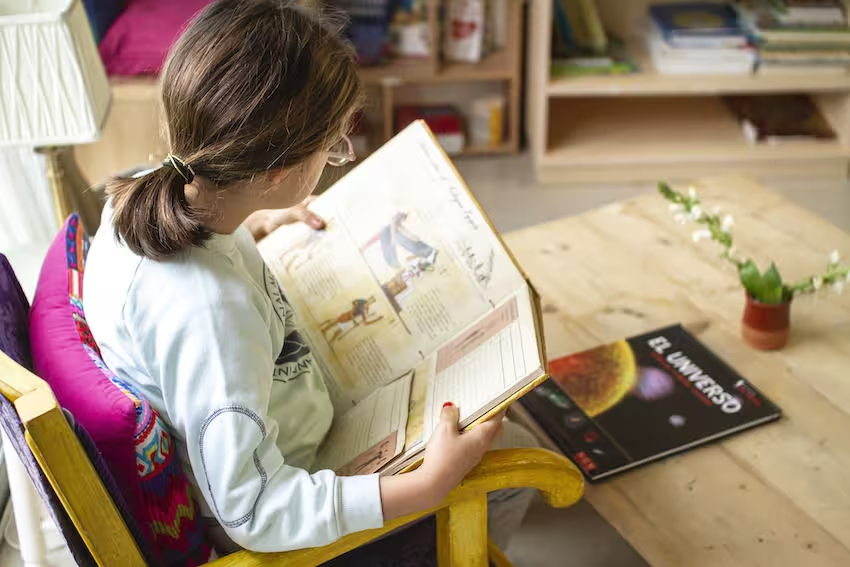
Children are by nature curious and eager to acquire knowledge and skills. They interact naturally with their environment, so a “prepared environment” is created for them: certain materials are made available to them to practice sensory and practical skills. In the Montessori classroom, “play” is called “work,” and children select materials that interest them and become absorbed in the process of mastering the particular skill required.
The Montessori guide will first introduce the new material to the child and then allow them to practice.
Maria Montessori believed that children who are free to choose and act independently within an environment prepared according to her model, would act spontaneously for optimal development. In this sense, children may be allowed to do whatever they want, but they are always gently guided to make the most of their time and efforts.

The question of discipline in a Montessori school is simple.
Discipline does not involve bribes, rewards or punishments; These are all extrinsic motivations that do not help the child develop any internal self-discipline. Instead, the Montessori approach to discipline generates intrinsic motivation, that is, doing something because you want it, enjoy it, or simply believe it is the right thing to do.
How do we do this?
We listen to our children with respect, so that they see that we value them. They come to understand that we are there to keep them safe and will support them if they need it. They learn to take responsibility when something goes wrong and over time they learn how to solve problems for themselves. When we say “no” we need to give good reasons and we don’t shout at them to solve the problem: children model the behavior they see so we are careful to model the sort of self discipline we would like to see in our children.
We find ways to solve problems together so that the child understands why something happens: Over time, children begin to understand logic, but it may take a lot of repetition to instill it.
We often use the phrase “Freedom within limits”: We want our children to be free to do the things they want without fear of getting into trouble, but we also recognize that they need limits and they need to know that there are limits to what they can do and they need to understand what the impact of their actions is on others. Knowing their limits also lets children know that we care about them. When we are clear about the house rules, children are clear, too.
A Montessori approach to discipline requires patience and a lot of repetition on our part.
A classroom where children understand their freedoms and limits and appreciate the effect of their actions on others is a happy place and contributes greatly to the progress that children make in their individual paths.









