
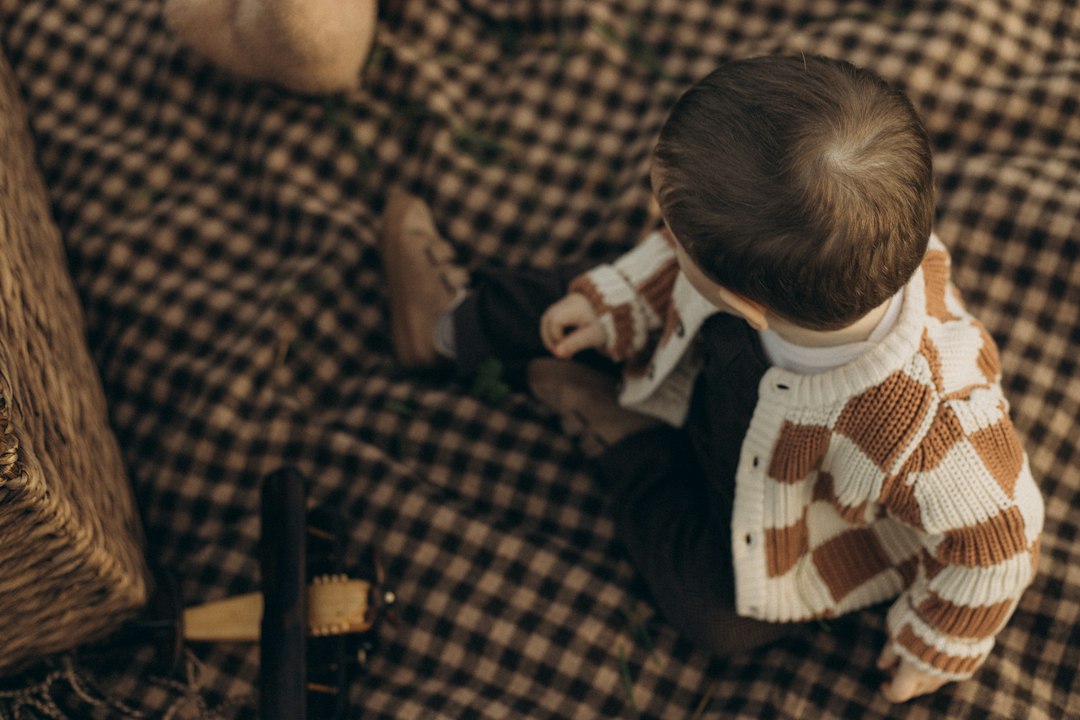
Stages of Play by Age: From 0 to 12 Years

The stages of play are the phases that a child’s play goes through from birth to age 12: functional play in babies, symbolic play around 18 months, constructive and rule-based play after 4 or 5 years, and increasingly complex social play. Play is a child’s natural way of knowing the world, and each stage calls for different materials, company and time. Below, I go through what happens at each age range and what you can do from home.
In summary
- Play evolves in a recognisable sequence: functional (0-2), symbolic (2-4), constructive (3-6), rule-based (6-9) and group or project play (9-12).
- Each stage of play calls for different materials: sensory and mouthing objects at first, pretend play afterwards, construction materials and rules later on.
- The adult’s role changes with age: preparing the space and observing in the early years, and accompanying without directing once the child is already playing by rules.
- Rule-based play appears around 5-6 years old and is a step in maturation: the child begins to understand norms, turns and agreements with others.

Why play is the work of childhood
When a child plays, they are not killing time: they are working. Play develops coordination, language, attention, problem-solving and emotional regulation. That is why play is the engine of child development, and why Maria Montessori argued that children learn by manipulating, moving and repeating, not by listening to long explanations.
The scientific community agrees. UNESCO recognises play as a right of childhood and a pillar of early learning. And child health guidelines, such as those from the American Academy of Pediatrics, recommend daily free play, not driven by screens or structured activities.
Play also explains many everyday conflicts. If your 2-year-old insists on dropping their cup on the floor again and again, they are not disobeying you: they are running a cause-and-effect experiment, which is the play typical of that stage. Understanding the stages of play helps you avoid misunderstandings and respond with judgement instead of in a hurry.

Types of play by stage of child development
The types of play by stage of child development are organised by approximate ages. Every child has their own rhythm and the boundaries are flexible, but the sequence repeats itself: sensorimotor first, then symbolic, then constructive and rule-based, and finally social and cooperative.
Ages 0 to 2: sensory and functional play
Babies play with whatever they can grab, mouth, look at and throw. It is called functional play because they explore the physical properties of things. Around 18 months comes a huge change: the child starts imitating everyday actions, such as feeding a doll or talking on a toy phone.
Example: if your 10-month-old drops a spoon from the high chair, pick it up without a lecture and hand it back. That repetition is their way of studying gravity, and they will need to do it dozens of times. Set aside 5 minutes a day to observe without intervening: you will see far more than you imagine.
Ages 2 to 4: symbolic play
Symbolic play (or pretend play) is the star of this stage. The child pretends: cooking with stones, caring for a sick doll, turning a sofa into a boat. Through fiction they process what they live and rehearse emotions safely. This kind of play is key for language and empathy.
Ages 3 to 6: constructive and role play
Around 3 or 4 years old, symbolic play combines with construction: towers of pieces, block houses, train tracks. The child begins to play with others and role play appears, where each one takes on a character. In this range, which at IMS covers the Children’s House stage (3-6 years), quality free play is worth more than any extra activity.
Ages 6 to 9: rule-based play
Rule-based play appears around 5-6 years old and consolidates afterwards. The child understands that there are shared norms, turns and winners, and learns to lose without falling apart. It is an enormous cognitive step: it involves planning, working memory and impulse control.
In the Taller 1 classroom (6-9 years), board games and group projects work on exactly this: agreeing on rules, negotiating and collaborating. The same happens at home: a post-lunch game of dominoes teaches more about living together than a thousand sermons.
Ages 9 to 12: social, sporting and project-based play
In pre-adolescence, play becomes more social and complex. Team sports, strategy games, building with long instructions and projects that last weeks all appear. The child looks for a sense of belonging to a group and needs spaces where they decide with others, not just obey.
Summary table: which play belongs to each stage
- 0-2 years : sensory and functional. Objects to grab, mouth and throw. The adult’s role: observe and prepare the space.
- 2-4 years : symbolic. Play kitchens, dolls, fabrics and real objects in small sizes.
- 3-6 years : constructive and role play. Construction pieces, costumes, free play with other children.
- 6-9 years : rule-based. Board games, simple sport, building challenges.
- 9-12 years : social and project-based. Team sports, strategy, long crafts and hobbies.

Example: how the same toy changes with age
Imagine you have a box of wooden blocks at home. Your 2-year-old throws them and bangs them together to hear the sound (functional play). At 3 they build a tower and say it is a lighthouse (symbolic play). At 5 they try to build the lighthouse for real, counting pieces and correcting the imbalance (constructive play). At 8 they challenge their sister to build the tallest tower in 2 minutes, agreeing on rules before starting (rule-based play). One single material supports years of development if it withstands the use.
Quick checklist to support play according to age
- Does your child have an accessible space where they can reach their materials without asking you for help?
- Are there open-ended materials (pieces, fabrics, boxes) alongside toys with buttons and lights?
- Do you set aside a stretch of free play every day, with no screens or directed activities?
- Are you letting boring play exist? Boredom is usually the prelude to invented play.
- Do you play with them without directing? Less “do it like this” and more “tell me what you’re doing”.
Common mistakes when supporting play (and how to fix them)
The most common mistake is buying the toy for the wrong stage: a board game with complex rules for a 3-year-old ends in frustration for both of you. Solution: first observe what your child does when they play freely, and choose materials that match that kind of play, not the age printed on the box.
The second mistake is intervening too soon. When your 4-year-old struggles with some pieces, count to ten before helping. In most cases they will reorganise on their own. Only step in if they ask for help or if there is real danger.
Frequently asked questions
At what age does symbolic play start?
Symbolic play usually appears around 18 months and consolidates between 2 and 4 years old. It is when the child pretends an object is something else: a spoon becomes an aeroplane, a box becomes a house. If by around 3 years old there is still no imitation or fiction at all, it is worth discussing with the paediatrician or a child development specialist.
What are the stages of play by age?
There are five stages of play: sensory and functional play (0-2 years), symbolic play (2-4 years), constructive and role play (3-6 years), rule-based play (6-9 years) and social or project-based play (9-12 years). The ages are approximate and can vary by several months from one child to another without any problem.
What if my child always plays alone?
Playing alone is normal until 3-4 years old: before that age children play in parallel, side by side, without truly interacting. From 4 or 5 years old it is expected that shared play with other children appears. If after the age of 5 they always avoid other children when playing, it is worth mentioning to their teacher or the paediatrician.
How much free play does a child need each day?
Child health guidelines recommend at least one hour of free, active play a day, spread throughout the day. What matters most is not counting minutes, but that there is a stretch with no screens or directed activities where the child decides what to do. Daily free play is worth more than many back-to-back extracurriculars.
Watch how your child plays this week and choose one small change for the coming days: a more accessible corner, a new material, fewer interruptions. If you would like to see how play is supported in a Montessori prepared environment, book a personalised visit to the school.









