Potty Training Readiness Signs | Montessori Guide for Expats in Costa del Sol
Supporting a child through the potty training process is one of those milestones that brings up many questions. Is it time? Should I wait? At IMS, we see every year how children between 18 months and 3 years start showing a natural interest in the toilet. The key is to observe, not impose. Here we share the potty training readiness signs and how to support your child calmly and respectfully. In this article we explore potty training readiness signs in depth with practical examples.
Key Points to Begin
- Physical and emotional maturity is more important than a specific age.
- Nighttime dryness is a separate process and usually takes longer.
- Forcing the process can lead to resistance and fear.
- At IMS, we use a respectful approach based on observing the child.
Physical and Behavioral Signs to Look For
Your child’s diaper stays dry after naps or for two hours while awake. They squat or become still when they need to pee or poop. They start walking towards the bathroom or point at the potty. These potty training readiness signs indicate their body is prepared. Bladder control matures between 18 and 24 months, though each child has their own pace.
It’s also common for a child to remove their own diaper or to let you know with words or gestures. If they show curiosity about what you do in the bathroom, that’s another clear indicator. In the Nido classroom at IMS, we observe these moments closely because while there’s no rush, recognizing the window of opportunity is important. When it comes to potty training readiness signs, it pays to listen to what families and lead guides actually report.
Cognitive and Emotional Signs: The Child Must Also “Want” To
Beyond the physical aspect, the child needs to understand what’s happening. Can they indicate with words or signs that they need to pee or poop? Do they understand simple instructions like “let’s go to the bathroom”? Can they sit calmly for a couple of minutes? These questions help you assess cognitive readiness.
Emotionally, the child should not be going through a major change (arrival of a sibling, a move, starting a new school). Montessori potty training is based on supporting without rewards or punishments, which requires a stable environment. At IMS, we’ve seen that children who do this calmly are usually between 20 and 30 months old, but there is no magic age.
How to Prepare the Environment at Home (and in the Classroom)
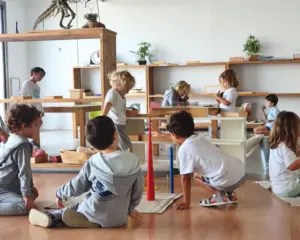
Place a potty in the bathroom at their height. You don’t need expensive models. A simple, stable one is sufficient. Show them where it is and allow them to explore it without pressure. At IMS, each Casa de Niños classroom has its own adapted hygiene area because the prepared environment is fundamental in Montessori.
You can also offer underwear with their favorite characters as natural motivation. But remember: the goal is autonomy, not obedience. If one day they don’t want to sit, it’s okay. We’ll try again tomorrow. For more ideas, you can book a personalized school visit to see how we do it in the classroom.
Common Mistakes That Delay the Process
One of the most frequent mistakes is starting too early due to social pressure. “Their cousin is already out of diapers” is not a valid argument. Another mistake is constantly switching between diapers and underwear, which confuses the child. And the worst of all: scolding them for an accident. At IMS, we believe accidents are part of learning, not failures.
It’s also important not to mix messages. If you ask them to tell you when they need to pee but then don’t take them to the bathroom in time, they will lose trust. Consistency is the foundation of everything. In our approach, learning to use the toilet is a collaborative process between the child, the family, and the school.
Frequently Asked Questions
At what age is potty training usually achieved?
Most children achieve daytime bladder control between 2 and 3 years old. Nighttime control can take until age 4 or 5 without indicating any problem. Each child has their own rhythm, and it’s important to respect their individual process.
Is it better to use a potty or a toilet seat adapter?
Both options are valid. A potty offers more security initially because the child’s feet touch the floor. A toilet seat adapter with a small step also works well if the child feels stable. The important thing is that they choose what feels most comfortable.
What do I do if my child refuses to sit on the potty?
Don’t force the situation. If there is constant resistance, they are likely not ready. Go back to diapers without making a fuss and reintroduce the potty in a few weeks. Pressure creates aversion and delays natural learning.
How do we manage potty training at IMS?
At IMS, we support this process with complete naturalness. In the Nido (0-3 years), we observe each child’s individual signs and work in coordination with families. We don’t impose deadlines: we respect each child’s pace while preparing the environment to make it easy and respectful.
Key Takeaways
Identifying the potty training readiness signs requires observation and patience. It’s not a competition, but about supporting a developmental milestone with respect. At IMS, we believe each child has their own timeline, and our role is to facilitate the path, not dictate the pace.
If you’d like to see how we integrate autonomy and personal care in the Montessori environment, we invite you to visit our school in Sotogrande. You can book a personalized visit and have all your questions answered by our pedagogical team.