
Montessori Sleep Training: How to Help Your Child Sleep Independently

Does every night become an endless negotiation? Many families in the Campo de Gibraltar and Costa del Sol areas ask me how to apply Montessori sleep training at home, especially when they arrive at our school and discover that autonomy doesn’t stop at the classroom door. The good news is that independent sleep is built, not imposed, and you can start today.
- Key Points
- Why the Montessori Method Changes How Your Child Sleeps
- The Montessori Floor Bed: The Piece That Changes Everything
- Respectful Sleep Routines by Age
- The Montessori Method vs. Controlled Crying Techniques
- Common Mistakes When Teaching a Child to Sleep Alone
- The Role of the Prepared Environment in Child Sleep
- Frequently Asked Questions
- Key Conclusions
Key Points
- The Montessori Method proposes respecting the child’s rhythm and offering an environment that invites autonomy, also at bedtime.
- The floor bed is the star tool: it allows the child to get in and out by themselves from 6-12 months.
- A predictable, short, and affectionate routine is worth more than any crying extinction technique.
- There is no magic age for sleeping alone: each child has their own time and your role is to accompany, not force.

Why the Montessori Method Changes How Your Child Sleeps
Montessori pedagogy is born from a simple but powerful observation: when a child can do things by themselves, their confidence grows. Applied to sleep, this means designing an environment where your child has real control over their sleeping process. We’re not talking about letting them cry or turning the night into a battlefield. We’re talking about mutual trust. When it comes to Montessori sleep training, it pays to listen to what families and lead guides actually report.
According to the Association Montessori Internationale (AMI), a child’s independence is built by respecting their sensitive periods and offering freedom within clear limits. In sleep, those limits are the routine and the environment. At IMS Sotogrande, we see it every day in Nido and Children’s House: the little ones who actively participate in their care sleep better, eat better, and manage their emotions better. Daily practice with Montessori sleep training reveals nuances no handbook fully captures.
Book a personalized school visit to see how we work on autonomy at every stage. Understanding Montessori sleep training from inside the classroom reshapes everyday decisions.

The Montessori Floor Bed: The Piece That Changes Everything
The floor bed, also called a Montessori bed, is a mattress directly on the floor or on a low base. Why does it work? Because it removes the physical barrier that makes bedtime a total dependency on the adult. An 18-month-old can lie down alone, get up alone, and explore their room safely. Concrete data on Montessori sleep training is worth reviewing before acting on assumptions.
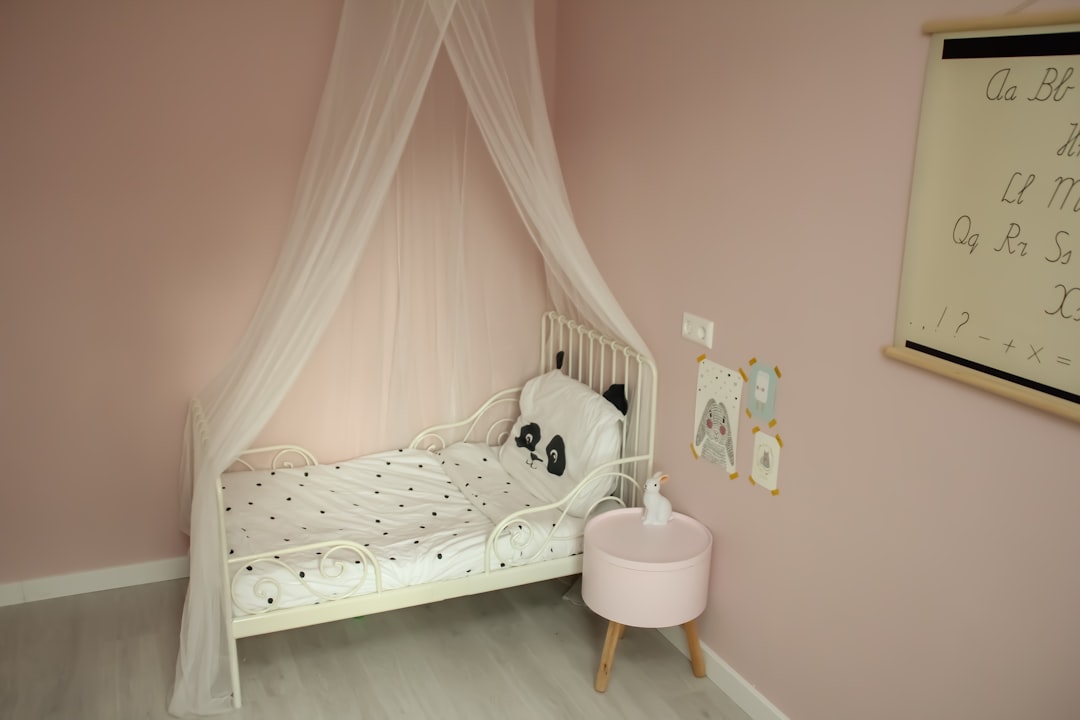
You don’t need to buy expensive furniture. A firm mattress on the floor, well fitted against the wall, serves the same purpose. What’s important is that the space around it is safe: no small objects, no cables, with a dim light available. In our experience at IMS Nido, children who transition from the crib to a low bed between 12 and 18 months make the change with less anxiety than those who wait until they are 3 years old.
How to Prepare the Room for Sleeping Alone
Before changing the bed, look at the space through a child’s eyes: can they access their bed without help? Is there a low shelf with a couple of books for the time before sleep? Is the night light within their reach? These small adjustments give them real power. Add a soft rug next to the mattress and remove everything that doesn’t need to be there. Less stimulation, more calm.

Respectful Sleep Routines by Age
Accompanying the sleep of an 8-month-old baby is not the same as that of a 5-year-old child. The Montessori approach adapts the strategy to the developmental plane your child is in.
From 0 to 18 months: Presence and Cues
At this age, the baby cannot sleep alone in the adult sense, but they can learn the cues. A fixed routine (gentle bath, pajamas, brief song, low light) tells the brain that sleep is near. Physical contact is legitimate and necessary. You are not creating a bad habit. You are building security.
From 18 months to 3 years: The Window of Opportunity
Between 18 months and 3 years, what Montessori called the sensitive period for order appears. Your child wants things to be predictable. Take advantage of this window to introduce the low bed and a more structured routine: brushing teeth, choosing a book, turning off the lights together. Give real choices, not false ones: “Do you want the blue pajamas or the green?” instead of “Do you want to go to sleep?”.
From 3 to 6 years: Growing Autonomy
In Children’s House, we observe that children of this age can already manage almost their entire sleep process if the environment allows it. They can prepare their bed, choose their book, and turn off the light. Your role is reduced to being emotionally available without directing every step. If your child gets up at night, guide them calmly back without turning it into a drama.
The Montessori Method vs. Controlled Crying Techniques
We won’t sugarcoat it: many popular child sleep techniques are based on letting the child cry for controlled periods. The Montessori approach does not recommend them. Not because crying is inherently bad, but because a crying child is communicating something, and the adult’s response teaches them if the world is a safe place.
A study published by the American Academy of Pediatrics (AAP) in 2012 concluded that extinction methods do not produce measurable long-term harm, but neither do they generate more secure bonds. Montessori pedagogy bets on a different path: accompanying crying with presence, validating the emotion, and offering alternatives. It’s slower, but the result is a child who sleeps by choice, not by abandonment.
Common Mistakes When Teaching a Child to Sleep Alone
The family that fails in this transition usually repeats three patterns. First, changing the routine every few days looking for immediate results. Second, offering screens before sleep as a way to calm down, when blue light does exactly the opposite. Third, involving too many adults in the process: if one day mom does it, another day dad, and another day grandma with different techniques, the child doesn’t know what to expect.
Choose one strategy, explain it to all the adults in the house, and stick with it for at least three weeks before evaluating. Consistency is more important than the perfect technique.
The Role of the Prepared Environment in Child Sleep
At IMS, we design each classroom as a prepared environment where the child can act with independence. Your home deserves the same approach. Your child’s room should be a space that belongs to them: furniture at their height, accessible materials, visible order. When a child feels they own their space, they transition to sleep with less resistance because they don’t feel something external is being imposed on them.
The UNESCO recognizes in its early childhood reports that the design of the physical environment directly influences the quality of rest and cognitive development. You don’t need to redecorate. You need to think from your child’s height.
Frequently Asked Questions
At what age can a child sleep alone with the Montessori Method?
There is no fixed age because each child follows their own rhythm. With the Montessori bed, many children start sleeping in their own space between 12 and 18 months, although the complete transition can take months. The important thing is not the age, but that the child is emotionally ready and that the environment supports it.
Is the Montessori floor bed safe for babies?
A firm mattress well fitted to the floor is safe from the moment the baby can roll over on their own, generally around 4-6 months. Make sure there are no pillows, loose blankets, or soft objects nearby, and that the room is completely childproof. If you have doubts, consult your pediatrician before making the change.
What do I do if my child gets up many times at night?
First, rule out physical causes: hunger, cold, heat, pain. If everything is fine, guide them calmly back to bed without turning on bright lights or starting long conversations. Keep the same short phrase each time: “It’s time to sleep, I am here.” Boring and loving repetition works better than arguments at three in the morning.
Key Conclusions
The Montessori approach to sleep does not seek shortcuts: it builds real autonomy by respecting your child’s rhythm. The floor bed, the prepared environment, and a predictable routine are the three pillars of a system that works because it puts the child at the center, not the clock.
If you want to see how we apply these principles in the classroom, we invite you to visit our Nido and Children’s House in Sotogrande. Book your personalized visit and discover firsthand how we cultivate autonomy from the first months of life.
Viviane Dumont, Director of Studies at IMS Sotogrande.









