
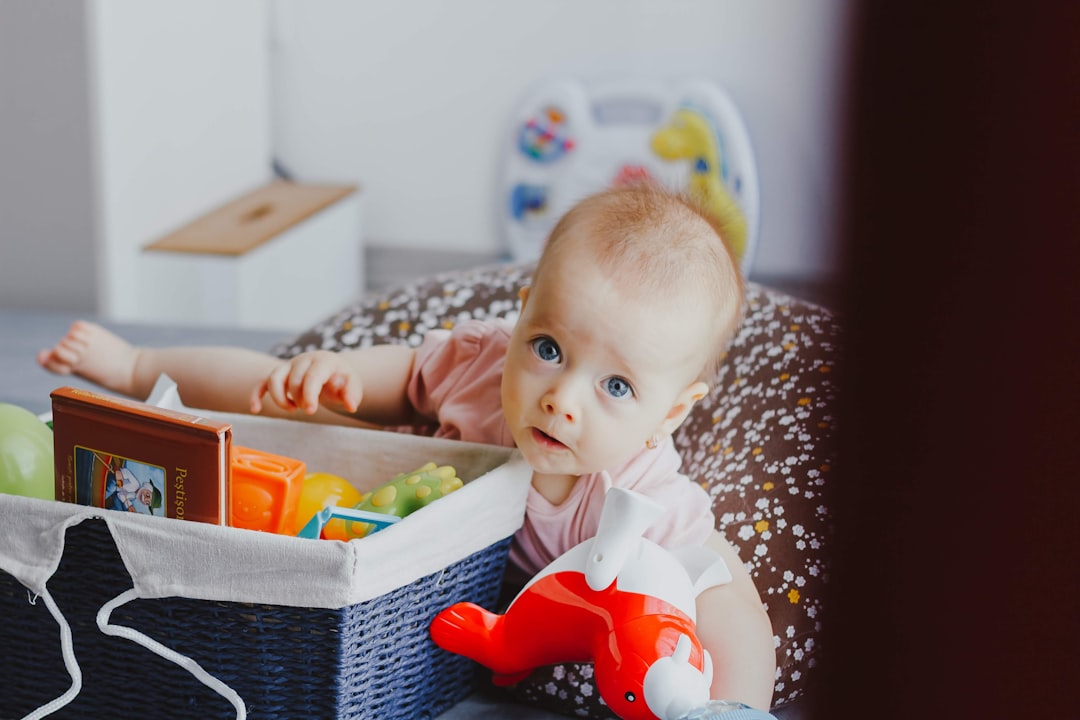
Montessori for Babies: A Practical Guide from Birth | IMS Sotogrande

When a baby arrives in the world, everything is new for them. And for you too. Montessori for babies starts from a simple premise: the child already comes with an internal program of development. Our job as adults is to prepare the environment so that program can unfold without interference.
You don’t need to be an expert or have a perfect house. It’s about observing, simplifying, and trusting. In the families we accompany at IMS Sotogrande, this approach transforms the first months into a stage of deep connection. When it comes to Montessori for babies, it pays to listen to what families and lead guides actually report.
- Key Points
- What Does Applying Montessori from Birth Mean?
- How to Prepare the Home for a Montessori Baby
- Montessori Routines for the First Months
- Free Movement: Why You Don’t Sit the Baby Before Time
- The Adult’s Attitude: Observe, Wait, Accompany
- Common Mistakes When Starting Montessori with Babies
- How to Start Today: Concrete Steps
- Frequently Asked Questions
- Key Takeaways
Key Points
- Montessori for babies is based on observation: your baby tells you what they need if you learn to read their cues.
- A safe, accessible, and orderly environment replaces overstimulation with calm.
- Montessori materials for babies are simple, natural, and few: less is more.
- The daily routine offers security without rigidity. Flexibility within structure is the key.
- Applying Montessori from birth doesn’t require renovations or big investments, just intention.

What Does Applying Montessori from Birth Mean?
Applying the Montessori method from infancy is not about teaching them things. It’s about offering them an environment where they can do for themselves what their body and mind are prepared to achieve. Dr. Maria Montessori observed that the child under three is a “spiritual embryo” that absorbs its environment unconsciously. Daily practice with Montessori for babies reveals nuances no handbook fully captures.
This has direct practical implications. A four-month-old baby who sees an interesting object within reach is learning hand-eye coordination. You don’t need a class or a toy with batteries. Just space, safety, and time. Understanding Montessori for babies from inside the classroom reshapes everyday decisions.
In the scientific community, the recognition of the importance of the early years is unanimous. The Association Montessori Internationale (AMI) publishes specific resources for the 0-3 stage that detail how to prepare the home and the adult attitude.

How to Prepare the Home for a Montessori Baby
The prepared environment is the pillar of the Montessori method for babies. It’s not about decoration or buying expensive furniture. It’s about thinking from the child’s eyes: can they reach what they need? Do they have freedom to move? Does the space convey calm to them?
The Floor as the Center of Development
The floor is the baby’s best ally. A firm rug, a small mat, or simply a spread-out blanket offers what no bouncer or seat gives them: freedom to roll, crawl, and eventually sit up by themselves. Every motor skill is conquered from the floor, not from a seat that holds them artificially.
Low furniture like a futon or a firm mattress replaces the high crib. Many families opt for a floor bed from a few months onward. This allows the baby to enter and leave their sleep space when they are ready, fostering autonomy from the start.
Avoid excess visual stimuli: light-colored walls, few objects in view, and a rest area separate from the play zone. Visual order promotes concentration, even in a newborn.
Montessori Materials for Babies: Less is More
Montessori materials for babies share three characteristics: they are simple, natural, and functional. A wooden rattle, a visual contrast mobile, a fabric ball, a colorful scarf. Each object invites real sensory exploration, without artificial lights or sounds.
The golden rule: offer a limited number of objects, within their reach, and on an organized support (a small basket, a tray). When the baby loses interest, remove that material and offer another. Rotation keeps curiosity alive without overwhelming.
You don’t need to buy everything at once. At 0-2 months, a Munari mobile (black and white contrast) is enough. At 3-4 months, the Gobbi mobile (spheres with color gradation) stimulates color perception. From 5-6 months onward, treasure baskets (everyday objects of different textures) awaken tactile interest.

Montessori Routines for the First Months
The structure of the daily routine in the Montessori method for babies is not a rigid schedule. It’s a predictable rhythm that the baby recognizes and that gives them security. The three main areas of the day are: self-care, autonomous activity, and rest.
Self-Care as a Moment of Respect
Diaper changing, bathing, or feeding are not tasks to “get done quickly.” They are opportunities for connection. When you explain what you’re going to do before doing it (“now we’re going to change the diaper”), you are respecting them as a person. Over time, the baby collaborates: they extend their legs, lift their head.
On the changing table, place a mirror at their height. Babies fascinated by their own reflection are developing self-awareness. A damp cloth and a bowl with room-temperature water replace packs of industrial wipes and give them an active role in their care.
Feeding with Respect and Autonomy
Breastfeeding or bottle feeding is experienced in a calm environment, without screens or rush. When the time for complementary feeding arrives (around six months, according to the baby’s cues), we offer soft foods in pieces that they can bring to their mouth by themselves. Baby-Led Weaning (BLW) fits with the Montessori philosophy because it respects their rhythm and gives them control.
Use a ceramic or silicone plate with suction, a small open cup (of light glass or BPA-free plastic), and adapted cutlery. The baby gets messy, throws food, and explores textures. All of that is learning.
Book a personalized school visit
Free Movement: Why You Don’t Sit the Baby Before Time
One of the most powerful (and sometimes hardest to follow) principles of the Montessori method for babies is free movement . You don’t place the baby in a position they cannot achieve by themselves. You don’t sit them until they sit alone. You don’t stand them until they stand alone.
Why? Because each motor phase builds the foundations for the next. A baby who crawls strengthens the muscles they will later use to sit. A baby who sits and falls is learning balance. Skipping stages can create postural weaknesses and frustration.
Instead of bouncers, walkers, or chairs that keep them “safe” in one position, offer clear and safe floor space. Remove furniture with sharp edges, cover outlets, and let them explore. Trust their body. They know when they are ready.
The Adult’s Attitude: Observe, Wait, Accompany
Montessori said: “The child who is not helped when they need help is obliged to develop an attitude of incapacity.” But also: “Never help a child with a task at which they feel they can be successful.” The balance is in observing.
Observing means not intervening at the first sign of effort. When your baby tries to reach an object and makes faces of concentration, don’t grab it for them. Wait. If they need it, they will ask. That respectful wait builds resilience and confidence in their own abilities.
At IMS, our Nido (0-3 years) guides practice this observation daily. The result are children who, from a very young age, show deep concentration and a calmness that surprises many families.
Common Mistakes When Starting Montessori with Babies
The intention is good, but some frequent mistakes can frustrate the family. The most common is buying too many “official” Montessori materials. A baby doesn’t need a complete catalog. They need adult presence and a simple environment.
Another mistake: confusing Montessori with rigidity. If one day the routine doesn’t flow, that’s okay. The method is a guide, not a recipe. Adaptation to the real needs of the baby (and the family) always comes first.
“Not intervening” is also confused with “neglecting.” The baby needs your close presence, your gaze, your voice. Accompanying doesn’t mean directing: it means being available without invading.
How to Start Today: Concrete Steps
You don’t need to change the whole house in a weekend. Start with three actions:
- Prepare a floor area : a firm blanket with 2-3 objects within reach. Dedicate 10-15 minutes a day to observing them without intervening.
- Simplify the space : remove toys with batteries, reduce the number of visible objects in their room, and organize materials in low baskets.
- Talk during self-care : every time you go to change, dress, or feed them, explain what you’re doing before doing it. Give them time to respond.
These three actions, simple and cost-free, are the seed of a real Montessori environment. Over time, you will expand them according to your child’s cues.
Frequently Asked Questions
At what age can you start with the Montessori method for babies?
The Montessori method for babies can be applied from birth. It’s not about “teaching” anything, but about offering a respectful environment. From the first days, a safe floor space, simple materials, and an observing attitude are already Montessori.
Do I need to buy specific Montessori materials for my baby?
You don’t need to buy “official” materials to start. Montessori mobiles are a good investment because they stimulate vision intentionally. But a wooden spoon, a wool ball, or a basket with objects of different textures fulfill the same function at zero cost.
Is Montessori incompatible with other parenting styles?
The Montessori method for babies does not exclude other approaches. Many families combine respectful parenting, secure attachment, and Montessori without contradiction. The essential thing is to observe your child and respond to their real needs, not a label.
What is an AMI-certified Montessori Nido like?
A Montessori Nido accredited by the Association Montessori Internationale offers an environment designed for babies from a few months to three years. The guides are AMI-certified, the materials are original, and the space is prepared for free movement and autonomy. In our IMS Sotogrande Nido, in addition, Spanish-English bilingual immersion is integrated from day one.
Key Takeaways
The Montessori method for babies is not a product or a fad: it’s a respectful look at the child from the moment they are born. A simple environment, natural materials, and an adult who observes before intervening are its three pillars.
If you want to see how it’s applied in a real classroom, with AMI-certified guides and a bilingual environment, we invite you to visit our Nido. You can book a personalized visit or call us at +34 653 04 17 39. We are in Sotogrande, a few minutes from families in San Roque, La Línea, Algeciras, and the entire Costa del Sol.









