
Montessori Emotional Regulation for Children | IMS Sotogrande
In short
Emotional regulation is one of the most important skills a child can develop in their early years. We aren't born knowing how to identify what we feel or how to express it healthily. This learning is built day by day, with adults who guide without judgment and environments that invite inner exploration.
Emotional regulation is one of the most important skills a child can develop in their early years. We aren’t born knowing how to identify what we feel or how to express it healthily. This learning is built day by day, with adults who guide without judgment and environments that invite inner exploration. In this article we explore Montessori emotional regulation in depth with practical examples.
- Children learn to regulate their emotions by observing how the adults around them do it.
- Montessori pedagogy integrates emotional regulation into daily life at school and at home.
- Tantrums and frustrations aren’t ‘bad behavior’: they are learning opportunities.
- Concrete tools (a calm-down corner, body language, validation) make the difference.
- Why Montessori Emotional Regulation Matters So Much in Early Childhood
- The Montessori Approach to Children's Emotional Regulation
- Tantrums Aren't the Enemy: How to Support Your Child Through Them
- Practical Tools for Working on Emotional Regulation at Home
- Emotional Regulation & Multilingualism: An Unexpected Advantage
- Frequently Asked Questions
- Key Takeaways
Why Montessori Emotional Regulation Matters So Much in Early Childhood
A child who doesn’t know how to manage what they feel isn’t a ‘badly behaved’ child. They are a child who simply doesn’t yet have the tools to process what’s happening to them. Neuroscience confirms this: the prefrontal cortex, responsible for emotional regulation, doesn’t fully mature until age 25. In childhood, that area is still under development. When it comes to Montessori emotional regulation, it pays to listen to what families and lead guides actually report.
This means expecting a three-year-old to ‘behave’ when feeling anger or frustration is asking for something they biologically cannot yet do alone. They need adults to help them name what they feel, to breathe, to find calm. That support is the foundation of healthy emotional regulation. Daily practice with Montessori emotional regulation reveals nuances no handbook fully captures.
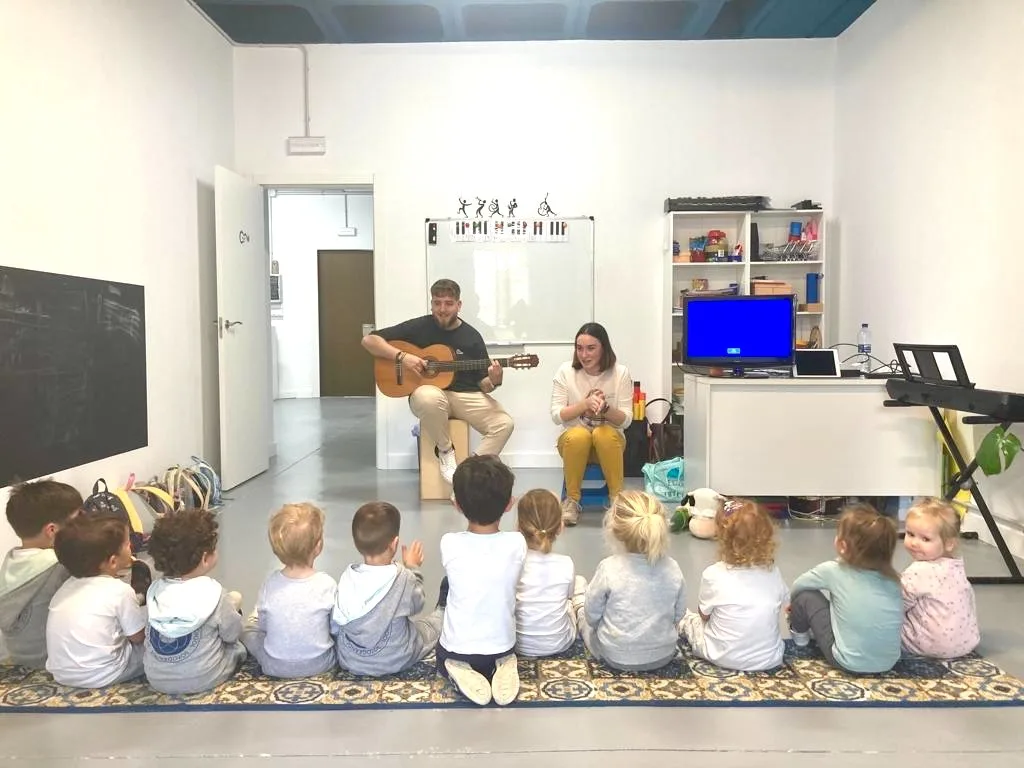
At IMS, we work on this from the Nido (0-3 years) with emotional intelligence activities that are part of every day. They aren’t isolated sessions: it’s the way we relate to each child. Understanding Montessori emotional regulation from inside the classroom reshapes everyday decisions.
Book a personalized school visit to see how we support our youngest learners in their emotional development.
The Montessori Approach to Children’s Emotional Regulation
Maria Montessori observed something that neuroscience now confirms: the child needs order, respect, and freedom within clear limits to develop fully. Emotional regulation isn’t a separate subject in Montessori. It’s woven into every moment of the day.
The Prepared Environment as a Safe Space
A Montessori environment is designed to reduce unnecessary frustration. Materials are within the child’s reach, furniture is their size, and routines are predictable. When a child knows what to expect, their nervous system regulates better.
In Children’s House (3-6 years), for example, children choose their work, develop it at their own pace, and put it away when finished. That sequence gives them control over their experience. And having control reduces anxiety, which is a primary source of emotional dysregulation in early ages.
The Role of the Adult Guide
In Montessori, we don’t yell, punish, or reward. We observe, support, and offer alternatives. If a child hits another because they want their toy, the guide doesn’t say ‘you’re bad.’ They approach, validate the emotion (‘I see you really want to use that material’), and offer a concrete solution (‘we can wait our turn or choose another one’).
This model is based on deep respect for the child as a complete person, with legitimate emotions. The Spanish Montessori Association reflects this philosophy in its pedagogical principles.
Tantrums Aren’t the Enemy: How to Support Your Child Through Them
Every family knows them. Tantrums between ages 2 and 5 are normal, expected, and necessary. The child is discovering they have their own will but don’t yet have the resources to express it with words. Emotional regulation involves understanding that the tantrum is an internal storm, not a calculated act of rebellion.
What can we do at home?
- Don’t reason during the storm. When a child is overwhelmed, their reptilian brain takes over. Words don’t get through. Wait for the most intense moment to pass.
- Validate without giving in to manipulation. ‘I understand you’re angry because you can’t have that right now’ is different from giving in. Validating isn’t condoning.
- Offer physical presence. Sometimes just being nearby, in silence, without intervening is enough. The child needs to feel we haven’t abandoned them in their distress.
- Teach afterwards, not during. When calm returns, we can talk: ‘What happened? What could we have done differently?’ That’s the moment for learning.
Practical Tools for Working on Emotional Regulation at Home
At IMS, every classroom has a calm-down corner: a small space with cushions, sensory objects, and breathing cards. Any child can use it when they feel they need a moment. It’s not a punishment: it’s a resource.
At home, you can create something similar. A corner with a soft blanket, a stuffed animal, a calm-down bottle (water with glitter inside a transparent bottle), and some books about emotions. You don’t need to spend a lot: the important thing is that the child knows that space exists for them.
Other tools that work:
- The emotion traffic light: red (I’m very angry), yellow (something is bothering me), green (I’m calm). The child learns to identify their state and ask for help before reaching red.
- Balloon breathing: inflate an imaginary balloon and release the air slowly. Simple, but powerful.
- Emotional storybooks: stories where the protagonist feels fear, sadness, or joy. Children identify with them and learn emotional vocabulary.
The American Academy of Pediatrics recommends teaching children to identify and name their emotions from 18 months as a protective factor for future mental health.
Emotional Regulation & Multilingualism: An Unexpected Advantage
At IMS, we are a trilingual school (Spanish, English, German). Children learn to express their emotions in three languages, which exponentially expands their emotional vocabulary.
When a child in the Workshop (6-12 years) says ‘I feel frustrated’ or ‘Ich bin traurig,’ they’re doing something extraordinary: naming their inner world with precision, in more than one language. This metalinguistic ability strengthens emotional regulation because the more words we have to describe what we feel, the better we process it.
Families relocating to the area (from Gibraltar, Algeciras, or anywhere in the Campo de Gibraltar) find at IMS an environment where their children can express themselves in their mother tongue and in the school’s languages. This reduces adaptation anxiety and facilitates faster emotional regulation.
Learn about our admissions process if your family has just arrived in the area and you’re looking for a school that prioritizes emotional well-being.
Frequently Asked Questions
At what age does Montessori start working on emotional regulation?
From birth. In the Nido (0-3 years), emotional regulation is worked on through a secure bond with the primary caregiver. A baby who is attended to with sensitivity when they cries learns that their emotions matter. That foundation is what allows for more complex development later.
Do tantrums disappear with Montessori parenting?
No. Tantrums are a normal part of child development and occur in all parenting styles. The difference is that in Montessori, we support them with concrete tools and without punishments. Over time, children develop a greater emotional vocabulary and the frequency and intensity of tantrums decrease.
How do I know if my child has difficulties with emotional regulation?
If at ages 4-5 your child has very frequent tantrums (several a day), routinely self-harms or hurts others, or shows persistent sadness that doesn’t resolve, it’s good to consult a professional. At IMS, we have the Rainbow Classroom, specialized in diversity and specialized support.
What’s the difference between validating an emotion and condoning a behavior?
Validating an emotion means acknowledging what the child feels: ‘I see you’re very angry.’ Condoning a behavior means allowing them to hit, scream, or throw objects without limit. You can validate the anger while also setting a clear limit: ‘You can be angry, but you can’t hit. Let’s find another way to express it.’.
Key Takeaways
Emotional regulation in childhood isn’t a luxury or an add-on: it’s the foundation of future mental health. Children who learn to identify, name, and regulate what they feel develop greater resilience, better social relationships, and more stable academic performance.
Start today: create a calm-down corner at home, validate emotions before correcting behavior, and remember that every tantrum is a learning opportunity. If you want to see how we do it in the Montessori classroom, book a personalized school visit at our campus in Sotogrande.
Viviane Dumont, Director of Studies at IMS Sotogrande









