
Montessori at Home: Practical Ideas by Room for Expat Families

If you’ve been reading about Montessori pedagogy for a while, you know that the prepared environment is one of its pillars. What you might not have been told is that you don’t need to redecorate the whole house or buy expensive materials. Montessori at home starts by observing your child and making small adjustments in each room so they can act for themselves.
Below you’ll find ideas organized by room, with age guidelines and real examples we also apply in the classrooms at IMS Sotogrande. Take what works for you and leave the rest.
- Key Points
- What a Montessori Prepared Environment at Home Really Means
- Montessori in the Kitchen: The Heart of Independence
- Montessori Bedroom: Rest and Self-Organization
- Adapted Bathroom: Hygiene Without Constant Help
- The Entryway Corner: Organizing the Chaos
- Common Mistakes When Adapting Your Home for a Child
- Frequently Asked Questions
- Key Takeaways
Key Points
- A prepared home environment is one a child can use without constant adult help.
- The most effective changes are made in the kitchen, bathroom, bedroom, and entryway.
- The golden rule: everything a child needs should be at their height and within reach.
- No special furniture is required. Low shelves, low hooks, and a sturdy step stool are enough.
- The biggest explosion of independence happens between 18 months and 6 years. Take advantage of that window.

What a Montessori Prepared Environment at Home Really Means
Maria Montessori observed that children learn by moving and choosing. If objects within their reach are real (not toy replicas) and are organized, children repeat tasks until they master them and develop deep concentration. A prepared environment isn’t a pretty decoration. It’s a learning tool that invites action.
At IMS, every classroom follows this principle: materials on open shelves, logical order, and child-sized furniture. You can replicate the same at home with very little.

Montessori in the Kitchen: The Heart of Independence
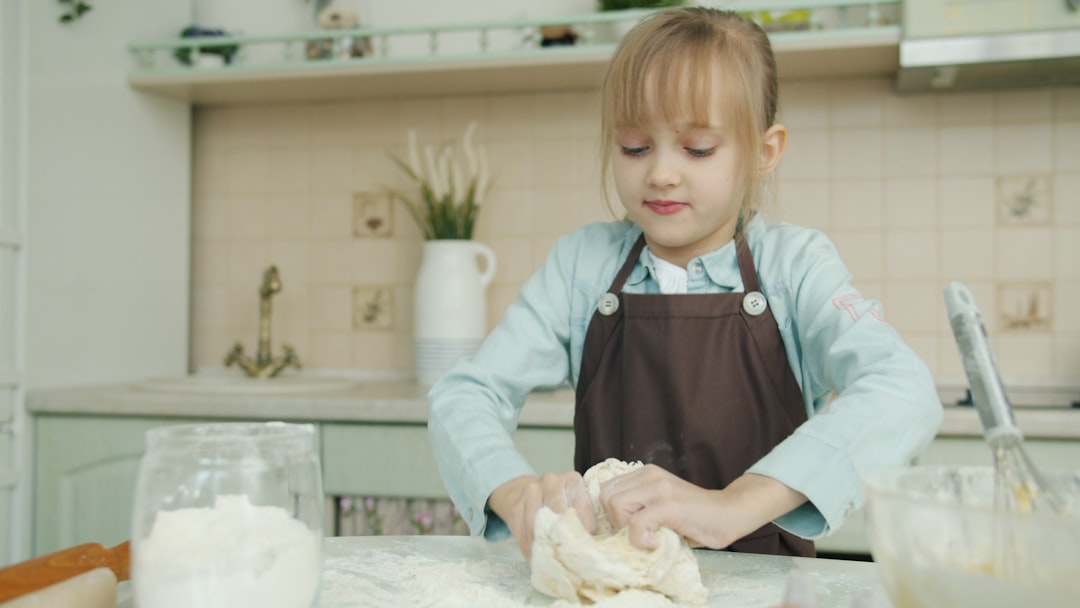
The kitchen is where a young child has the most opportunities to collaborate in daily life. A learning tower or a stable stool lets them reach the countertop and participate in simple preparations.
What to Prepare by Age
18 months to 3 years: place a small pitcher of water on a low fridge shelf so they can serve themselves. Leave washed fruit in an accessible basket. Offer real utensils (wooden spoon, ladle) in an unsecured drawer.
3 to 6 years: assign a drawer with safe kitchen tools (Montessori kitchen knife, adapted peeler). Prepare trays with pre-measured ingredients for simple recipes. Include a cutting board, cloth, and bucket for cleaning spills.
6 to 12 years: expand responsibilities: plan a weekly menu, write the shopping list, cook with minimal supervision. In the Taller (6-12) program at IMS, we work on kitchen projects applied to math and science. Your child can do the same at home on weekends.
Common Mistakes in a Montessori Kitchen
One of the most common is offering plastic toys instead of real utensils. The child perceives the difference and loses interest quickly. Another mistake: setting everything up perfectly the first week and then abandoning the system. Consistency matters more than perfection.
Book a personalized school visit to see how we organize practical life activities in our classrooms.

Montessori Bedroom: Rest and Self-Organization
The standout change in a Montessori bedroom is the floor bed. It allows the child to get in and out without depending on an adult, reinforcing their confidence and natural sleep cycle. You don’t have to use a futon. A firm mattress directly on the floor or a low bed with guardrails is sufficient.
Key Bedroom Elements
A child-height hook (80-90 cm) to hang their clothes for the next day. This eliminates morning battles. A low shelf with 3 or 4 books and one or two toys. No more, to avoid overload. An accessible laundry basket and a full-length mirror (sturdy, wall-mounted) so they can observe their own movement.
Natural light matters. If possible, avoid blackout curtains and opt for blinds that regulate light without completely darkening the room. Many families in La Línea de la Concepción and Algeciras tell us the local sun helps a lot in establishing sleep routines.
Adapted Bathroom: Hygiene Without Constant Help
The bathroom is the space where independence is trained daily. A non-slip stool, a mirror at their height, and hygiene tools within reach change the dynamic completely.
Tips That Work
Place the toothbrush and soap on a low tray. Put a towel on a hook 60 cm from the floor. If your child is between 2 and 4, use an adapted toilet seat or a reducer they can place themselves. The idea is that every step of the process (washing hands, drying, brushing teeth) is done without asking for help.
At 5 or 6 years old, they can shower with minimal supervision, pick up their clothes, and air out the bathroom. In Casa de Niños (3-6) at IMS, we practice these routines every morning with songs and hourglasses. At home, you can replicate the system with a simple visual timer.
The Entryway Corner: Organizing the Chaos
The front door is where backpacks, shoes, and coats pile up. A low hook, a shoe rack with few options, and a drawer for each child prevent the daily battle. If you live in a Sotogrande urbanization or in the Campo de Gibraltar and enter through the garage, set up the organization zone right there: what’s seen upon entry is what gets used.
Common Mistakes When Adapting Your Home for a Child
The most frequent: turning the whole house into a Montessori classroom and burning out. You don’t need to. Start with just one room, observe how your child reacts, and proceed. The second mistake is thinking Montessori at home means a total absence of rules. Quite the opposite: clear boundaries are an essential part of the method. A shelf with activities chosen by you, an agreed screen time schedule, and a place for everything are boundaries that provide security.
Frequently Asked Questions
At what age can I start Montessori at home?
You can start from birth. A free play space on the floor with a bell mobile and a safe mirror is already Montessori at home for a baby. From 18 months, when the child walks and wants to imitate, changes in the kitchen and bathroom are noticed quickly.
Do I need official Montessori materials?
No. Official materials are designed for the classroom. At home, everyday real objects (glass pitcher, wooden spoon, brush, sponge) are more effective because the child sees adults use them and they have a real purpose.
Does Montessori at home work if my child goes to a traditional school?
Absolutely. Home and school are different environments. Offering independence at home will reinforce their confidence and motor skills without conflicting with school. Many families in the Campo de Gibraltar combine a conventional school with Montessori practices at home with excellent results.
How do I organize the space if I have two children of different ages?
Dedicate separate shelves or zones by level. A low shelf for the younger child with simple sensory activities and a higher shelf for the older child with books and projects. Sharing the kitchen or bathroom isn’t a problem: the older child can model the routine and the younger one learns by observing.
Key Takeaways
Montessori at home isn’t a decorating project. It’s a way of life that starts by respecting your child’s capability. A low hook, an accessible pitcher, and a floor bed can change family dynamics in a week.
Start with one room this week. Observe, adjust, and if you want to see how we apply these principles in a professional prepared environment, visit us at IMS Sotogrande. We’ll be happy to show you our classrooms and answer your questions.
Viviane Dumont, Director of Studies at IMS Sotogrande









