
Montessori Art Classes for Kids in Estepona & Sotogrande | English School
In short
If you’re looking for Montessori art workshops for kids in Estepona because you sense your child’s creativity deserves more than pre-packaged playdough and copy-paste crafts, you’re right. In Montessori, art isn’t a decorative subject, it’s a tool for cognitive, emotional, and motor development that children use daily.

If you’re looking for Montessori art workshops for kids in Estepona because you sense your child’s creativity deserves more than pre-packaged playdough and copy-paste crafts, you’re right. In Montessori, art isn’t a decorative subject, it’s a tool for cognitive, emotional, and motor development that children use daily. In this article we explore Montessori art classes for kids Estepona in depth with practical examples.
Key points: When it comes to Montessori art classes for kids Estepona, it pays to listen to what families and lead guides actually report.
- Montessori art prioritizes the child’s creative process, not the pretty final product for the fridge.
- Materials like wet watercolors, clay, and thick crayons develop fine motor skills between ages 3 and 6.
- At IMS Sotogrande, less than 30 minutes from Estepona, art is part of the daily curriculum in Casa de Niños and Taller, guided by AMI-trained educators.
- Families from Estepona, Casares, and Manilva find in our campus a bilingual (Spanish-English) environment where art integrates with music, movement, and nature.
- What a Real Montessori Art Workshop Looks Like
- Why Art Matters So Much in Early Childhood
- Montessori Materials We Use for Art
- Montessori Art at Home: 3 Simple Ideas for Estepona & Surrounding Families
- Differences Between Montessori Art & Directed Crafts
- How to Choose a Good Art Workshop for Your Child
- Frequently Asked Questions
- Key Takeaways
What a Real Montessori Art Workshop Looks Like
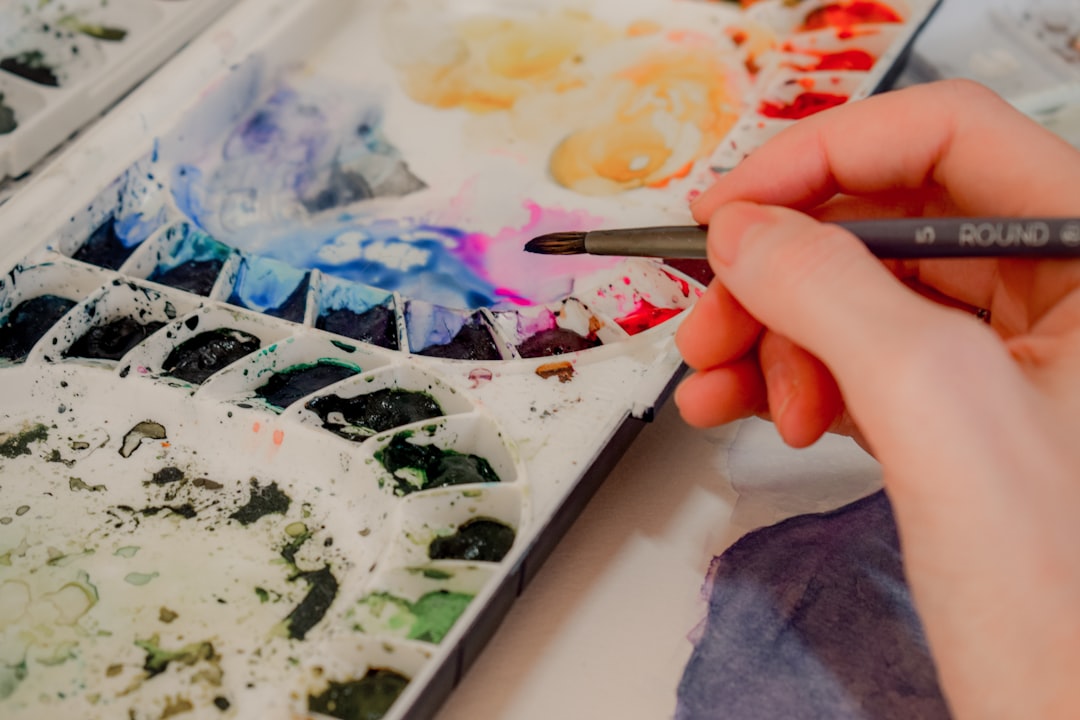
A Montessori art workshop for kids in Estepona (or any accredited Montessori classroom) doesn’t look like a drawing academy. There’s no blackboard with a model to copy. No “make a sunflower like Van Gogh.” What there is, is a prepared table with real materials: wet watercolor cakes, quality paper, jumbo crayons, clay, and wooden tools. Daily practice with Montessori art classes for kids Estepona reveals nuances no handbook fully captures.
The child chooses which material to use, how much time to dedicate, and what they want to express. The guide observes, offers technique when the child asks, but never corrects the result. A blue landscape with a purple sun is perfect. This is how imagination is protected. Understanding Montessori art classes for kids Estepona from inside the classroom reshapes everyday decisions.

Why Art Matters So Much in Early Childhood
Maria Montessori observed that young children learn through their hands. When a 4-year-old mixes watercolors, they’re training hand-eye coordination, concentration, and decision-making. When they model clay, they work on spatial perception and emotional regulation. Concrete data on Montessori art classes for kids Estepona is worth reviewing before acting on assumptions.
Art isn’t an extra: it’s language. Before writing, before reading, the child draws what they feel and understand about the world. The Montessori art workshops for kids in Estepona and at our Sotogrande campus use this window of development to build creative confidence from age 3.
Book a personalized school visit and see how we integrate art into our students’ daily lives.

Montessori Materials We Use for Art
At IMS, we work with real materials, not plastic toys. Here are some you’ll find in our Casa de Niños (3-6 years) and Taller (6-12 years) classrooms:
- Wet watercolor cakes : the child wets the brush, chooses color, and controls the amount of water. Develops precision and patience.
- Thick crayons : ideal from ages 2 to 4 for correct grip and frustration-free strokes.
- Clay and wooden tools : modeling with hands strengthens hand muscles and connects the child with texture and volume.
- Collage with natural materials : dried leaves, seeds, fabrics. The child creates compositions with real elements from the environment.

Montessori Art at Home: 3 Simple Ideas for Estepona & Surrounding Families
You don’t need a Montessori classroom to foster creativity. At home, with few materials and lots of observation, you can replicate the philosophy:
- Prepare an accessible art corner : a low shelf with paper, crayons, and watercolors. Let the child reach it alone whenever they want to create.
- Don’t say “how pretty” : instead, ask “tell me what you painted” or “how did you feel while doing it?” This validates the process, not the result.
- Offer real materials : a real brush, real clay. Children notice the difference and take the activity more seriously.
Differences Between Montessori Art & Directed Crafts
In a directed craft, all children produce the same product. The goal is the result: the ladybug with foam dots. In Montessori art, each child creates something different. The goal is the process: exploration, decision, expression.
This doesn’t mean crafts are bad. But if your child only does activities where everything turns out the same, they’re learning to follow instructions, not to think creatively. The Montessori art workshops for kids in Estepona and across the Costa del Sol aim for the opposite: that each child discovers their own visual voice.
How to Choose a Good Art Workshop for Your Child
If you’re looking for Montessori art workshops for kids in Estepona, consider these points before enrolling your child:
- Child-guide ratio : maximum 8-10 children per adult for real observation.
- Materials : are they real or toy-like? Is there variety or just playdough and markers?
- Does the result have to be the same for everyone? : if the answer is yes, it’s not Montessori.
- Guide’s training : ask if they have AMI or equivalent training. At IMS, all our guides are certified by the Association Montessori Internationale.
Frequently Asked Questions
At what age can my child start Montessori art workshops?
From age 2, with adapted materials like thick crayons and large paper. From age 3, in Casa de Niños, the child accesses watercolors, clay, and collage autonomously. In Taller (6-12 years), technique expands to include printmaking, perspective, and collaborative projects.
What’s the difference between a Montessori art workshop and a drawing academy?
In a drawing academy, the teacher teaches technique and the child copies models. In a Montessori art workshop, the child explores freely with real materials and the guide only intervenes when asked. The focus is on the creative process, not the final result.
Do I need Montessori experience to do art at home?
No. You only need three things: accessible quality materials, an unhurried space, and the willingness to observe without directing. If you want to delve deeper, at IMS we organize Acompañando-té workshops for families where we share these tools.
Key Takeaways
The Montessori art workshops for kids in Estepona and the Costa del Sol area offer a real alternative to directed crafts. Montessori art protects the child’s innate creativity, develops fine motor skills, and builds confidence through the process, not the product.
If your family lives in Estepona, Casares, or Manilva and you’re looking for a school where art is part of everyday life (not an isolated weekly hour), we invite you to visit IMS Sotogrande. We’re less than 30 minutes away by car via the AP-7. Check the admissions process here or call us at +34 653 04 17 39.









