Learning Games for Teens: Montessori Activities to Try at Home

Learning games for teens are games and challenges that teach while teenagers make decisions, cooperate, create or solve problems. The best ideas combine a clear objective, independence and an age-appropriate level of difficulty, with or without a screen. This guide applies a Montessori perspective for families in Sotogrande, Gibraltar and the Campo de Gibraltar.
- In summary
- How learning games for teens support learning
- Educational games for teenagers that hold their interest
- How to choose learning games for teens and educational games for teenagers
- What is a popular game among teenagers?
- Which game is best for a 13-year-old?
- Learning English with British Council LearnEnglish Teens resources
- Frequently asked questions
In summary
- A good educational game sets a specific challenge and allows players to review their strategy.
- For 13-year-olds, cooperative challenges lasting 15 to 30 minutes work particularly well.
- British Council LearnEnglish Teens can support English learning when it is followed by real conversation.
- Before choosing, families should consider age, time, interaction and privacy.

How learning games for teens support learning
Learning games for teens work best when teenagers have a purpose and can make decisions. Simply collecting points is not enough. The activity should require reasoning, communication, planning or creativity, followed by a brief opportunity to explain which strategy worked.
In a Montessori community, the adult prepares the environment and observes before stepping in. The Association Montessori Internationale places independence and active participation at the centre of the educational experience. As a result, a simple activity can be more valuable than an app packed with stimulation.
Screen use does not determine quality either. A digital game can encourage research or collaboration, while a card game can develop language, memory and self-control. What matters is the intention, the level of challenge and what happens after the game.

Educational games for teenagers that hold their interest
Educational games for teenagers hold their interest when they present a recognisable problem, offer several possible solutions and do not feel like a disguised worksheet. The phrase learning games for teens covers many different options, so it is best to start by identifying the skill you want to practise.
| Activity | Main skill | Duration | Preparation |
|---|---|---|---|
| Cooperative clue-based mission | Communication and logic | 20-30 minutes | 6-8 cards and a shared goal |
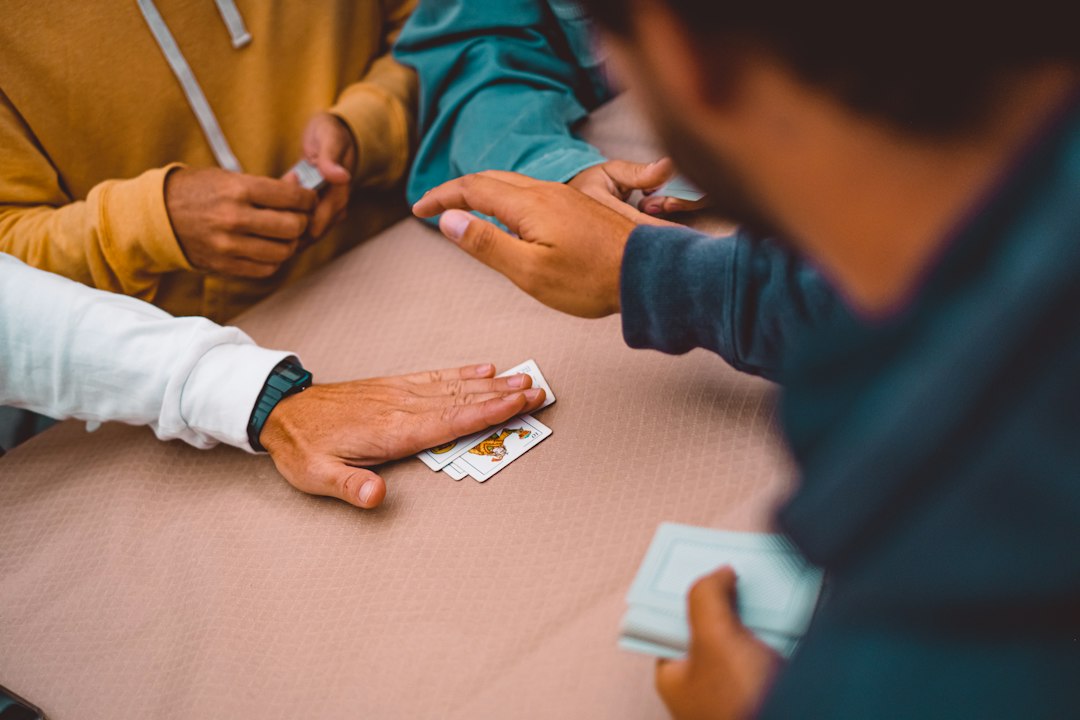
| Dilemma-card debate | Argumentation and listening | 15-20 minutes | 4 open-ended questions |
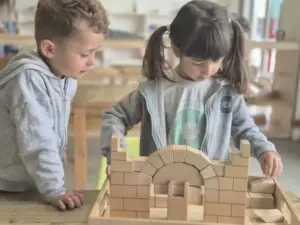
| Building challenge | Planning and creativity | 25 minutes | Recycled materials and one condition |
| Decision journal | Reflection and written expression | 10 minutes | One situation and two alternatives |
If you come across a resource identified as Teens Tech, first check the recommended age, whether it contains adverts, how data is collected and whether it can be played without competition. At home, educational games for teenagers become more valuable when the adult asks “What would you change?” rather than saying whether the answer is correct.

How to choose learning games for teens and educational games for teenagers
When assessing learning games for teens, start with the teenager’s profile, not the most popular app. Learning games for teens should offer an achievable challenge, allow some choice and connect with real interests such as music, science, languages, sport or relationship issues.
A common mistake is turning the game into a compulsory lesson. This fails because motivation disappears, and the teenager starts playing only to please the adult. The solution is to offer two options, agree on a specific amount of time and review the experience together afterwards. If it does not work after two attempts, change the activity.
Fun activities for teenagers: an idea for 13-year-olds
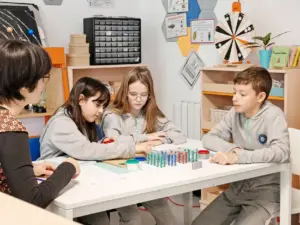
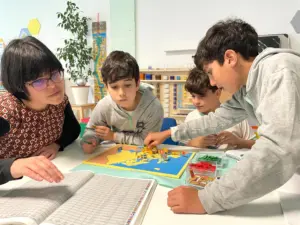
For a 13-year-old, one of these learning games for teens could be a 20-minute challenge for four people, involving a shared question and several possible solutions. This example does not require a digital platform and makes it possible to observe how the group cooperates.
- Write a mission on a card, such as designing an activity for a rainy afternoon using three materials.
- Provide four condition cards, for example 30 minutes, low noise, two participants and no devices.
- Allow 10 minutes to create the solution and 5 minutes to present it.
- Ask which decision was most difficult and what they would change in a second round.
This activity develops planning and negotiation. In addition, fun activities for teenagers allow each participant to contribute a different strength, which is especially useful when ages or confidence levels vary.
Learning games for teens can also work well for an international family. For example, a 15-year-old girl could choose a song by A*Teens, summarise its theme in English and defend her interpretation for three minutes. The task combines music, vocabulary and speaking without presenting the language as a test.
What is a popular game among teenagers?
Which game is best for a 13-year-old?
For a 13-year-old, a cooperative game with short rules, visible decisions and a 15- to 30-minute playing time is often a good fit. There is no universally best option. The adult should adjust the difficulty and allow the young person to choose between two or three formats.
A second example could take place on a Saturday in Sotogrande. Two 13-year-olds receive eight pieces of cardboard and the challenge of building a tower that supports a book for 20 seconds. They then write down one improvement and repeat the activity once. The activity develops design skills, tolerance for mistakes and conversation without turning the result into a grade.
The American Academy of Pediatrics offers guidance on supporting healthy media use in childhood and adolescence. Therefore, if the game is digital, agree beforehand on the time, place and point at which devices will be put away. The rule should be clear, and the adult must follow it too.
Learning English with British Council LearnEnglish Teens resources
British Council LearnEnglish Teens can be a useful resource for practising English through reading, videos, activities and topics relevant to teenagers. Its greatest value appears when digital material becomes a conversation, a creative task or a short activity with a real purpose.
A simple sequence takes 25 minutes. For 8 minutes, the teenager reviews one piece of content. They then choose five new words, use them in three sentences and explain for two minutes which idea they found most interesting. Finally, a family member asks two questions without correcting every mistake.
In families that speak Spanish and English at home, this routine can be extended with an oral or written response. In a Spanish-English immersion school, the goal is not to memorise more exercises but to build confidence in understanding and expressing ideas in real situations.
Frequently asked questions
What are some suitable educational games for teenagers?
Good educational games for teenagers combine a clear objective, genuine decisions, adjustable difficulty and a brief conversation afterwards. They may include logic challenges, cooperative projects, card-based debates or English activities, with or without a screen. The choice should reflect the young person’s age, interests and available time.
What are some good games for teenagers?
Good games for teenagers respect their interests, allow them to choose strategies and offer an achievable challenge. Options include a cooperative mission, an argument-based card game, a spatial puzzle or a family planning activity. The duration should be agreed in advance, and the activity should not always become a compulsory lesson.
What is a popular game among teenagers?
There is no single popular game that works equally well for every teenager, because preferences depend on age, group and type of challenge. Cooperative games, quizzes, strategy games and creative activities are often flexible options. Ask the young person before choosing and observe how they participate.
What is the best game for a 13-year-old?
A short, cooperative and adjustable activity is often a good fit for a 13-year-old if it allows them to make decisions, explain their strategy and accept changes. It could be a clue-based mission or a building challenge. Try it for 15 or 30 minutes and adjust the rules according to their response and level of interest.
Start this week with a 20-minute challenge, observe what your child needs and adjust the difficulty without turning it into an obligation. To find out how this approach is experienced at IMS Sotogrande, book a personalised school visit.