
Helping Shy Children: Montessori Tips for Parents in Sotogrande
In short
Helping shy children begins with something many parents find hard to accept: shyness isn't a problem to correct, but a way of relating that requires respect, time, and safe environments. Shyness is a cautious reaction to the unknown, not a defective trait.

Helping shy children begins with something many parents find hard to accept: shyness isn’t a problem to correct, but a way of relating that requires respect, time, and safe environments. Shyness is a cautious reaction to the unknown, not a defective trait. When a child hides behind your leg or doesn’t greet, they aren’t being rude: they’re regulating their inner world before opening up. In Montessori, we support this need for security without pressure, and at home, you can do the same with simple gestures. In this article we explore help shy child in depth with practical examples.
- Don’t label your child as “shy”: labels become self-fulfilling prophecies.
- Offer predictable environments with clear routines, both at home and school.
- Allow observation before participating: watching is also an active way of learning.
- Validate their emotions instead of minimizing them: “I see you need time, I’m here.”
- Model greetings and interactions yourself, without forcing them to imitate you.
Helping Shy Children: The First Step is Not Labeling
Not labeling is the golden rule. Phrases like “he’s very shy” said in front of the child reinforce an identity that’s hard to let go of later. For example, describing behavior without judgment is more useful: “today he prefers to watch for a while before playing.” Often, what adults call shyness is actually a temporary childhood insecurity in new situations. However, if this insecurity persists for months and limits daily life, it should be observed more closely. When it comes to help shy child, it pays to listen to what families and lead guides actually report.
Signs of Childhood Insecurity Not to Confuse with Shyness
Childhood insecurity is noticeable when the child avoids any social contact, cries when separated, or appears sad, not just cautious. In that case, support should be more individualized and may require a professional. Daily practice with help shy child reveals nuances no handbook fully captures.

The Montessori Classroom: A Safe Environment for Cautious Children
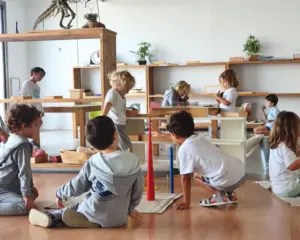
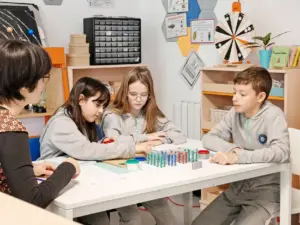
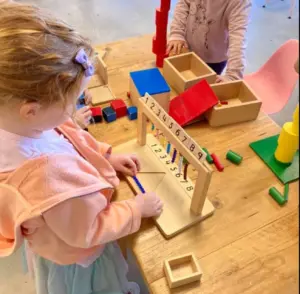
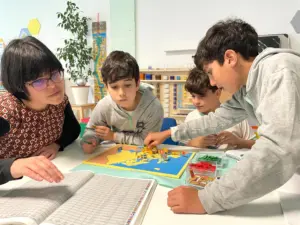
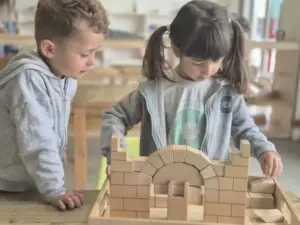
In a Montessori classroom, the shy child doesn’t compete for adult attention: they choose a material, work at their own pace, and interact when they feel ready. We don’t confuse social withdrawal with lack of skills: they just need more observation time. According to the Association Montessori Internationale, the prepared environment fosters child autonomy and confidence (AMI). The American Academy of Pediatrics reminds that a shy temperament is a normal variant of development (AAP). Families from Sotogrande, La Línea, or even Estepona visit us and observe how their children, initially cautious, choose a quiet corner before joining in. Many expat families moving to the Costa del Sol tell us their children need weeks to feel secure with a new language. Understanding help shy child from inside the classroom reshapes everyday decisions.
If you’re looking for an environment that respects your child’s pace, Book a personalized school visit. Concrete data on help shy child is worth reviewing before acting on assumptions.
Social Withdrawal in Childhood: When to Worry and When Not To
Social withdrawal stops being concerning when the child maintains secure bonds with at least one reference figure and shows curiosity about the environment, even from a distance. If they completely avoid any interaction and isolate for months, consulting a specialist is advisable.

Helping Shy Children at Home: 4 Steps That Work
Helping shy children at home doesn’t require complicated techniques: just validate, prepare, accompany, and celebrate small advances. Here are four steps we apply in the classroom that you can adapt to your family routine.
- Validate without dramatizing : “I see you need a bit more time, I’m here.”
- Prepare the contexts : if going to a party, tell them who will be there and what might happen.
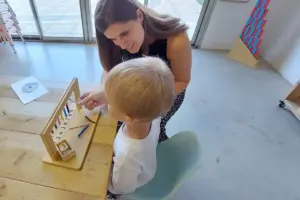
- Accompany without pushing : stay close, offer your hand, and let them decide when to let go.
- Celebrate attempts , not just results: a wave or a quiet “hello” are huge steps.
Helping Shy Children at Age 3
At age 3, shyness often mixes with the identity crisis and desire for autonomy. Don’t ask them to greet strangers if they don’t want to. Offer alternatives like waving or hiding behind you until they feel safe. At home, respect their “no” calmly and show through your attitude that it’s okay to need more time.
My Child is a Quiet Child: Should I Intervene?
A quiet child isn’t necessarily a sad child. Often, they just process silently before speaking. Therefore, don’t ask them to talk more, but offer quiet moments of one-on-one conversation. If your child is a quiet child, value their gestures and looks as valid forms of communication.
Fear of Making Mistakes and How It’s Addressed in Children’s House
The fear of making mistakes blocks many cautious children, especially from age 5 or 6. In Children’s House, we treat errors as a natural part of learning, never as failure. When the fear of mistakes is very intense, it’s worth reviewing what messages they receive at home about errors.

Frequently Asked Questions
Does Shyness Go Away with Age?
Shyness as a temperamental trait doesn’t disappear, but it can be modulated with appropriate strategies and a safe environment. Supporting without pressure, validating emotions, and respecting their pace is the best way to help them gain confidence.