
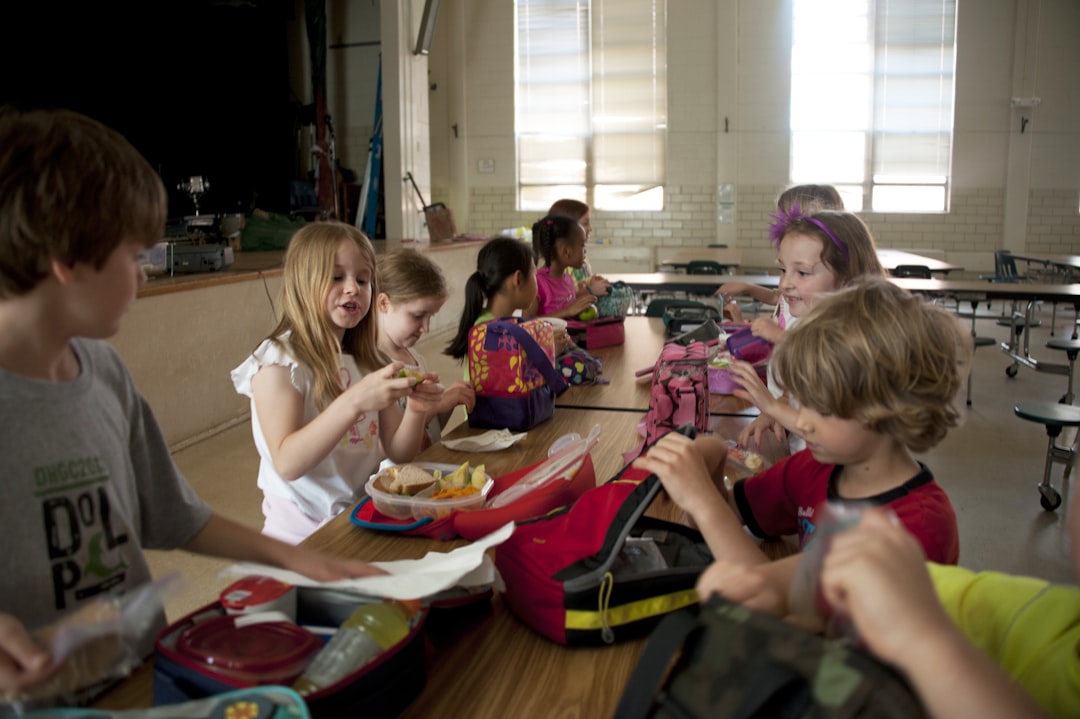
Healthy School Lunch in Costa del Sol: A Guide for International Families
In short
When choosing a school for your family abroad, the quality of the lunch program weighs just as heavily as the teaching method or facilities. A great school catering service doesn’t just fill stomachs, it fuels your child’s energy, focus, and emotional balance throughout the day.

When choosing a school for your family abroad, the quality of the lunch program weighs just as heavily as the teaching method or facilities. A great school catering service doesn’t just fill stomachs, it fuels your child’s energy, focus, and emotional balance throughout the day. For families relocating to the Costa del Sol, this is especially important as you may be unfamiliar with local nutritional standards and want to ensure your child’s school meals are genuinely healthy. In this article we explore healthy school lunch Costa del Sol in depth with practical examples.
- A quality lunch program is defined by fresh ingredients, rotating menus overseen by nutritionists, and accommodation for allergies.
- A balanced school diet improves cognitive performance and reduces behavioral issues, according to WHO studies.
- At IMS Sotogrande, nutrition is an integral part of our educational project, not an isolated outsourced service.
- Parents can request weekly menu information and participate in family nutrition workshops.
Why School Nutrition Deserves Your Attention from Day One
A child spends between four and eight hours at school daily. During that time, they consume 40-60% of their total caloric intake. This means what they eat at school isn’t just a supplement, it’s the foundation of their daily nutrition. Therefore, the quality of the school lunch program you choose directly impacts their capacity to learn, their immune system, and even their mood. When it comes to healthy school lunch Costa del Sol, it pays to listen to what families and lead guides actually report.
The Spanish Association of Pediatrics (AEP) emphasizes that eating habits formed between ages 2 and 12 shape one’s relationship with food for life. If a school offers a varied menu with seasonal vegetables and quality proteins, your child internalizes those flavors as normal. Conversely, a lunch service based on ultra-processed foods and repetitive frying teaches exactly the opposite. Daily practice with healthy school lunch Costa del Sol reveals nuances no handbook fully captures.

What a Truly Great School Lunch Program Includes
Not all school catering services are created equal. A high-quality program for children includes these features: Understanding healthy school lunch Costa del Sol from inside the classroom reshapes everyday decisions.
- Menus designed by registered nutritionists , with food rotation and seasonal adaptation.
- Fresh, locally sourced ingredients , avoiding ultra-processed items, artificial flavorings, and excess added sugars.
- A clear allergy and intolerance protocol , with real alternatives (not just removing a food).
- An in-house kitchen or supplier with verifiable traceability , allowing you to know the origin of every product.
- Integrated food education , where children learn about what they eat and participate in the experience.
At IMS, we include a balanced diet in all our programs. Nutrition is not an add-on or an outsourced service disconnected from our educational project. It’s part of our daily classroom life. Our menus are planned for active children who need sustained energy, not sugar spikes followed by a focus crash. Concrete data on healthy school lunch Costa del Sol is worth reviewing before acting on assumptions.
To learn how we integrate nutrition into our educational approach, book a personalized school visit.

Red Flags in a School Lunch Program
As a parent, there are concrete indicators you can observe to evaluate if your child’s catering is working well:
- Your child comes home hungry or, conversely, says they weren’t given enough food.
- The menus don’t change for weeks: always pasta, nuggets, and the same salad.
- There is no weekly communication about what is being served.
- They don’t ask about allergies or offer alternatives for intolerances.
- Children eat in front of screens or in a chaotic environment without proper adult supervision.
Any of these signs indicates the lunch service is functioning as a mere formality, not an educational experience. At IMS, the weekly reports we send every Friday include nutrition information because we know families need to know what and how their child is eating.

The Link Between Food and Learning
Educational neuroscience has shown that a child’s brain consumes up to 60% of the energy they ingest. A meal based on refined carbohydrates produces a glucose spike followed by drowsiness. In contrast, a meal with proteins, healthy fats, and fiber generates constant energy for three to four hours. This has direct implications for the second half of the school day, when accumulated fatigue is more noticeable.
For example, a lunch of baked fish, legumes, and seasonal vegetables sustains a six-year-old’s concentration during afternoon work. The same meal in a format of breaded nuggets with ketchup and sugary juice produces the opposite effect. A school lunch program that truly respects child development understands this relationship and cooks accordingly.
Food and Autonomy: The Montessori Approach
In Montessori pedagogy, eating is a practical life activity. Young children participate in food preparation, serve their own portions, and learn to listen to their body’s hunger and satiety signals. This is radically different from a lunchroom model where the child receives a fixed plate and must finish it in a set time.
When a school catering program incorporates this approach, mealtime becomes a moment of autonomous learning. The youngest develop fine motor skills cutting fruit. Older children learn about nutrition by reading labels. And everyone internalizes that eating well is an act of self-care, not an imposed obligation.
The Spanish Montessori Association highlights that food autonomy is one of the pillars of Montessori early childhood education because it builds the child’s confidence in their own body.
Frequently Asked Questions About School Lunch Programs
What’s the difference between an outsourced catering service and an in-house school kitchen?
The main difference is control over ingredients and processes. A school with its own kitchen monitors each dish from procurement to service, ensuring freshness and adaptation to student needs. With outsourced catering, that control depends on the provider and the contract. The key is to always ask who cooks, where the ingredients come from, and how allergies are managed.
How do I know if the school menu is truly healthy?
Request the monthly menu and review it with these questions: Are seasonal vegetables featured daily? Do proteins vary between fish, legumes, and meat? Are there frequent ultra-processed items like nuggets or pizza? Are desserts fruit or dairy instead of pastries? If the school doesn’t provide this information, that’s a red flag. Nutritional transparency should be as natural as handing over an academic report.
Is a high-quality school lunch program much more expensive?
Not necessarily. The cost difference between a menu based on fresh ingredients and one based on ultra-processed foods is smaller than it seems. What increases the cost is customization for allergies, professional nutritional supervision, and staff training. These are worthwhile investments because they directly impact your child’s health. To review the terms of our program, including nutrition, you can check our admissions page or write to us directly.
What if my child has severe food allergies?
A professional school catering service must have a documented allergy protocol that includes: child identification, a real alternative menu (not just removing the allergen), staff trained in anaphylactic reactions, and constant communication with the family. Don’t accept a “we’ll just remove the nuts” without more. Ask to see the written protocol and ask who supervises it.
Key Takeaways
School nutrition is one of the factors that most influences your child’s performance, development, and well-being during the school day. A quality school catering program combines fresh ingredients, professional nutritional supervision, and an educational approach that teaches lifelong habits.
If you are evaluating schools in the Campo de Gibraltar or Costa del Sol area, include nutrition on your list of questions during the visit. Ask to see the menus, inquire about the origin of ingredients, and observe how the children eat. And if you’d like to discover our complete offering, book a visit to IMS Sotogrande and see how food is an integral part of our educational project.
Viviane Dumont, Director of Studies at International Montessori School Sotogrande.









