
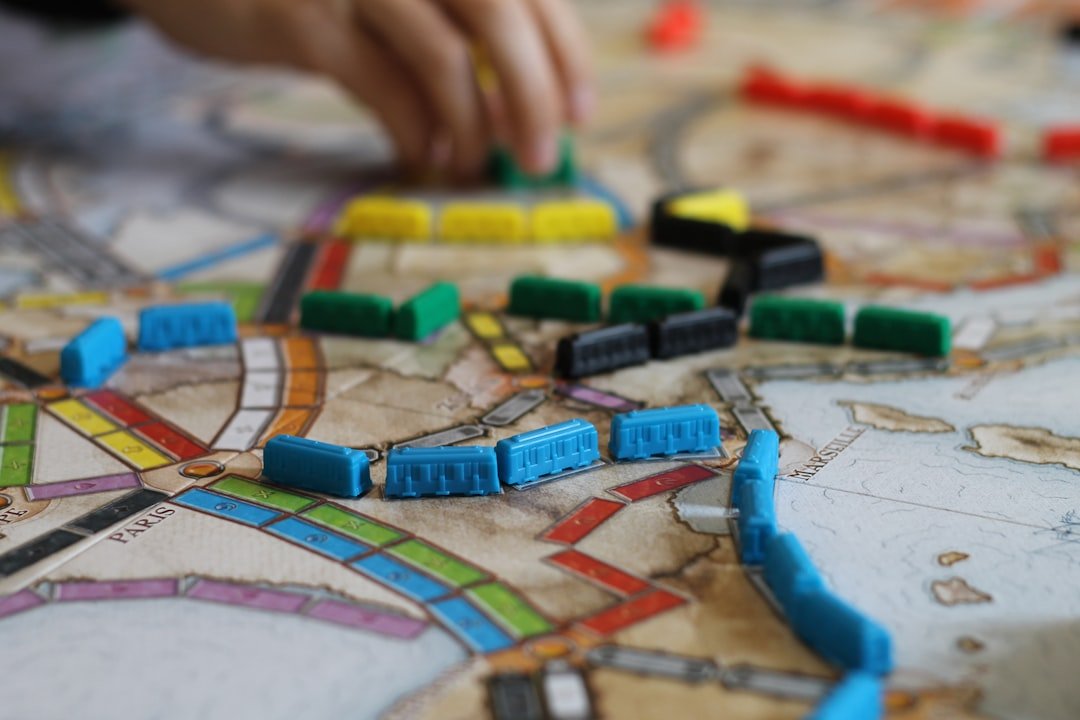
Educational Games for 10-Year-Olds: Montessori Guide for Sotogrande Families
In short
Educational games for 10-year-olds combine challenge, autonomy, and collaboration to consolidate skills in logic, critical reading, and teamwork. In Montessori, we view them as the gateway to abstract thinking, which is why they deserve a starring role both at home and in the classroom.

Educational games for 10-year-olds combine challenge, autonomy, and collaboration to consolidate skills in logic, critical reading, and teamwork. In Montessori, we view them as the gateway to abstract thinking, which is why they deserve a starring role both at home and in the classroom. At age 10, children are in the midst of the second plane of development, where moral imagination and abstract reasoning begin to soar. Ignoring this impulse is wasting the most fertile window for cultivating strategic thinking. In this article we explore educational games for 10 year olds in depth with practical examples.
- At 10 years old, a child enters the second plane of development (6-12), where imagination and morality take charge.
- The best educational games involve decision-making, not just repetition.
- In the Montessori Elementary Classroom, games are integrated with manipulative materials and real-world projects.
- Avoid rewarding every correct answer: mistakes are part of learning.
- If you’re looking for an environment that respects this approach in Sotogrande, schedule a visit to the school.
- The Shift from Concrete to Abstract in the Montessori Elementary Classroom
- Educational Games for 10-Year-Olds That Foster Collaboration
- How to Choose Educational Games for 10-Year-Olds at Home
- STEM and Board Games: Combinations That Work
- Common Mistakes When Selecting Educational Games
- Frequently Asked Questions
- Key Takeaways
The Shift from Concrete to Abstract in the Montessori Elementary Classroom
At age 10, simply fitting pieces together is no longer enough. Children need challenges that activate deductive logic and planning. That’s why educational games for 10-year-olds should propose decisions with consequences, not just correct answers. When it comes to educational games for 10 year olds, it pays to listen to what families and lead guides actually report.
In the 6-12 plane of development, Montessori describes a reasoning mind that seeks to understand the why behind things. Educational games for pre-teens, when well-chosen, feed this curiosity without turning it into an obligation. The Association Montessori Internationale (AMI) reminds us that play is not a break from learning, but a different form of learning. Daily practice with educational games for 10 year olds reveals nuances no handbook fully captures.
Why Mechanical Repetition Fails with Pre-Teens
A game that only scores correct answers will exhaust a 10-year-old in minutes. Meaningless repetition triggers boredom, not curiosity. Instead of accumulating points, value games that require choosing between options: a logic puzzle without instructions, a probability card game, or a building challenge with limited materials. These formats maintain attention because each play is different. Understanding educational games for 10 year olds from inside the classroom reshapes everyday decisions.
A good educational game doesn’t reward memory, but the ability to argue a decision and accept its consequences. In the Montessori Elementary Classroom in Sotogrande, educators select these games based on each child’s moment. Thus, the leap from concrete to abstract becomes a personal experience, not an imposition. Concrete data on educational games for 10 year olds is worth reviewing before acting on assumptions.

Educational Games for 10-Year-Olds That Foster Collaboration
Cooperative games develop social skills that no individual exercise can match. At age 10, children start to understand that their decisions affect the group, and this understanding is better trained through play than through lectures.
Examples of Cooperative Games by Category
In logic and strategy, Pandemic Junior requires players to coordinate resources against a common challenge. There’s no individual winner: either everyone wins or everyone loses. In communication, Dixit stimulates narrative creativity by asking each player to associate images with ambiguous verbal clues.
In construction, the classic Jenga in cooperative mode (building the tallest tower without it falling) teaches shared risk management. Finally, role-playing games like Forbidden Island demand joint planning and real-time negotiation. Each of these formats works on different skills, but they all share a fundamental Montessori principle: responsibility is shared, not imposed.
How to Integrate Cooperative Games at Home
Reserve a weekly screen-free afternoon for family play. Don’t direct the game: let your child explain the rules and mediate conflicts. If a dispute arises over a rule, don’t resolve it yourself. Ask what seems fair to everyone. That negotiation is the real game.

How to Choose Educational Games for 10-Year-Olds at Home
Not all games that claim to be educational are. A good criterion is to ask whether the game requires thinking or just repetition. If the answer is repetition, discard it.
The Rule of Three Decisions
Before buying a game, check that it offers at least three meaningful decisions per turn. A meaningful decision is one where the child must choose between options with different and visible consequences. For example, in a math card game like “Zeus on the Loose,” the child decides which card to play, when to use their power, and how to react to the opponent’s move. Three decisions in a single turn.
If the game only asks to roll a die and move spaces, it doesn’t meet the criterion. Luck has its place, but it shouldn’t be the main engine of a game for a 10-year-old. Look for the strategic component to outweigh the random one.
Montessori Materials as Games at Home
You don’t always need to buy new games. Montessori materials from the Elementary Classroom can be adapted at home with simple items. Wooden fractions, for example, become a challenge game: “Build 3/4 using only 1/8 pieces.” Elementary grammar boards allow creating absurd stories where each part of speech has a color. Geometry with a compass and ruler turns into a symmetrical design contest.
These manipulative materials have a key advantage: the child sees the error immediately and can correct it without adult intervention. This self-correction is the core of Montessori learning.

STEM and Board Games: Combinations That Work
Science, technology, engineering, and mathematics don’t have to be boring subjects. When learned through play, abstract concepts become tangible, and failure is experienced as part of the process, not as a punishment.
Recommended STEM Games for This Age
Gravity Maze combines spatial logic with basic physics: the child must build a circuit for a marble to reach its destination. Its manufacturer, ThinkFun, classifies it for ages 8 and up, but the advanced challenges even test adults. On the other hand, Rush Hour presents traffic jams that can only be solved with sequential thinking. Levels range from beginner to expert, allowing the game to grow with the child.
In the realm of screen-free programming, Robot Turtles introduces concepts of sequences and instructions without a computer. A 10-year-old can design their own levels, raising the complexity and fostering real computational thinking.
Classic Board Games That Never Fail
Chess: develops planning, patience, and anticipation skills. Various studies published in the journal Educational Research Review link regular chess practice with improvements in mathematical problem-solving. Blokus works on geometry and spatial thinking with simple rules but complex decisions. Set trains pattern recognition and mental speed.
None of these games require batteries or an internet connection. That simplicity is, precisely, their greatest advantage in a world saturated with digital stimuli.
Common Mistakes When Selecting Educational Games
The first mistake is choosing by the box. Many games promise “education” in large letters but offer repetitive or decontextualized content. Read other parents’ opinions and, if possible, try before buying.
The second mistake is intervening too much during the game. If you correct every move, the child learns to depend on your approval, not their own judgment. Let them lose. Let them make mistakes. The game is the safe space where errors don’t hurt.
The third mistake is forcing frequency. A brilliant game played every day becomes an obligation. Better two weekly games with enthusiasm than seven out of duty. Intrinsic motivation, the kind that comes from the child, is the most powerful engine of learning. Montessori called it “the child’s work.”
Frequently Asked Questions
How much time per day should a 10-year-old spend on educational games?
There’s no universal fixed time. What’s important is that play arises naturally and doesn’t become another chore. Between 20 and 40 minutes of focused play, without interruptions or background screens, is a good starting point. If the child asks for more, great. If they get bored, switch activities without drama.
Are board games better than educational apps for a 10-year-old?
Board games offer social interaction, physical manipulation, and emotion management that a screen cannot replicate. Apps have their place, especially for practicing specific skills, but they shouldn’t replace in-person play. The ideal combination is a higher proportion of physical games and controlled doses of digital ones.
What if my child only wants video games and rejects board games?
Don’t force it. Start with video games that require strategy, like Minecraft in survival mode or building games with real physics. Then propose a board game with a similar theme. The transition works better when the child sees continuity, not rupture. It also helps to play in groups with friends: the positive social pressure of “we’re all playing” works wonders.
Is it normal for a 10-year-old to get frustrated quickly with difficult games?
Completely normal. At age 10, frustration tolerance is still being built. Don’t eliminate the challenge, but do adjust the difficulty. Many board games include progressive levels: start with the easiest and go up when the child asks. The goal isn’t to win, but to learn that sustained effort yields results.
Key Takeaways
Educational games for 10-year-olds work when they respect their need for autonomy, challenge, and collaboration. It’s not about filling hours, but offering experiences where the child thinks, decides, and learns from their own mistakes. The Montessori approach doesn’t demand expensive materials: it demands intention and respect for the child’s pace.
If your family lives in the Sotogrande, La Línea, Algeciras, or Costa del Sol area and wants to see how we integrate these principles in the Montessori Elementary Classroom, we invite you to visit our school. Seeing a classroom in action is worth more than any article.









