
Bilingual nursery in Sotogrande: a family guide to early years education

Searching for a bilingual nursery in Sotogrande usually means looking for an early years setting where Spanish is part of daily care, play and communication. At IMS Sotogrande, the equivalent stage is Nido/IC for babies and children aged 0 to 3, with Spanish-English dual-language immersion, Montessori routines and respectful support in Sotomarket, San Roque. In this article we explore bilingual nursery Sotogrande in depth with practical examples.
In brief
- Age: IMS’s Nido/IC programme supports children from 0 to 3 years old.
- Languages: The day uses Spanish-English dual-language immersion. French begins from Casa de Niños.
- Hours: Raíces runs from 9:00 to 13:00 and Alas from 9:00 to 15:00, with an extension until 17:00.
- Choosing a nursery: It is worth observing the environment, settling-in process, family communication and opportunities for independence.

What to look for in a bilingual nursery in Sotogrande
When a family searches Google for a bilingual nursery in Sotogrande, they are usually looking for more than a setting where someone speaks Spanish. They want a safe, consistent and understandable place for their child. The choice should not be reduced to language, because routines, the environment and relationships with adults also support development. When it comes to bilingual nursery Sotogrande, it pays to listen to what families and lead guides actually report.
What a Spanish-speaking nursery offers
A Spanish-speaking nursery should offer real conversations during arrival, meals, personal care, rest and play. The adult names what is happening, waits for the child’s response and avoids filling every silence with questions. In this way, language is connected to a real experience rather than presented as an isolated worksheet. Daily practice with bilingual nursery Sotogrande reveals nuances no handbook fully captures.
At a Spanish-speaking nursery, it is also worth asking how the setting supports a family that uses another language at home. Clear communication between home and nursery helps preserve the child’s familiar words. It also makes it easier to notice changes in sleep, appetite or mood without interpreting every behaviour out of context. Understanding bilingual nursery Sotogrande from inside the classroom reshapes everyday decisions.
How to assess a bilingual nursery
A bilingual nursery is not about translating every sentence. It is about providing consistent Spanish-English dual-language immersion, with adults maintaining their reference language and activities serving a real purpose. For example, a song, a basket of objects or a washing routine can introduce vocabulary without turning the moment into a lesson. Concrete data on bilingual nursery Sotogrande is worth reviewing before acting on assumptions.
At a bilingual nursery, ask what happens when a child does not yet respond in the second language. The right approach respects the child’s pace, accepts gestures and words from home, and maintains exposure without pressure. It makes no sense to demand English sentences from an 18-month-old who is still organising their first words.

How IMS Montessori Nido works for children aged 0 to 3
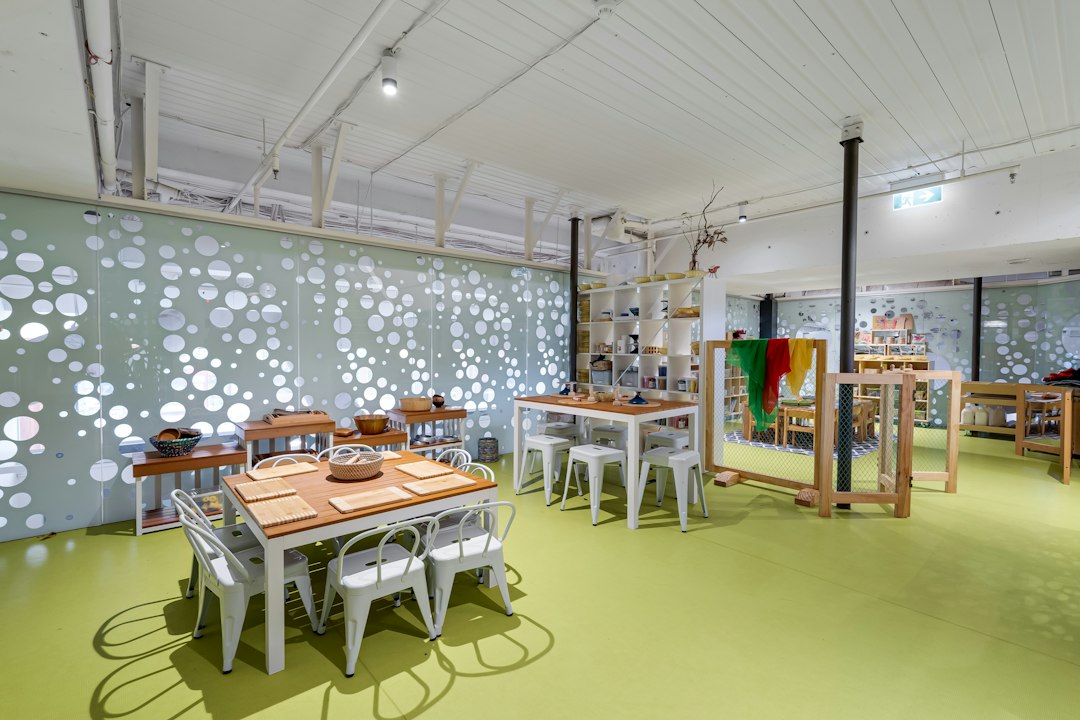
IMS Montessori Nido provides a prepared environment where young children can move, explore and take part in simple tasks with adult support. The space includes Montessori materials, bright areas, outdoor corners and spaces that encourage concentration and independence.
Early years education from 0 to 3 needs predictable periods of time, but not a rigid schedule. At Montessori Nido, the adult observes before intervening and adapts support to each child. The aim is not for everyone to do the same thing at the same time, but for each child to progress confidently within shared routines.
Schedules and adapting to family life
IMS organises Nido/IC into two session options. Raíces runs from 9:00 to 13:00 and Alas from 9:00 to 15:00, with the possibility of extending until 17:00. This difference allows families to consider their childcare arrangements without confusing a longer day with a better experience for every child.

What multilingual early years education from 0 to 3 can offer
Early years education from 0 to 3 can integrate several languages when children receive stable relationships, understandable messages and enough time to listen. At IMS, Spanish-English dual-language immersion forms part of the programmes. French is introduced from Casa de Niños, from the age of 3.
For an international family, maintaining the home language is compatible with attending a bilingual nursery. You can speak to your child in the language in which you express affection most naturally, read stories and talk about what you are doing. It is also helpful to tell the team about familiar words, routines and ways of providing comfort.
The Association Montessori Internationale provides an international reference point for Montessori education and respect for individual development. Meanwhile, UNESCO brings together information about education and linguistic diversity. Both sources help place the discussion beyond the idea of learning languages quickly.
A simple scene to try at home
Imagine a 20-month-old who arrives at 9:00 and still uses only a few sounds to ask for help. At home, you can offer two choices for five minutes, such as water or milk, and name each one without repeating the question ten times. Then accept pointing. This practice strengthens communication without turning mealtime into a test.
Settling in, boundaries and communication with the family
Settling in is easier when the adult keeps goodbyes brief, maintains a consistent routine and gives an honest message. Before the first day, explain who will look after the child and when you will come back, using simple words. Afterwards, tell the team about sleep, eating and comfort objects. Predictability reduces unnecessary changes.
A common mistake is extending the goodbye because the child is crying. The adult comes back in, negotiates for ten minutes and ends up communicating uncertainty. The solution is to agree on a two- or three-step ritual, such as a hug, a goodbye phrase and handing the child to their key adult. Then always keep the promise to return.
If a family is comparing bilingual nurseries in Sotogrande, they should also ask how the setting responds to crying, communicates an incident and supports independence. Choosing a bilingual nursery only because of its languages leaves out decisions that affect every morning. By contrast, observing a real arrival provides information no brochure can replace.
Frequently asked questions
What age range does a Montessori nursery cover?
At IMS Sotogrande, the Nido/IC programme welcomes babies and children from 0 to 3 years old. Support is organised around independence, movement, language and daily routines within Spanish-English dual-language immersion. Information about later stages should be confirmed directly with the school.
Are Spanish and English spoken during the day?
According to the information in this article, the Nido/IC programme uses Spanish-English dual-language immersion in care, play, songs and everyday interactions. Families can maintain their home language and share with the team the words and routines their child already uses.
What are the Montessori Nido hours?
The article states that the Raíces option runs from 9:00 to 13:00 and Alas from 9:00 to 15:00, with the possibility of extending until 17:00. Families should confirm availability, extension conditions and the most suitable option directly with IMS Sotogrande.
How do we apply for a place?
Families can contact IMS Sotogrande to request a visit and learn about the admissions process, required documentation and available places. Before publishing specific dates or conditions, it is advisable to verify them directly with the school, as they may change depending on the academic year and programme.









