
Best English Summer Camp near Sotogrande & Costa del Sol | Bilingual Immersion
In short
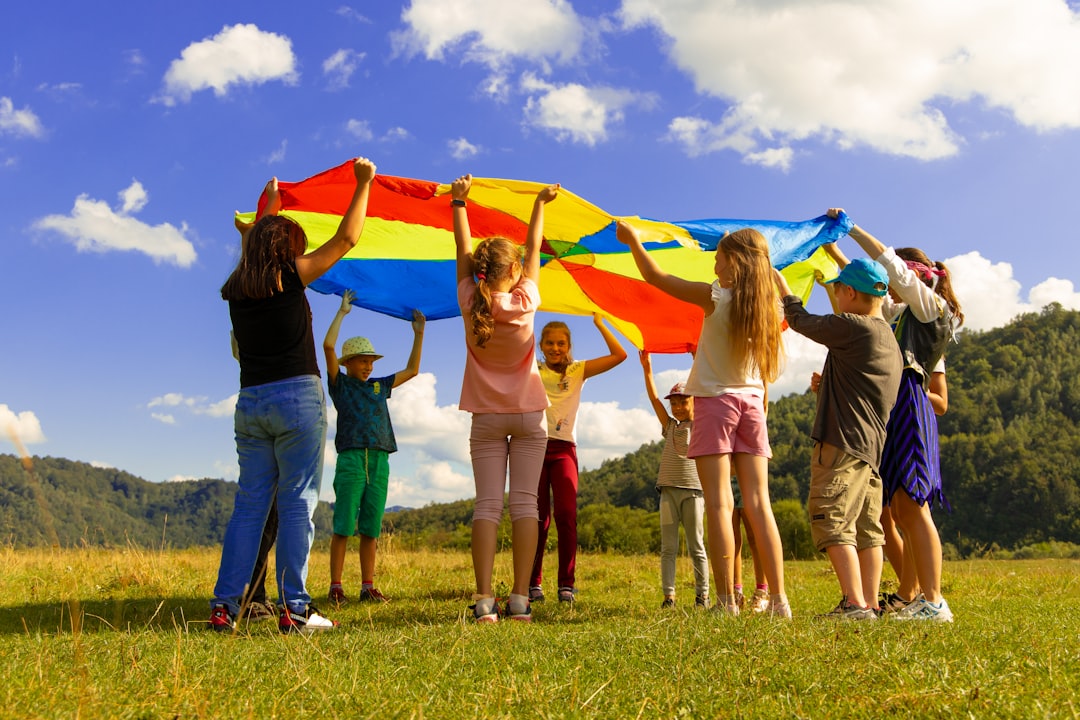
An English summer camp is a bilingual immersion experience where children aged 3 to 12 spend their holidays doing fun, active, and creative activities while practicing English in a natural context.

An English summer camp is a bilingual immersion experience where children aged 3 to 12 spend their holidays doing fun, active, and creative activities while practicing English in a natural context. These programs combine play, nature, and natural language acquisition, something that families in the Campo de Gibraltar and Costa del Sol increasingly seek to reinforce bilingualism during July and August. In this article we explore English summer camp Sotogrande in depth with practical examples.
- Learning in a real context (not at a desk) is the most effective method for a child to gain fluency without conscious effort.
- The ideal age to start an English summer camp is between 3 and 7 years old, when the brain is in its prime language acquisition window.
- A good program includes varied activities: sports, art, music, and cooperative games, not just language classes.
- Location and the staff-to-child ratio are what separate a crowded camp from a truly enriching one.
- Why an English summer camp works better than after-school classes
- Recommended ages for an English summer camp
- Activities a good English summer camp should include
- What to ask before enrolling your child in an English summer camp
- The MIMS Kids Summer Camp: an English summer camp in Sotogrande
- Differences between an English summer camp and a monolingual one
- Frequently Asked Questions
- Key Takeaways
Why an English summer camp works better than after-school classes
When a child spends four hours a day immersed in an environment where English is the usual language of communication, their brain processes the language in the same way they learned their mother tongue. This is what linguists call ‘incidental acquisition,’ and it happens naturally during play, meals, and group activities. When it comes to English summer camp Sotogrande, it pays to listen to what families and lead guides actually report.
After-school English classes, on the other hand, are typically one-hour sessions with a more academic focus. Both options are valid, but an English summer camp offers something a weekly class cannot: continuous exposure over weeks. A study by the Association Montessori International (AMI) indicates that children exposed to two languages in natural contexts develop greater cognitive flexibility than those who only receive formal instruction. Daily practice with English summer camp Sotogrande reveals nuances no handbook fully captures.
In bilingual or multilingual families, like many living in Sotogrande, La Línea, or Gibraltar, the camp reinforces the minority language (usually English) during the summer months when school exposure is interrupted. Understanding English summer camp Sotogrande from inside the classroom reshapes everyday decisions.

Recommended ages for an English summer camp
There isn’t a single age to start, but there are stages that favor natural language learning. Between 3 and 6 years old, children absorb sounds, intonation, and vocabulary without filters. An English summer camp for these ages works especially well because play is the main vehicle, there are no exams or evaluations. Concrete data on English summer camp Sotogrande is worth reviewing before acting on assumptions.
From 6 to 12 years old, the child already has more developed cognitive tools. They can participate in more complex projects, debates, and sports activities where English becomes the tool for organizing, not just naming objects. In this age range, an English summer camp builds confidence to speak in front of the group and solve problems in a second language.
The important thing is that the program is adapted to the child’s development. A camp that mixes very different ages without grouping by levels can frustrate the youngest and bore the oldest.

Activities a good English summer camp should include
A quality program doesn’t just offer outdoor English lessons. The best options combine:
- Sport and movement: cooperative games, skill circuits, water activities, or team sports where instructions are given in English.
- Arts and creativity: crafts, painting, building projects where technical vocabulary is learned by handling real materials.
- Music and expression: songs, instruments, small performances that work on pronunciation and the rhythm of the language.
- Nature and science: outdoor explorations, simple experiments, flora and fauna observation.
- Structured free play: unscripted time where children interact with each other using English spontaneously.
If the camp only offers one of these areas, it’s probably not using the full potential of immersion. Ideally, each day should include variety, with moments of high energy and others more calm.

What to ask before enrolling your child in an English summer camp
Before deciding, these questions will help you filter options:
- What is their staff-to-child ratio? The recommended maximum is 10-12 children per adult so each child receives real attention.
- Are the staff native speakers or do they have a certified advanced level? It’s not enough to ‘know English’. They need to know how to transmit it to children.
- How do they group by age and level? An English summer camp that puts everyone together without criteria loses effectiveness.
- Does it include meals? Lunchtime is one of the best opportunities to practice the language in a relaxed way.
- What is the educational philosophy? Is it just leisure or is there a pedagogy behind it?
If you’re looking for an English summer camp in the Campo de Gibraltar or Costa del Sol area, we invite you to learn about the MIMS Kids Summer Camp at IMS Sotogrande, a bilingual Montessori program that combines all of the above.
The MIMS Kids Summer Camp: an English summer camp in Sotogrande
At IMS Sotogrande, we organize the MIMS Kids Summer Camp each year, a program designed for children aged 3 to 12 within our Montessori environment. It is held from June 29 to July 31, 2026, at our Sotomarket facilities, with a schedule from 8:00 to 15:00 and the possibility to extend until 17:00.
The program includes music, sports, art, cooperative games, and weekly themed parties. Everything takes place in a Spanish-English bilingual environment, with staff who ensure English is the usual language during activities. Meals are included, which simplifies logistics for families and takes advantage of every moment of the day for language immersion.
Spaces are limited, and we offer sibling discounts. To reserve your spot or get answers to your questions, email [email protected] or call +34 691 225 041. You can also request information through our admissions page.
Differences between an English summer camp and a monolingual one
The main difference isn’t just the language, but how it’s experienced. In a monolingual camp, Spanish dominates all interactions: instructions, conversations between children, conflict resolution. English is reduced to a daily ‘class’ hour separated from other activities.
In an authentic English summer camp, the language is the vehicle for everything. Children ask for help, negotiate game rules, and share their experiences in English, not because they are forced to, but because the environment facilitates it. This generates much deeper and longer-lasting acquisition.
For families living in areas with a strong Spanish presence, like San Roque, Algeciras, or La Línea, a bilingual camp during the summer is a unique opportunity to maintain linguistic balance.
Frequently Asked Questions
What is the recommended age to enroll a child in an English summer camp?
Most camps accept children from age 3, which is when the child has enough autonomy to be separated from their parents for a few hours. Between 3 and 6, learning is completely natural and unconscious. From age 6, the child can participate in more structured activities that take advantage of their growing cognitive ability.
Does an English summer camp replace after-school language classes?
It doesn’t necessarily replace them, but it complements them very powerfully. After-school classes work on grammar, specific vocabulary, and exam preparation. The English summer camp offers massive, contextual exposure that consolidates everything learned during the school year. The ideal is to combine both approaches throughout the year.
What if my child doesn’t speak any English and I enroll them in a bilingual camp?
English summer camps are prepared for all levels. The staff use gestures, images, repetition, and games so that even children with zero foundation understand the instructions and integrate. In fact, children who start from scratch are often the ones who progress the most in a few weeks, because their brain is in full language absorption mode.
How long does a typical English summer camp last?
The duration varies between one and five weeks. The most effective programs last at least two weeks, because the child needs a few days to adapt to the new linguistic environment and then more time to consolidate what they’ve learned. Camps of only one week often fall short of generating a real impact on English level.
Is an English summer camp with native staff better?
It’s not essential, but it is recommended. Native staff provide authentic pronunciation, colloquial expressions, and linguistic modeling that a non-native speaker, however good, can hardly match. The important thing is that all staff, native or not, have a certified advanced level and experience working with children.
Key Takeaways
An English summer camp offers children real language immersion during the holidays, combining play, sport, and creativity in an environment where the second language is lived, not studied. For families in the Campo de Gibraltar and Costa del Sol, it’s a practical tool to maintain and reinforce bilingualism during July and August.
If you are looking for a quality program for the summer of 2026, we invite you to learn about the MIMS Kids Summer Camp at IMS Sotogrande. Email us at [email protected] or request your personalized visit through our admissions page to discover how we work on bilingualism in a Montessori environment.









