
Best Baby Toys for 0-6 Months: A Montessori Guide for Sotogrande Families

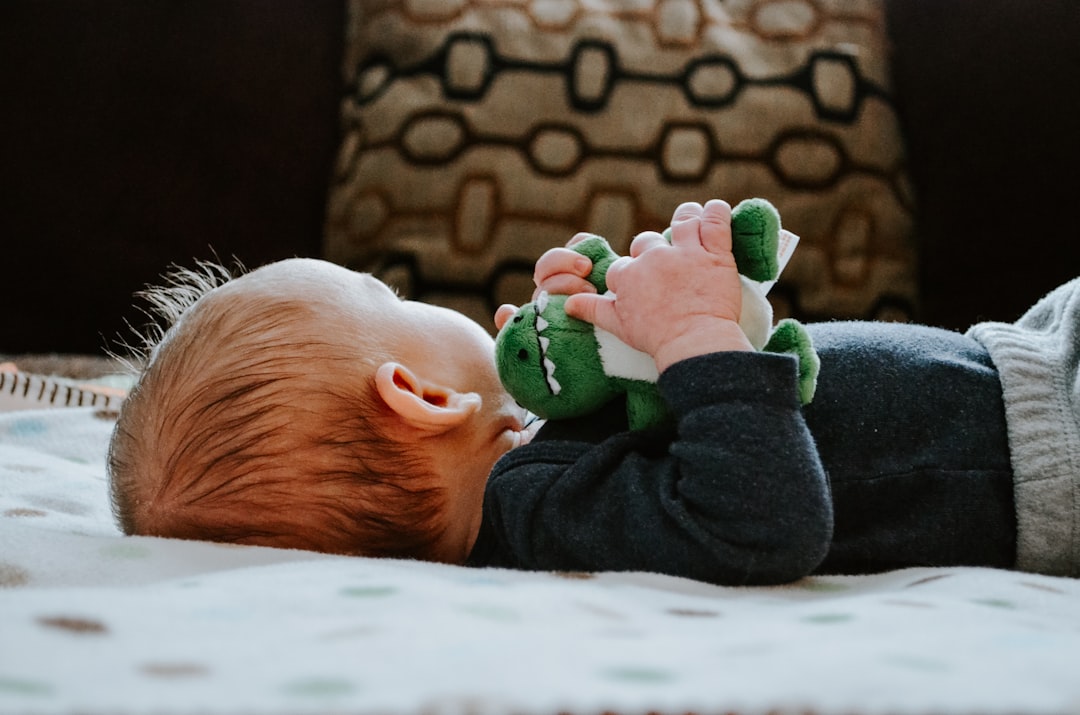
The best baby toys for 0 to 6 months are safe, lightweight, washable and easy to grasp. These materials support visual attention, listening, movement and hand-to-mouth coordination without demanding a specific response. Start with one or two objects and observe. The Montessori approach prioritises freedom of movement and a prepared environment, not a room full of stimulation.
- Key points
- Best Baby Toys for 0 to 6 Months: What Each Stage Needs
- Sensory Toys for Babies: Fewer Stimuli, More Exploration
- Best Baby Toys for 0 to 6 Months in a Montessori Environment
- Safety Before Quantity: What to Avoid
- Toy Rotation and Support During Daily Play
- Frequently Asked Questions
- Key Takeaways
Key points
- Choose durable, washable, lightweight pieces without loose parts.
- From 0 to 3 months, prioritise looking, listening and moving freely.
- From 3 months onwards, offer objects to grasp, turn and explore with the mouth.
- Offer only a small amount of material during awake time and remove it when your baby shows signs of tiredness.

Best Baby Toys for 0 to 6 Months: What Each Stage Needs
Between 0 and 6 months, play progresses from looking and listening to grasping, bringing objects to the mouth, rolling and coordinating both hands. Materials should follow this process rather than introduce functions your baby cannot yet control. When it comes to best baby toys for 0 to 6 months, it pays to listen to what families and lead guides actually report.
Toys for Babies 0 to 6 Months During the First 3 Months
During the first three months, offer clear contrasts, gentle sounds and suspended objects to look at, always during awake time. For example, a simple visual mobile can engage your baby for a few minutes, out of reach and with an adult nearby. Remove it if your baby looks away or shows signs of tiredness.
When your baby closes their hand, offer a lightweight rattle. An unbreakable mirror beside a blanket lets them observe their face and move during tummy time. A cloth book with simple pictures is enough too.
From 3 to 6 Months: Grasping and Turning
From 3 months, babies often seek out objects to grasp and explore by bringing them to their mouths. A wide ring, safe teether, large soft ball or cloth book offers practice without overwhelming them.
Place the material to one side rather than directly in your baby’s hand. This allows them to turn, reach for it and repeat. In addition, several short periods of floor time support free movement better than spending a long time in a bouncer.

Sensory Toys for Babies: Fewer Stimuli, More Exploration
Sensory toys for babies work best when they offer one clear experience: a texture, a gentle sound, a contrast or a shape that is easy to grasp. Babies learn through repetition. They do not need lights, automatic music or multiple functions.
When choosing baby toys for 0 to 6 months, look for one main feature and check that the object has no loose parts. For example, crinkly fabric, smooth wood or a one-piece teether can spark interest without directing every movement.
This choice aligns with the prepared environment described by the Association Montessori Internationale. The adult sets up the space and observes, while the baby acts within their abilities. Sensory toys for babies should not become a performance test.
If you would like to learn about a Montessori environment for early childhood, book a personalised visit to the school.

Best Baby Toys for 0 to 6 Months in a Montessori Environment
A Montessori environment for a baby needs very little furniture: a firm surface on the floor, freedom to move and accessible materials during awake time. Keep one object in view and another nearby instead of covering the space with toys.
Choose a stable area without cables, hard edges or small objects. Instead, place materials to the sides to encourage rolling. Once your baby starts crawling, check the entire area.
Montessori Baby Toys: How to Present Them
Montessori baby toys are defined by being appropriate for the moment, simple and open to active exploration. A product being made of wood does not, by itself, make it Montessori.
At home, Montessori toys for babies can be a ring, a rattle or a simple book. Offer one, wait and describe what happens. There is no need to encourage, correct or demonstrate how to use it.
Open-Ended Baby Toys Worth Making Room For
Open-ended toys for babies deserve space when they let children touch, look and repeat safely. An open-ended material gives each child room to find their own pace.
Rotate these open-ended toys when your baby loses interest, they become worn or they no longer match the stage. Store the rest and bring them back later.
Safety Before Quantity: What to Avoid
Safety depends on the toy’s design, condition and how it is used. No activity replaces adult supervision, especially once your baby starts putting everything in their mouth.
Baby Play Materials and Daily Safety Checks
Baby play materials should be durable, washable and suitable for the stated age. Check seams, connections, paint, teethers and any piece that could come loose.
Avoid magnets, button batteries, long cords, small parts and objects with damaged edges. Do not use containers, bags or homemade items that may break or release pieces. Baby play materials therefore need frequent checks.
At bedtime, remove loose toys from the crib. The guidance of the American Academy of Pediatrics also recommends keeping the sleep space clear and safe.
Toy Rotation and Support During Daily Play
Toy rotation keeps interest alive without filling the room. Leave two or three options visible and replace one when your baby has ignored it for several days, as long as it is in good condition.
Supporting play does not mean providing constant entertainment. If your baby is looking, touching or listening, wait before stepping in. You can also imitate their sounds and name their actions without turning play into a lesson.
If your baby turns their head away, cries or arches their body, reduce stimulation and offer a break. Even so, do not interpret every pause as a lack of interest. This guidance is practical for families in the Campo de Gibraltar, both in Sotogrande and when they manage daily life between home and school.
Frequently Asked Questions
What Is the Best Toy for a Baby Aged 0 to 3 Months?
The best toy for a baby aged 0 to 3 months is a lightweight, safe and simple object, such as a simple visual mobile for awake time, a rattle that is easy to grasp once your baby closes their hand or an unbreakable mirror for floor time, always with supervision and with no objects in the crib.
You do not need to offer them all at once. Follow your baby’s cues and let them set the pace.
How Many Toys Does a Baby Aged 0 to 6 Months Need?
A baby aged 0 to 6 months needs only a few safe objects, rotated according to their development and placed within reach during awake time, because the quality of exploration and freedom of movement matter more than a large collection.
A small visible selection makes concentration easier. Keep the rest stored away for rotation.
Is Every Wooden Toy Montessori?
No. A wooden toy is not Montessori simply because it is made of wood: the Montessori approach also values simplicity, suitability for the stage, independent activity, the absence of unnecessary stimulation and adult observation within a prepared environment.
Look for a clear, safe option suited to your baby’s current abilities.
Key Takeaways
The best baby toys for 0 to 6 months combine safety, simplicity and freedom of movement. Age provides guidance, but daily observation determines when to offer, remove or change a material.
Today, review the play area, remove questionable pieces and leave just two or three suitable options. Then observe what captures your baby’s attention without directing every movement.
Viviane Dumont









