
Avoidant vs Anxious Attachment in Children: A Montessori Guide for Families in Sotogrande (2026)
In short
Avoidant vs anxious attachment in children refers to two insecure attachment patterns that may emerge when a child learns to protect themselves in response to unpredictable adult availability. The first reduces visible comfort-seeking, while the second intensifies proximity. However, neither is a fixed label or diagnosis, and a sensitive response can strengthen the relationship.

Avoidant vs anxious attachment in children refers to two insecure attachment patterns that may emerge when a child learns to protect themselves in response to unpredictable adult availability. The first reduces visible comfort-seeking, while the second intensifies proximity. However, neither is a fixed label or diagnosis, and a sensitive response can strengthen the relationship.
- Avoidant attachment often hides the need for comfort rather than eliminating it.
- Anxious attachment seeks closeness and reassurance very intensely.
- An isolated behavior cannot identify an attachment style.
- Predictable routines, respectful boundaries and an adult’s presence help create security.
Avoidant vs anxious attachment in children: what do these terms mean?
Avoidant and anxious attachment describe different strategies for seeking safety, not character traits or diagnoses. The visible difference is often how a child asks for help: by moving very close or by appearing not to need it. When it comes to avoidant vs anxious attachment in children, it pays to listen to what families and lead guides actually report.
In the avoidant pattern, a child may reject being held, play down pain or prefer to handle a difficult situation alone. By contrast, an anxious child may cling, protest a separation or repeatedly seek reassurance. Both behaviors express a need for predictability, not bad intentions. Daily practice with avoidant vs anxious attachment in children reveals nuances no handbook fully captures.
What do avoidant and anxious attachment mean within childhood attachment styles?
Childhood attachment styles are repeated ways of organizing proximity, comfort and exploration alongside caregivers. That is why they cannot be identified from one scene, one tantrum or one tired day. They are observed across different contexts and over a sufficient period.
At 18 months, for example, separation anxiety may be expected and does not by itself indicate insecure attachment. Between ages 3 and 6, a difficult goodbye may also be related to sleep, changes or emotional language that is still developing. In Taller 6-12, this need may show up as control, silence or reluctance to ask for help.

Secure attachment is built through predictable responses
Secure attachment develops when an adult responds warmly, firmly and predictably, even during a tantrum. Perfection is not required. Repairing the relationship after losing patience teaches a child that the relationship can withstand difficult moments.
At home, it helps to name what is happening, hold the boundary and remain available: "I can see you’re angry. I won’t let you hit. I’m staying with you". This sequence combines connection and protection without rewarding harmful behavior.
For an international family in Sotogrande or the Campo de Gibraltar, routines can remain consistent even when the family switches between Spanish, English and German. A repeated goodbye phrase, the same order each morning and an adult who keeps their promises give the child a familiar sense of secure connection.
The Association Montessori Internationale provides the international framework for Montessori education. For questions about child health and development, also consult the general resources of the American Academy of Pediatrics and UNESCO. These sources complement, but do not replace, an individual professional assessment.
To learn how we observe development and independence, Book a personalized school visit.

Avoidant vs anxious attachment in children: what to do at home
At home, avoidant and anxious attachment are best supported with consistent presence, clear boundaries and less pressure to show affection. The goal is not to produce a particular reaction, but to make asking for help feel safe.
A sensitive response starts with observing before correcting
Ask yourself what happened immediately beforehand, what the child needs and what the adult can do to make the situation predictable again. A sensitive response should therefore be adapted to the child’s age, not to a label.
- Come close without invading the child’s space. Say you are available and accept that the child may need a few seconds before talking.
- Validate without giving up the boundary: "Stopping is hard for you. The toy is being put away now, and I’ll stay with you".
- Anticipate transitions. Use brief warnings, pictures or a ritual for leaving, going to sleep and returning to school.
- Repair and repeat. If you shouted, acknowledge the mistake, apologize and offer a calm response again.
If you notice ongoing distance, start with parallel activities: read nearby, prepare fruit or go for a walk without requiring conversation. If you observe an intense need for contact, offer physical contact and a stable framework, but avoid negotiating every boundary during the protest. This insecure attachment pattern needs time, not tests of love. At 3-6 years, the adult lends calm and, afterward, the child learns to access it independently.

Montessori and insecure attachment in school life
Montessori and insecure attachment can be considered together because both value observation, gradual independence and an adult who prepares safe conditions. Montessori does not diagnose attachment styles or promise to correct them.
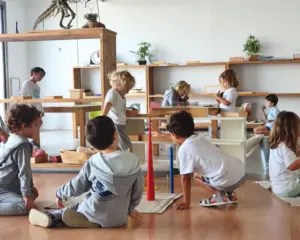
The prepared environment provides order, accessible materials and real opportunities for participation. This structure reduces unnecessary demands, while adult guidance remains available. A child can choose an activity and still know where to find help. Independence does not mean doing everything alone.
At IMS, respect for each child’s individuality and pace guides the educational relationship. In the classroom and at home, it is useful to share specific observations, not labels such as "is avoidant" or "is anxious". That allows family and school to adjust goodbyes, rest breaks and boundaries using the same language. Secure attachment does not require perfect responses, only consistent adults.
Frequently asked questions
These answers help distinguish a typical developmental stage from a pattern that deserves closer observation.
What is the difference between avoidant and anxious attachment?
The difference between avoidant and anxious attachment lies in the protective strategy: a child with avoidant traits reduces visible comfort-seeking, while a child with anxious traits intensifies proximity and needs frequent reassurance. Both may need an available, predictable and sensitive adult. The same behavior can have different causes, so it is worth observing the context and whether it recurs.
How can I tell if my child has insecure attachment?
You cannot tell whether a child has insecure attachment from a tantrum, a difficult goodbye or a period of greater independence, because an assessment requires observing repeated patterns, context and the relationship with their caregivers over time. A single behavior does not allow anyone to assign an attachment style. If distress is intense or persistent, consult a child psychologist or pediatrician.
What should I do when my child cries intensely at goodbye?
When your child cries intensely at goodbye, validate the emotion, explain when you will return using a reference the child can understand, and keep the ritual brief and consistent, without disappearing or drawing the separation out indefinitely. Then allow another available adult to stay with the child until they are calm again. At school, a clear goodbye usually helps more than coming back several times and prolonging it.
Key takeaways
Avoidant and anxious attachment describe protective strategies, not children’s identities. Calm observation helps you respond to the need without turning a behavior into a label.
This week, choose one difficult transition and make it predictable: give a warning, validate, hold the boundary and repair if you get it wrong. If the pattern continues, note specific situations and share them with the pediatrician or a specialist.