
Best Montessori Children’s House near Casares: A Guide for Expat Families

If you live in Casares and your child is between 3 and 6 years old, you’ve probably asked yourself: where can I find the best Montessori Children’s House near Casares? This isn’t a trivial search. The 3 to 6 age range is a golden window for cognitive, social, and emotional development. Choosing well makes all the difference. In this article, I’ll help you define what makes a Montessori center great and how families from Casares are making this decision with clear criteria.
- An authentic Montessori Children’s House is guided by adults trained by the Association Montessori Internationale (AMI) and uses sensory materials designed by Maria Montessori.
- Children aged 3 to 6 work in three-year cycles, which allows for natural leadership and peer-to-peer learning.
- From Casares to Sotogrande, it’s about 20-25 minutes via the A-7, a commute many families make every day.
- Immersive bilingualism (Spanish-English) from age 3 is a real differentiator compared to other models.
- What Makes a Montessori Children’s House the Best Choice for Your Child?
- How Families from Casares Choose a Montessori Children’s House
- What to Look for When Visiting a Montessori Children’s House
- Daily Life in a Montessori Children’s House
- Why Do Families from Casares Choose IMS Sotogrande?
- Frequently Asked Questions
- Key Takeaways
What Makes a Montessori Children’s House the Best Choice for Your Child?
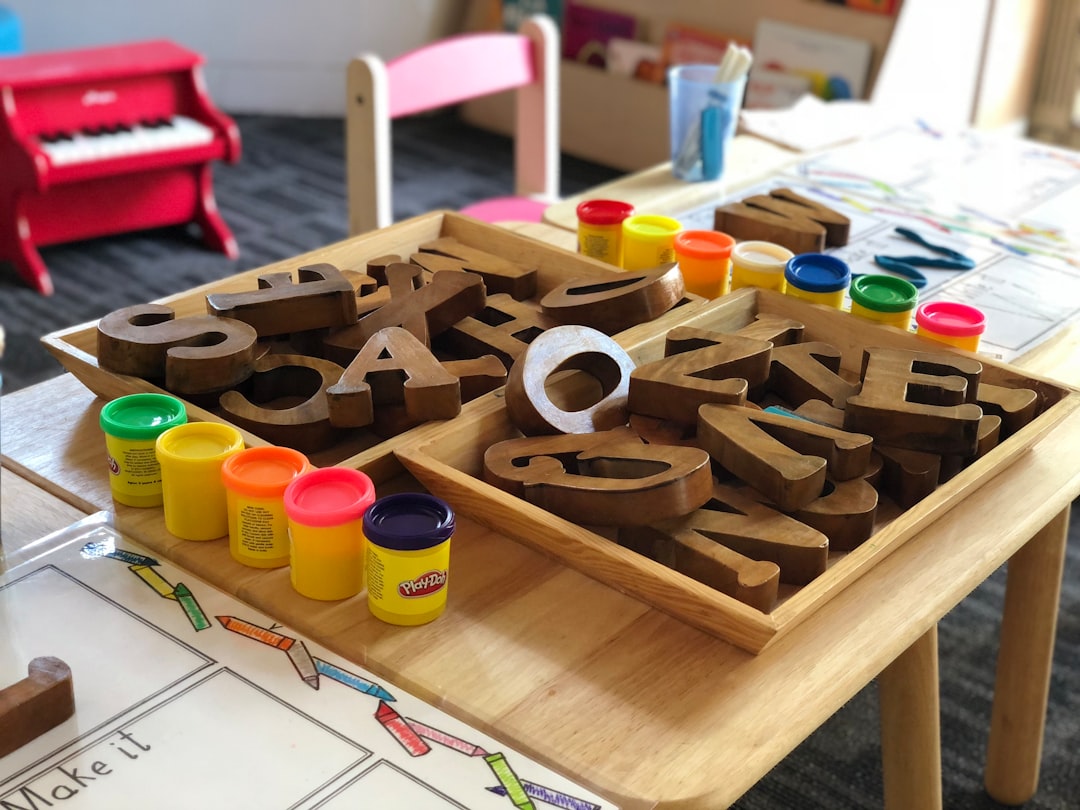
A Montessori Children’s House isn’t a traditional preschool with small desks. It’s a prepared environment where every element has a purpose. The sensory materials are designed so the child can explore, compare, order, and classify with their hands before their head. The adult doesn’t give lectures: they observe, present, and step back. The child chooses their work, repeats it as many times as they need, and builds deep concentration.
For this to work, you need three pillars. First, guides with AMI (Association Montessori Internationale) training. Second, a three-year cycle without separating by age: the older ones lead, the younger ones observe and learn. Third, real Montessori materials, not generic toy versions. If a center meets these three criteria, you’re looking at a serious option.
AMI training isn’t a decorative seal. It guarantees that the adult understands child development, knows how to present each material at the right time, and respects sensitive periods. At IMS Sotogrande, our teaching team holds this accreditation along with the backing of NEASC and the Junta de Andalucía. For families from Casares looking for the best Montessori Children’s House, these three seals are a guarantee hard to match.

How Families from Casares Choose a Montessori Children’s House
Casares is a charming village, but its Montessori educational offer is limited. That’s why many families look towards the Costa del Sol and the Campo de Gibraltar. The question is no longer “what’s in my town?” but “which school, even if it’s 20 minutes away, offers what my child needs?” And that’s the right question.
The commute from Casares to Sotogrande is direct via the A-7 and usually doesn’t exceed 25 minutes. It’s a route hundreds of families take every morning. Why? Because the quality of the environment, the team’s training, and the bilingual program more than compensate for the time in the car. Moreover, many families share the commute with other parents from the area, something the school itself facilitates.
Another key factor is the schedule. At IMS, we offer everything from morning schedules until 17:00, which allows for balancing work and family life without rush. This is especially relevant for families from Casares who work in Estepona, Marbella, or Gibraltar and need real flexibility. If you want to see the updated schedules and fees for our Children’s House, you can check them on the IMS Sotogrande admissions page.
Bilingualism as a Selection Criterion
For international families moving to Casares or the Costa del Sol, bilingualism isn’t an extra: it’s a necessity. At IMS Sotogrande, dual Spanish-English immersion starts from the Children’s House (ages 3-6). Children receive the same content in both languages, naturally, without forced translation. This allows them to develop early fluency without losing connection to their mother tongue.
Furthermore, French is introduced as a third language from the Children’s House. For families coming from Gibraltar, the UK, or France, this means the school respects and nurtures the child’s linguistic profile instead of limiting it. Not many centers in the area offer this combination. It’s a fact that carries weight when comparing options.

What to Look for When Visiting a Montessori Children’s House
When you visit a center, don’t just look at the decor. Notice the productive silence: are the children concentrated on their work or running around aimlessly? Observe if the materials are complete and accessible. Ask about the AMI training of the guides. An authentic center has nothing to hide and will let you see the classrooms in action.
Also ask about the three-year cycle. In a real Children’s House, children aged 3, 4, and 5 share the same space. The older ones help the younger ones, reinforcing their own learning. The younger ones observe the older ones and aspire to do the same. This design isn’t accidental: it’s based on decades of research on how young children learn. The Association Montessori Internationale considers it a fundamental principle of the method.
At IMS Sotogrande, we organize personalized visits so you can experience the prepared environment first-hand. It’s not a tourist excursion: it’s a real morning, with real children working. If you’re evaluating the best Montessori Children’s House near Casares, a visit is the step you can’t skip.

Daily Life in a Montessori Children’s House
A typical day in a Montessori Children’s House doesn’t look like what many parents remember from their childhood. There are no massive 30-minute recesses or lines for the bathroom. Children choose their work, develop it calmly, and put it away when finished. Meals are prepared and served communally. Young children learn to cut fruit, pour water, and clean their space.
This isn’t a luxury: it’s education for autonomy. By age 4, a Montessori child knows how to put on their shoes, hang up their coat, and help set the table. Not because they’re forced to, but because their environment is designed so they can. This approach generates real confidence, not empty labels of “you’re a big kid now.”
For families from Casares who value independence and respect for the child’s rhythm, this model fits like a glove. It’s not more “progressive” or more “strict”: it’s simply coherent with the child’s natural development.
Why Do Families from Casares Choose IMS Sotogrande?
The most honest answer is: because they find what they’re looking for. A school with AMI accreditation, a real bilingual program, flexible schedules, and a teaching team that knows each child by name. IMS isn’t a franchise or a mass-market center. It’s a school founded in 2001 by Olimpia Tardá, with deep roots in the Campo de Gibraltar and the Costa del Sol.
Our campus is in Sotomarket, above Mercadona, about 20-25 minutes from Casares. The classrooms are bright, the materials are within the child’s reach, and the outdoor spaces complement the indoor work. But what families value most isn’t the building: it’s the community. Parents, guides, and children form an educational tribe where everyone has their place.
If you’re looking for the best Montessori Children’s House near Casares, I invite you to visit us. Book a personalized visit on our admissions page and see for yourself why so many families from Casares, Estepona, and the entire area choose us.
Frequently Asked Questions
What is the best Montessori Children’s House near Casares?
The best Montessori Children’s House near Casares is one that has guides trained by AMI, authentic materials, and a three-year cycle. IMS Sotogrande, a 20-25 minute drive away, meets these three criteria and adds a Spanish-English bilingual program with NEASC accreditation.What’s the difference between a Montessori Children’s House and a traditional nursery?
In a Montessori Children’s House, the child chooses their work within a prepared environment. There are no blackboards or lines. The sensory materials allow children to learn abstract concepts through touch and manipulation. The adult observes and presents, they don’t direct or interrupt.Is it worth the 25-minute drive from Casares to Sotogrande?
For the majority of families who do it, yes. The commute is direct via the A-7 and is compensated for by the quality of the environment, the team’s training, and flexible schedules. Many families from Casares share commutes with other parents in the area. A visit to the school will allow you to decide based on real data.From what age can my child start in a Montessori Children’s House?
The Montessori Children’s House is designed for children aged 3 to 6. At IMS Sotogrande, we also offer the Nest for babies from 4 months to 3 years. If your child is under 3, they can start in the Nest and make a natural transition to the Children’s House when ready.Key Takeaways
Finding the best Montessori Children’s House near Casares doesn’t depend on distance, but on criteria: AMI training, a prepared environment, a three-year cycle, and real bilingualism. If a center meets these requirements, a 25-minute commute becomes an investment, not an obstacle.
Your next step is clear: visit a center in operation and watch the children work. At IMS Sotogrande, we organize personalized visits for families from Casares and the entire area. Book yours on our admissions page and see if this is the environment your child needs.









