Best International Montessori Preschool near Estepona: How to Choose

Choosing the best international Montessori preschool near Estepona is one of the most important decisions for an expat family. It’s not just about schedules or fees—it’s about who will guide your child during their most formative years. If you’re living in or relocating to the Costa del Sol area and are drawn to Montessori education, it’s worth understanding what truly sets a great school apart from one that just uses the name. In this article we explore Montessori preschool Estepona in depth with practical examples.
- Key Factors for Choosing a Montessori Preschool
- What Does “Montessori” Really Mean in a Preschool?
- Why Are Families from Estepona Looking Toward Sotogrande?
- 5 Key Questions to Evaluate a Montessori Preschool
- Logistics: The Estepona to Sotogrande Commute
- Common Mistakes When Choosing a Montessori Preschool
- Frequently Asked Questions
- Key Takeaways
Key Factors for Choosing a Montessori Preschool
- AMI (Association Montessori Internationale) accreditation guarantees the school follows the original standards of Maria Montessori.
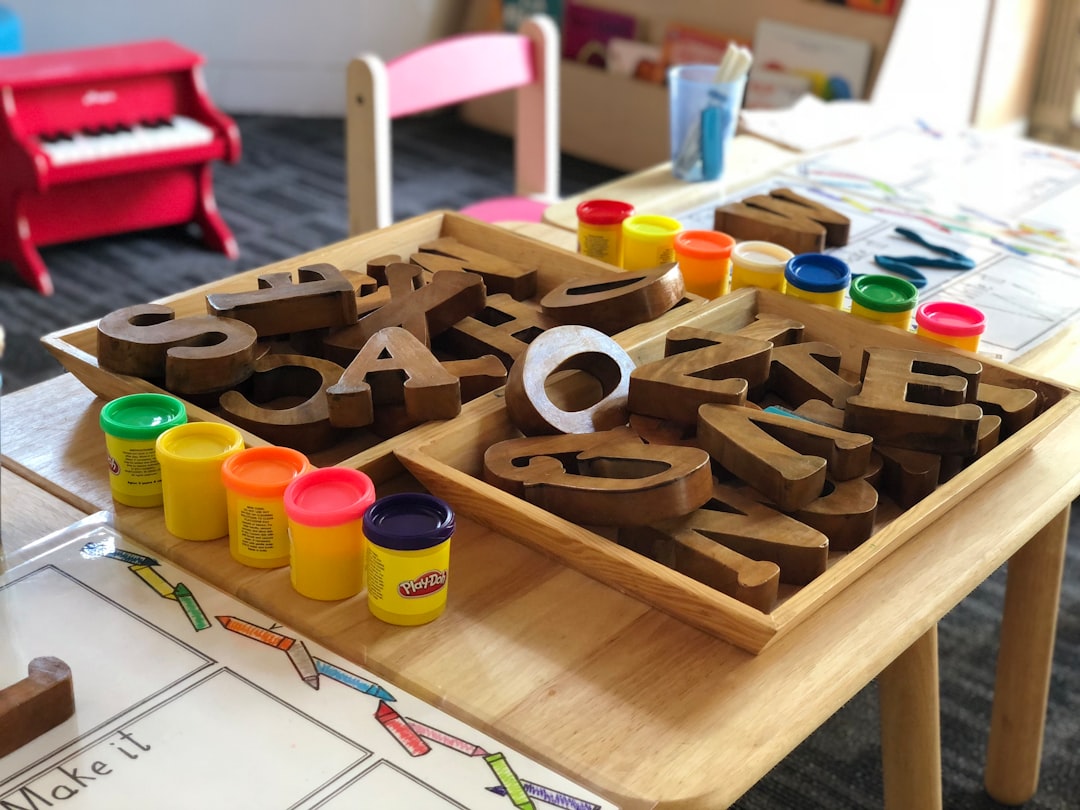
- A truly prepared environment has authentic sensory materials, not plastic toys with a Montessori label.
- The adult-child ratio and the training of the guides matter more than any fancy facilities.
- Bilingual immersion from age 3 has a direct impact on cognitive development and a child’s confidence.
- Location matters: a short, predictable commute reduces stress for the whole family.

What Does “Montessori” Really Mean in a Preschool?
Not every school with “Montessori” in its name truly is. The Montessori method is based on clear principles: respect for the child’s pace, freedom within limits in a prepared environment, and specifically trained adult guides. The Association Montessori Internationale (AMI) is the organization founded by Maria Montessori herself to preserve the integrity of the method. If a school lacks AMI accreditation or certified guides, it’s likely applying only a superficial version. When it comes to Montessori preschool Estepona, it pays to listen to what families and lead guides actually report.
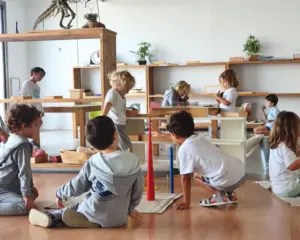
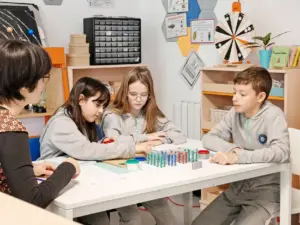
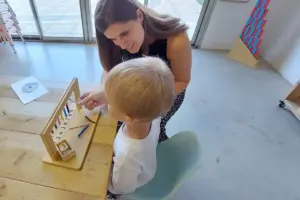
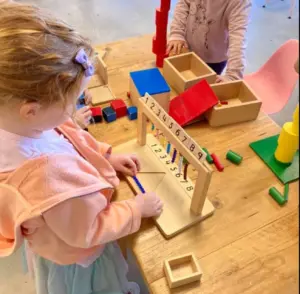
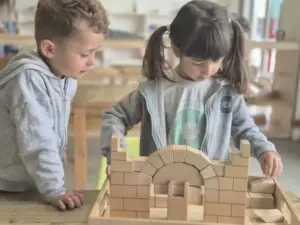
In practice, you can see this in concrete details. Children work with sensory materials designed for a single skill: the pink tower for dimensions, sandpaper letters for touch and writing, and bead bars for mathematical abstraction. There are no blackboards or exams. Each child chooses their work within a clear framework that the guide maintains with firmness and care. Daily practice with Montessori preschool Estepona reveals nuances no handbook fully captures.

Why Are Families from Estepona Looking Toward Sotogrande?
Many families from Estepona discover that the best international Montessori preschool for them isn’t in Estepona, but just over a 20-minute drive away. The journey along the AP-7 motorway is direct and predictable, and what they find on the other side makes a real difference: a school with AMI and NEASC accreditation, Spanish-English bilingual immersion from birth, and a team of guides specifically trained in the Montessori pedagogy. Understanding Montessori preschool Estepona from inside the classroom reshapes everyday decisions.
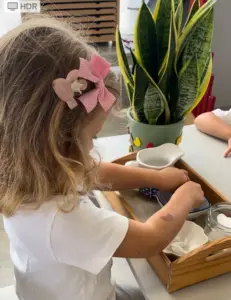
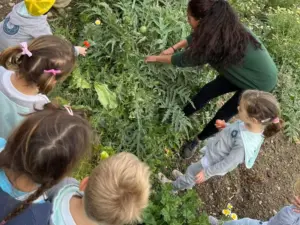
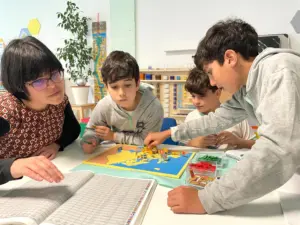
At IMS Sotogrande, for example, the Children’s House (ages 3-6) functions as a microcosm where children actually cook, care for plants, work with practical life materials, and develop real autonomy. It’s not marketing—it’s what you see when you walk into the classroom. The guides observe, present activities individually, and respect each child’s sensitive periods. A 4-year-old might spend half an hour focused on pouring water from one jug to another without being interrupted. Concrete data on Montessori preschool Estepona is worth reviewing before acting on assumptions.
Book a personalized school tour and see for yourself how an authentic Montessori environment works.
5 Key Questions to Evaluate a Montessori Preschool
When you visit a school, don’t be swayed by the decor. These questions will give you real information:
Are the guides AMI certified?
This is the most important question. An AMI-certified Montessori guide has completed between 200 and 600 hours of practical training, including classroom observation and making materials. Without that training, the adult in the classroom is an instructor, not a guide. Ask to see the diploma or inquire directly about certification.
Does the environment have authentic Montessori materials?
Authentic Montessori materials are not cheap. A wooden pink tower, a set of sandpaper letters, or number rods cost between 200 and 500 euros each. If you see plastic, commercial toys, or generic materials with a “Montessori” sticker, be skeptical. Authentic materials are designed for a single presentation and have a built-in control of error: the child corrects themselves without adult intervention.
What is the adult-child ratio?
AMI recommends one guide and one assistant for a group of 20-25 children in the Children’s House (ages 3-6). Smaller groups are even better, but the key is that the adults are trained and don’t interrupt the children’s work. A good guide spends more time observing than speaking.
Do they offer real bilingual immersion?
“English classes” are not the same as bilingual immersion. In authentic immersion, each guide speaks one language consistently: one in Spanish and one in English. The child absorbs both naturally, without forced translation. Studies on early bilingualism show that this constant exposure improves cognitive flexibility and attention span.
Can you observe a morning class?
Any serious school will let you observe without your presence altering the dynamic. If they say it’s not possible, or only show you photos and videos, something is off. Observation lets you see how the children react, how the guides speak, and if the environment has the calm concentration that characterizes a real Montessori classroom.
Logistics: The Estepona to Sotogrande Commute
The journey between Estepona and Sotogrande is about 20-25 minutes via the AP-7 motorway, with no tolls or complications. Many families combine it with their commute to work, as the Sotogrande area is a hub for business and leisure. Children quickly adapt to the car routine, and many Montessori schools offer flexible hours to help with work-life balance.
At IMS Sotogrande, the Children’s House offers two schedule options: Raíces (9:00-14:00) and Alas (9:00-15:00), with extension until 17:00. Families from Estepona who choose IMS particularly value the combination of authentic Montessori pedagogy with real bilingualism and a safe, family-friendly environment in Sotogrande.
Common Mistakes When Choosing a Montessori Preschool
The most frequent mistake is being swayed by aesthetics. A classroom with wooden furniture and neutral-colored walls is not Montessori if the adults are untrained or the materials are generic. Another common mistake is confusing “respect for the child” with “letting them do whatever they want.” The Montessori method has clear limits: the child chooses within a framework the guide maintains with firmness and consistency.
Some families also prioritize physical proximity over educational quality. A preschool 5 minutes from home that doesn’t respect Montessori principles can create frustration for both the child and the parents. In contrast, a 20-minute commute to an authentic school makes a real difference in a child’s emotional and cognitive development throughout their childhood.
Frequently Asked Questions
What age does Montessori preschool start?
The Montessori Children’s House accepts children from 3 to 6 years old. By age 3, a child typically has the concentration and basic autonomy to benefit from the prepared environment. However, many Montessori schools, like IMS Sotogrande, offer programs from birth (Nido) for families who want to start earlier.
Is a Montessori preschool better than a traditional one?
There’s no universal answer, but evidence shows that children in Montessori environments develop more autonomy, better concentration, and greater intrinsic motivation. A study published by Frontiers in Psychology in 2017 found that Montessori children showed better results in reading, math, and social skills. The key is that the school is authentically Montessori, not just that it carries the name.
How much does a Montessori preschool cost on the Costa del Sol?
Fees vary by school and chosen schedule. At IMS Sotogrande, families can check updated fees directly on the admissions page or request personalized information. It’s important to consider what’s included in the fee: adult-child ratio, authentic materials, team training, bilingual immersion, and services like balanced meals.
How do I know if a preschool is truly Montessori?
Ask to see the school’s or guides’ AMI certification, observe a class session, and look for three things: whether children work individually or in a directed group, if the materials are authentic, and if the adults speak softly and observe more than they intervene. An authentic Montessori school has a focused calm that you notice immediately.
Key Takeaways
Choosing the best international Montessori preschool near Estepona requires looking beyond the surface. AMI accreditation, trained guides, authentic materials, and real bilingual immersion are the indicators that matter. Many families from Estepona discover that the school that best fits their values is just 20 minutes away, in Sotogrande.
If you want to see it with your own eyes, book a visit to IMS Sotogrande and observe how an AMI-certified Montessori environment works. There’s no better way to decide than seeing your child work with freedom and joy in a space designed for them.