
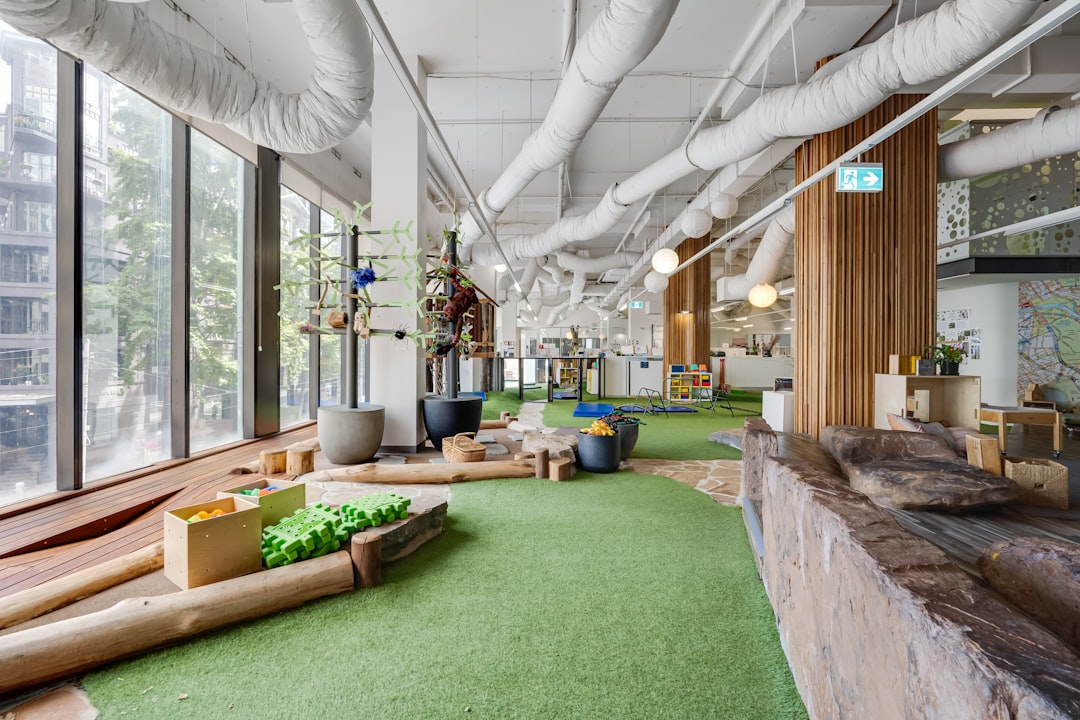
Best Montessori Nursery Near Estepona: How to Choose the Right School for Your Child

Finding the best Montessori nursery near Estepona starts with understanding what makes a school truly Montessori, not just one that uses the name as a marketing tool. Many expat families moving to the Costa del Sol with young children need a safe, bilingual environment that respects natural child development. This guide gives you the tools to compare schools with confidence and make an informed decision.
- A genuine Montessori school has accreditation from the AMI (Association Montessori Internationale) and certified guides, not just wooden materials.
- The prepared environment, adult-to-child ratio, and continuity through age 12 make more of a difference than classroom décor.
- Families from Estepona choose schools in Sotogrande because they combine accredited Montessori education with genuine bilingualism (Spanish/English) in a secure, family-friendly setting.
- An in-person visit is the most important step: observe how the guides interact with the children, not just the furniture.
- What It Really Means for a Nursery to Be Montessori
- Criteria for Choosing the Best Montessori Nursery Near Estepona
- Why Families from Estepona Choose Schools in Sotogrande
- What to Ask on a Visit to a Montessori Nursery
- Differences Between a Traditional Nursery and a Montessori One
- Frequently Asked Questions
- Key Takeaways
What It Really Means for a Nursery to Be Montessori
It’s not enough to put “Montessori” in the name. An authentic Montessori nursery follows the principles of Dr. Maria Montessori: children grouped by age ranges, freedom of movement within clear limits, sensory materials designed for self-learning, and specifically trained guides. The Association Montessori Internationale (AMI) is the body that certifies schools and trainers worldwide.
In practice, this means that in a Montessori Nido (0-3 years) classroom, you’ll see babies crawling freely, choosing their activities, and working at their own pace without constant interruptions. The guide doesn’t direct or demand: they observe, present materials, and respect each child’s sensitive periods.

Criteria for Choosing the Best Montessori Nursery Near Estepona
When visiting schools, these are the points that truly matter. Forget the pretty Instagram photos and focus on what’s essential.
AMI Accreditation and Team Qualifications
Ask for the school’s AMI certificate and inquire about the training of each guide. An AMI-certified Montessori guide has completed between 200 and 600 hours of theoretical and practical training, depending on the age level. If the school lacks AMI accreditation or certified guides, it isn’t Montessori, even if it has pink towers and brown stairs.
Adult-to-Child Ratio and Age Groupings
In Nido (0-3 years), the recommended ratio is 1 guide for every 3-4 babies. In Casa de Niños (3-6 years), it’s 1 guide for every 8-10 children. Children are grouped in three-year cycles, allowing older children to help the younger ones and younger children to learn by observing.
Prepared Environment and Materials
Montessori materials are specific: they are not generic wooden toys. Each material has a concrete developmental purpose and is presented in a logical order. Observe if the materials are organized, accessible at the child’s height, and in good condition. A classroom overloaded with stimuli is not Montessori.
Genuine Bilingualism, Not Cosmetic
If you’re looking for a bilingual school near Estepona, ask how they integrate languages. True immersion means native speakers are in the classroom all day, not just a separate English hour. At IMS Sotogrande, for example, dual Spanish-English immersion starts in the Nido, with French added from Casa de Niños.

Why Families from Estepona Choose Schools in Sotogrande
Estepona has educational options, but many international and local families with a Montessori philosophy end up looking towards Sotogrande. The reasons are concrete: schools with AMI and NEASC accreditation, authentic bilingualism, a safe environment, and a community of families sharing educational values. The commute from Estepona to Sotogrande is 20-25 minutes via the AP-7, a reasonable journey when the educational quality justifies the drive.
Moreover, Sotogrande offers a quiet residential setting with nature and outdoor spaces that complement classroom work. Many families relocating to the Costa del Sol discover that accredited Montessori education is concentrated here, not in the tourist cities along the coast.
Want to see how a true Montessori environment works? Book a personalized school visit and see the difference for yourself.

What to Ask on a Visit to a Montessori Nursery
Prepare these questions before visiting any school that presents itself as the best Montessori nursery near Estepona or the surrounding area:
- Do you have current AMI accreditation? Can you show me the certificate?
- What specific training do the guides at my child’s level have?
- What does a typical day in the classroom look like? Can I observe a session?
- How do you handle the adaptation of young children?
- What languages are spoken in the classroom throughout the day?
- Do you offer educational continuity through age 12?
The answers to these questions will tell you more than any brochure. A school that is confident in its approach will show transparency and invite you to observe the classroom without filters.
Differences Between a Traditional Nursery and a Montessori One
In a traditional nursery, adults direct the activities and all children do the same thing at the same time. In a Montessori nursery, each child chooses their work within a framework of clear limits. This doesn’t mean chaos: it means respecting individual rhythms and fostering real autonomy.
Studies published by the AMI and UNESCO show that children who attend Montessori environments develop better social skills, greater concentration, and more creativity than their peers in conventional education. The difference isn’t just pedagogical: it’s visible in the child’s daily life.
Frequently Asked Questions
What is the best Montessori nursery near Estepona for international families?
The best Montessori nursery near Estepona for international families is one that combines AMI accreditation with genuine bilingualism from the early years. Many families from Estepona choose schools in Sotogrande because they offer dual Spanish-English immersion with native guides, something hard to find in local offerings.
At what age can my child start in a Montessori nursery?
In the Montessori method, children can start from as young as 3 or 4 months in Nido-type programs. The environment is specifically prepared for babies with freedom of movement, sensory materials, and a pace that respects the baby’s needs. There is no age “too young” if the environment is right.
Is the commute from Estepona to Sotogrande worth it for a Montessori school?
For many families, yes. The 20-25 minute drive is offset by AMI and NEASC accreditation, genuine bilingualism, low ratios, and a safe environment. Families who value authentic Montessori education often prioritize program quality over geographical proximity.
How do I know if a nursery is truly Montessori?
Ask for the school’s AMI accreditation and the certification of its guides. An authentic school has guides trained at AMI-recognized institutions, original Montessori materials, and an environment that respects the child’s freedom within clear limits. If the school cannot show documentation, it probably uses the name as a commercial hook.
Key Takeaways
The best Montessori nursery near Estepona isn’t necessarily the one closest to your home, but the one that meets the real standards of the method: AMI accreditation, certified guides, a prepared environment, and genuine bilingualism. Many families from Estepona discover that schools like IMS Sotogrande, just 20 minutes away via the AP-7, offer exactly what they’re looking for.
Take the next step: book a visit to IMS Sotogrande to see how an accredited Montessori environment works. Seeing the classroom in action will give you the clarity no article can provide.









