Best international school in Sotogrande: How to choose for your child
In short
Finding the best international school in Sotogrande for your child is probably the biggest headache for families relocating to the area. There’s no universal answer, but there are key criteria that make the difference between a choice you’re happy with and one you regret. Here’s what we’ve seen work for real families.

Finding the best international school in Sotogrande for your child is probably the biggest headache for families relocating to the area. There’s no universal answer, but there are key criteria that make the difference between a choice you’re happy with and one you regret. Here’s what we’ve seen work for real families. In this article we explore international school sotogrande in depth with practical examples.
- The best school isn’t the most expensive or famous, but the one that fits your child’s values and pace.
- Teacher-to-student ratio, discipline style, and teaching approach matter more than fancy facilities.
- Visiting the school, observing the children, and talking to other families is the best test.
- True, immersive bilingualism sets a school apart from just extra language classes.
- A good school listens to you too, not just educates your child.
Why there’s no single ‘best’ international school in Sotogrande for every child
Every child has their own pace, way of connecting with the world, and needs that change with age. What works for a three-year-old isn’t right for an eight-year-old. That’s why, when asking which is the best school in Sotogrande for your child, the first step is to stop looking at rankings and start listening to what your child needs. When it comes to international school sotogrande, it pays to listen to what families and lead guides actually report.
A school might have an Olympic pool and native teachers, but if your child feels invisible in the classroom, none of that matters. The real question isn’t which is the best school, but where will my child grow up feeling safe, motivated, and able to be themselves. Daily practice with international school sotogrande reveals nuances no handbook fully captures.
Families from La Línea, Algeciras, or Gibraltar who choose schools in Sotogrande typically value three things: a safe environment, real educational quality, and a community that makes them feel part of it. And that’s not always in the shiniest brochure. Understanding international school sotogrande from inside the classroom reshapes everyday decisions.

The 5 criteria that really matter when choosing a school in Sotogrande
Not all families prioritize the same things, but there are five criteria that, in our experience, are common among those happy with their choice. Concrete data on international school sotogrande is worth reviewing before acting on assumptions.
Teaching approach: How do children learn?
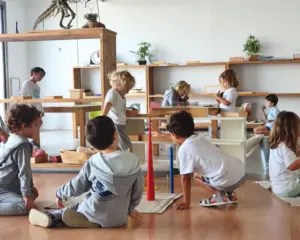
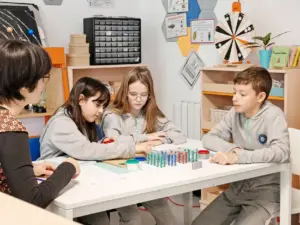
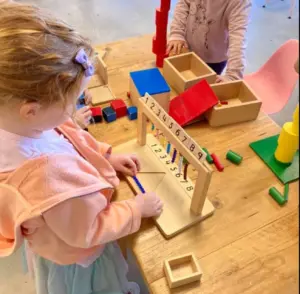
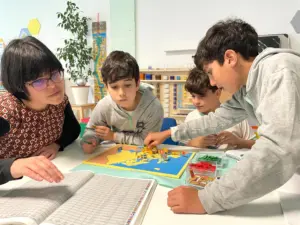
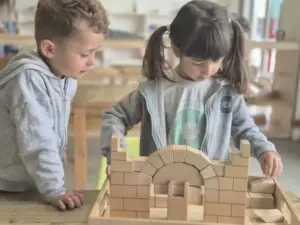
The method matters more than the building. Does the school respect each child’s pace, or expect everyone to learn the same thing at the same time? Is there room for movement, curiosity, and making mistakes? In Montessori, for example, the child chooses their work within a prepared framework, and the guide observes rather than directs. That changes everything.
Ask to see a morning class. If the children are calm, focused, and working on their own initiative, that’s a good sign. If they’re sitting waiting for instructions, ask if that’s the model you want for your child.
Teacher-student ratio and individual attention
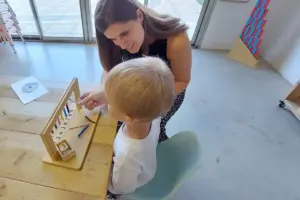
A classroom with 25 children and just one adult doesn’t allow for real attention. In Montessori schools accredited by AMI, like IMS Sotogrande, the ratio is low and age groups are mixed, which helps older children mentor younger ones and everyone progress at their own pace.
Ask how many children there are per key adult, not just per classroom. Observe if teachers know each child by name, their interests, and their challenges.
Real bilingualism vs. marketing bilingualism
On the Costa del Sol and in the Campo de Gibraltar, many schools advertise as bilingual. But there’s a huge difference between an hour of English a day and true language immersion with native teachers in every classroom.
If bilingualism is important for your family, ask how languages are distributed during the day, who teaches each session, and if other languages are introduced naturally. At IMS, for example, Spanish-English immersion starts from the Nido, and French is introduced from the Children’s House.
Families already at the school
No one tells the truth like another parent who’s been through the process. Ask for real references, not testimonials from the website. Talk to families from your area, whether it’s San Roque, Estepona, or La Línea de la Concepción, and ask about the good and the challenging.
At IMS we have families who commute daily from Algeciras, Gibraltar, and even Marbella. Ask them why they make the journey. Their answers will tell you more than any brochure.
Communication with families
A good school doesn’t only call when there’s a problem. They inform you weekly, offer regular parent-teacher meetings, and treat you as part of the educational team. Ask how they communicate, how often, and through which channels.
At IMS we use Growappy, ClickEdu, and a private Facebook group to keep families updated without overwhelming them. Weekly reports arrive every Friday, and there are at least three formal parent-teacher conferences per year.
Book a personalized school visit to see how all this works up close.

Common mistakes when choosing a school (and how to avoid them)
The first mistake is deciding based on facilities. A pool doesn’t educate, and a new building doesn’t guarantee teachers will connect with your child. Look at what happens inside the classrooms, not the building’s design.
The second is choosing based on social pressure. “All the kids in the neighborhood go to this school” isn’t a good criterion. Your child isn’t all the kids. Take the time to visit, ask, and compare.
The third is not asking about the discipline policy. How do they handle conflicts? Do they punish, ignore, or guide? The way a school manages tantrums and disagreements says a lot about how they treat children in general.

Frequently asked questions
When is the best time to choose a school in Sotogrande?
Ideally, start researching at least six months ahead. At IMS, the admissions process for the next school year begins in March, but applications can be submitted at any time of the year. Already enrolled families have priority, so the sooner you start, the more options you’ll have.
Is it better to choose a public or private school in Sotogrande?
It depends on what you’re looking for. The public system offers regulated, free education, but with less methodological flexibility. Private schools let you choose the teaching approach, student-teacher ratio, and languages, but involve a financial investment. The important thing is that the school, public or private, respects your child’s pace and communicates with you transparently.
What accreditations should a good international school have?
External accreditations ensure a school meets independent quality standards. In Montessori education, accreditation from AMI (Association Montessori Internationale) is the most rigorous worldwide. At IMS we also hold NEASC (New England Association of Schools and Colleges) and recognition from the Junta de Andalucía. These three bodies provide coverage for both the method and the international and national curriculum.
Which is the best school in Sotogrande for my child if we’re an international family?
If you’ve just moved to the area, look for a school with experience supporting expat families, native teaching staff, and a diverse community. At IMS we have families from over 20 nationalities, and true trilingualism allows children to maintain their home languages while learning Spanish. Plus, the location in Sotogrande makes logistics easier for families from Gibraltar, La Línea, and the entire Costa del Sol.
Key takeaways
Finding the best international school in Sotogrande for your child isn’t a question you can solve with a Google search. It requires visiting, observing, asking questions, and trusting what you see. The best school is the one where your child feels safe, respected, and motivated to learn every day.
If you’d like to see how a bilingual Montessori school with AMI and NEASC accreditation works in Sotogrande, book a personalized visit. We love meeting families and answering all their questions without any obligation.
Viviane Dumont, Director of Studies at IMS Sotogrande