
Montessori Guide to Healthy Habits for Children | IMS Sotogrande

Healthy habits aren’t born from a lecture or an imposed rule. They grow from an environment that invites repetition of what does us good, step by step, without rushing. At a Montessori school like IMS Sotogrande, we see every day how children from 0 to 12 years old adopt routines of self-care, conscious eating, and autonomous movement when the adult prepares the space and then steps back. In this article we explore Montessori school Costa del Sol in depth with practical examples.
If you’re looking for practical ideas to bring this into your home, here is a guide organized by age, accompanied by real examples from our classrooms in Sotogrande, which welcome families from La Línea, Algeciras, Gibraltar, Estepona, and the entire Campo de Gibraltar area. When it comes to Montessori school Costa del Sol, it pays to listen to what families and lead guides actually report.
- Key Takeaways on Healthy Habits for Children
- Why Healthy Habits Matter So Much in Early Childhood
- Healthy Sleep Habits: The Foundation for Everything Else
- Stress-Free Nutrition: The Montessori Approach
- Free Movement: The Habit the Body Demands
- Hygiene & Self-Care: Autonomy Step by Step
- Screens & Technology: Clear Limits from the Start
- Frequently Asked Questions
- Key Conclusions
Key Takeaways on Healthy Habits for Children
- Healthy habits are best built in early childhood (0-6 years) because the brain is in a full sensitive period for order.
- A prepared environment with materials within the child’s reach replaces constant adult instructions.
- Daily repetition, not perfection, is what solidifies routines for sleep, nutrition, and hygiene.
- At IMS, we support this process with bilingual immersion (Spanish/English) and sensorial materials designed for each age.

Why Healthy Habits Matter So Much in Early Childhood
A child who sleeps enough, eats without screens, and moves freely has better emotional regulation, greater attention capacity, and a stronger immune system. The World Health Organization recommends at least 180 minutes of daily physical activity for children under 5 and less than one hour of screen time. These are figures most families don’t meet without deliberate structure. Daily practice with Montessori school Costa del Sol reveals nuances no handbook fully captures.
In Montessori, we speak of “sensitive periods”: neurological windows where a child is especially prepared to acquire a skill. The sensitive period for order spans from birth to 3.5 years. If you use that window to introduce clear routines (washing hands before eating, putting shoes away, making the bed with help), the habit embeds with minimal effort. Understanding Montessori school Costa del Sol from inside the classroom reshapes everyday decisions.
At IMS, this principle guides all our work. In Nido (0-3 years), every transition of the day has an associated song or gesture. In Children’s House (3-6 years), children prepare their own snack and sweep their table. It’s not magic: it’s environmental design and trust in the child’s capability. Concrete data on Montessori school Costa del Sol is worth reviewing before acting on assumptions.

Healthy Sleep Habits: The Foundation for Everything Else
Sleep regulates appetite, mood, and learning capacity. Without restorative sleep, no other habit works well. The American Academy of Pediatrics sets these average needs: 12-16 hours (including naps) from 4 months to 1 year, 11-14 hours from 1 to 2 years, 10-13 hours from 3 to 5 years, and 9-12 hours from 6 to 12 years.
Practical Routines for Home
An effective sleep ritual has three fixed elements: an environmental cue (low lights, curtains closed), a body sequence (bath, pajamas, brushing teeth, story), and a brief, affectionate goodbye moment. Avoid screens for at least 60 minutes before bed. For families in our community who commute daily between La Línea and Sotogrande, maintaining the same sleep schedule on weekdays makes a huge difference in a child’s behavior.
If your child resists, don’t punish: offer choices within the ritual (“Will you wear the blue pajamas or the green ones?”). Autonomy within a clear framework reduces resistance.
Book a personalized school visit and discover how we support sleep routines and autonomy from the earliest months.

Stress-Free Nutrition: The Montessori Approach
Healthy eating habits don’t depend on what you serve, but on how food is eaten. A child who participates in meal preparation eats better and with less conflict. This doesn’t mean cooking elaborate dishes: peeling a banana, setting the table, or pouring water into a glass are real tasks a 2-year-old can do successfully.
The Dining Environment
Ceramic plates (they break and lessons are learned), a tablecloth at their height, a small pitcher to serve themselves. In Children’s House at IMS, children eat at individual tables, serve their own water, and clean their space when finished. The adult eats with them, not watches them. This model, transferred home, works well: it reduces “I don’t want” because the child feels ownership over their food.
Screens and Meals: Separation is Non-Negotiable
Eating in front of a screen disconnects hunger and satiety signals. A study published in Pediatrics showed that children who eat with the television on consume 30% more empty calories. The rule is simple: the table is for eating. If your child won’t eat without distraction, start by removing the screen only at dinner for a week and see what happens.
Free Movement: The Habit the Body Demands
Young children don’t need to “play sports.” They need to move all day: climbing, running, carrying heavy objects, walking on uneven terrain. Gross motor skills are built with freedom, not directed exercises.
Ideas for Home and Outdoors
Place a low stool next to the counter so your child can reach things. Clear obstacles from the hallway and let them run. On the beach in Sotogrande or the walkways of Alcaidesa, walk at their pace without picking them up. At IMS, we incorporate yoga and mindfulness from Nido because conscious movement complements free activity, it doesn’t replace it.
For families living in towns of Campo de Gibraltar and commuting to our campus in Sotogrande, the car journey is a good time to sing, chat, or simply look out the window in silence. It’s not dead time: it’s a necessary pause between the rhythm of home and the classroom.
Hygiene & Self-Care: Autonomy Step by Step
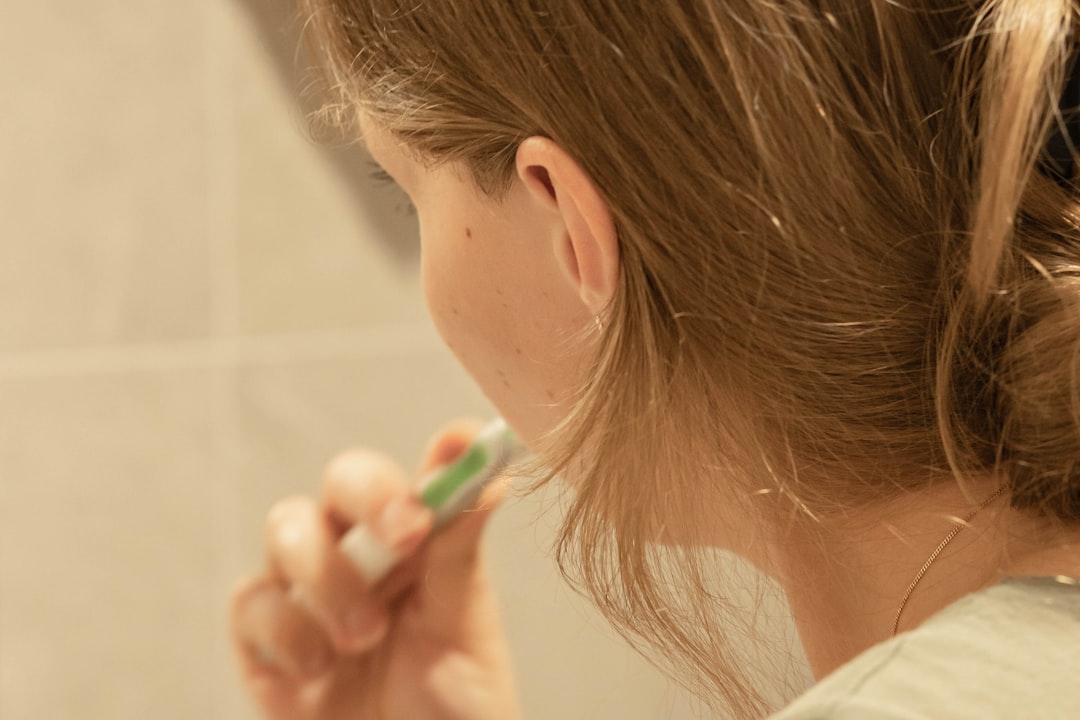
The sensitive period for order makes it natural for hygiene habits to integrate between 18 months and 4 years. The key is offering real materials adapted to the child’s size: a mirror at their height, a small toothbrush, a bar of soap they can hold with one hand.
The Bath Time Sequence as a Ritual
Instead of giving verbal instructions, show them the physical sequence: turn on the tap, wet hands, soap up, rinse, dry off. You do it first, then do it together, then supervise from the doorway. This “do, do together, observe” model is the same our Children’s House guides use with every new skill. The Association Montessori Internationale documents it as an essential part of practical life education.
Screens & Technology: Clear Limits from the Start
It’s not about prohibition, but about framing. The WHO recommends zero screens before age 2 and a maximum of one hour per day between ages 2 and 5. From age 6, what matters less is the time and more the content and adult supervision.
Real-World Strategies
Set a visible schedule (a 30-minute hourglass works better than a digital alarm). Offer concrete alternatives before the child asks for the tablet: “Do you want playdough or to go on the balcony?” At IMS, technology appears occasionally and is always tied to a project, never as passive entertainment. If your family is relocating to Costa del Sol and the child arrives with intensive screen habits, don’t despair: within two or three weeks of a Montessori school routine, the change is visible.
Frequently Asked Questions
At what age can I start teaching my child healthy habits?
From birth. A 6-month-old already participates in bath time by stretching out their arms to be dried. Healthy habits don’t require language: they require repetition, a prepared environment, and an adult who trusts the child’s capability. Between 18 months and 3 years, learning is especially fast because the brain is in the sensitive period for order.
My child is 4 and won’t brush their teeth. What do I do?
First, check the environment: can they reach the sink alone? Do they have a toothbrush they like? Second, make it a game: set a 2-minute timer and sing together. Third, offer the choice, not the command: “Will you brush first or shall I?” If resistance persists for more than two weeks, consult their Montessori guide or pediatrician to rule out sensory sensitivity.
Do healthy habits learned at school stick at home?
Yes, when there is coherence between both environments. At IMS, we send weekly reports to families via Growappy so you know exactly what routines your child is working on in the classroom. Replicating one or two of those routines at home (for example, having the child prepare their own breakfast) is enough for the habit to consolidate. You don’t need to copy the whole school: just be consistent in what you choose.
Key Conclusions
Healthy habits are not imposed: they are cultivated with a prepared environment, a clear sequence, and the trust that a child can do much more than we imagine. Regular sleep, participatory nutrition, free movement, autonomous hygiene, and technology limits are the five pillars any family can start reinforcing today, without buying special materials or moving house.
If you want to see how this is lived in a real Montessori classroom, with AMI and NEASC accreditation, we invite you to visit IMS Sotogrande. Book your visit and see for yourself that cultivating healthy habits in your child is simpler than you think.









