
Early Childhood Stimulation Guide for Expat Families | Montessori School Near Gibraltar

Many families search for information on early childhood stimulation thinking of structured classes or expensive toys. But the truth is much simpler and more beautiful. Early stimulation is any respectful interaction that helps your child’s brain create connections during their first years. And it happens every day, at home, with what you already have.
Key points
- Early stimulation is not a therapy: it’s the everyday environment that offers security, free movement, and rich sensory experiences.
- Between 0 and 3 years, the brain forms more than a million neural connections per second. What your child experiences in that window shapes their brain architecture.
- Montessori proposes a prepared environment where the child chooses, repeats, and concentrates. That is authentic stimulation.
- You don’t need to buy special kits. The kitchen, nature, and daily life are the best materials.

What early childhood stimulation really is
Early stimulation refers to the set of sensory, motor, cognitive, and emotional experiences that promote brain development during the first years of life. It’s not about advancing learning or teaching letters to a baby. It’s about offering an environment rich in stimuli appropriate for each stage, respecting individual rhythms. When it comes to early childhood stimulation, it pays to listen to what families and lead guides actually report.
According to the Association Montessori Internationale (AMI), the child from 0 to 6 has an absorbent mind that learns from the environment without conscious effort. Therefore, the most important thing is not what you teach them, but the environment that surrounds them. If you want to delve deeper, you can consult the resources from AMI or the Spanish Association of Pediatrics, which has a complete section on early childhood development. Daily practice with early childhood stimulation reveals nuances no handbook fully captures.
Book a personalized school visit to see how we apply these principles in our Nido and Children’s House classrooms in Sotogrande. Understanding early childhood stimulation from inside the classroom reshapes everyday decisions.

The baby’s brain: why the first three years matter
Between birth and three years, the human brain develops at an astonishing speed. Neuroscience has shown that during this stage, the foundations for emotional regulation, language, motor coordination, and attention capacity are established. A study published by the journal Pediatrics (2023) confirmed that children who grow up in environments with rich verbal interactions and free movement show greater development of Broca’s area at four years old.
This doesn’t mean your child needs a curriculum. It means they need:
- Skin-to-skin contact and frequent conversations.
- Freedom to move in a safe space.
- Real objects they can touch, hit, throw, and explore.
- Unhurried time to concentrate on what interests them.
Every time your baby turns a spoon and watches how it falls, they are doing their first physics experiment. That is real early stimulation.

How to apply early stimulation at home
You don’t need to transform your living room. Montessori pedagogy divides the environment into areas you can replicate with everyday objects.
Movement area (0-12 months)
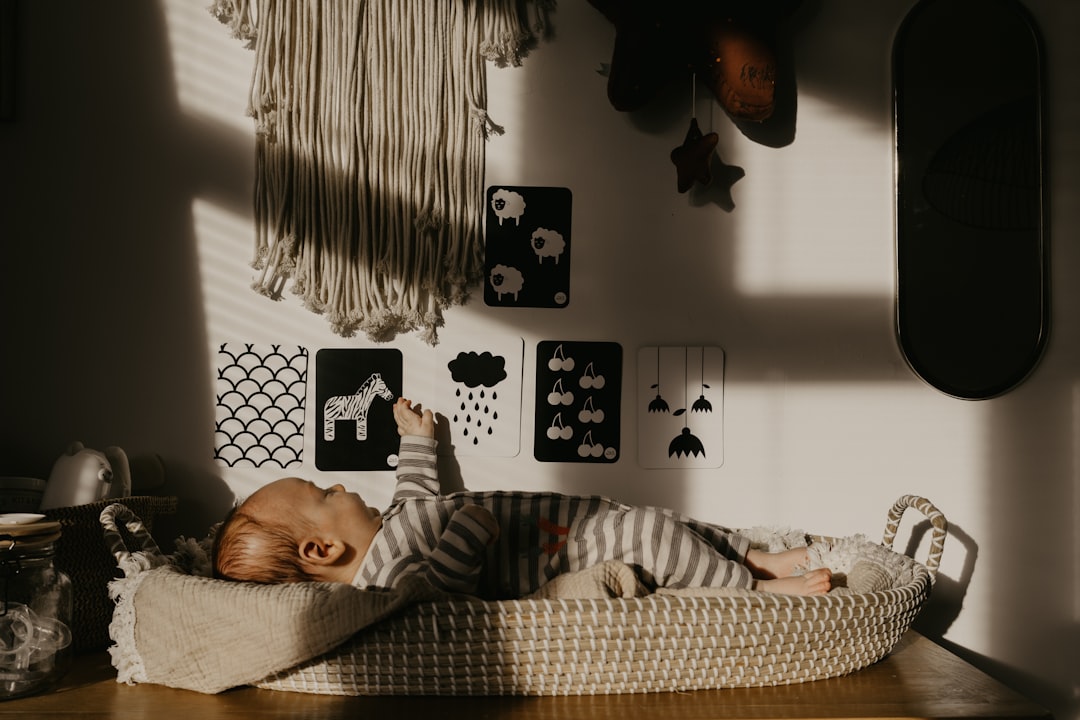
Place a small mat on the floor with a floor-level mirror, a Munari mobile, and two or three objects with different textures. Let your baby move freely without bouncers or playpens. Free movement is the engine of neurological development at this stage.
Sensory area (12-36 months)
From the age of one, offer trays with rice, lukewarm water, sponges, and containers of different sizes. Free sensory play strengthens the neural pathways linked to touch, proprioception, and motor planning.
Practical life area (2-6 years)
Involving your child in real household tasks is the best early stimulation that exists. Peeling a banana, sweeping with a small broom, watering a plant. Each task requires concentration, hand-eye coordination, sequencing, and autonomy. All of this builds the brain.
Signs you’re on the right track
Don’t compare your child to rigid developmental charts. Observe their behavior. If they concentrate while playing with a single object for several minutes, if they repeat an activity until they master it, if they seek your gaze when something surprises them, if they calm down with your voice. All are signs that their nervous system is integrating stimuli properly.
At IMS Sotogrande, our guides observe these signs daily in the Nido (0-3) and Children’s House (3-6). The prepared environment is designed so that each child finds the material they need at each moment, without adult interruptions. This is the difference between a Montessori environment accredited by AMI and a simply beautiful space.
Common mistakes when talking about early stimulation
The first is confusing stimulus with overload. More toys is not better. An environment with too many objects fragments attention and causes irritation. Less is more, always.
The second is believing that the adult must actively teach. In Montessori, the adult observes, prepares the environment, and withdraws. The child is the one who learns, as long as the environment allows it.
The third is rushing stages. Sitting a baby who doesn’t sit alone, walking hand-in-hand with a child who still crawls, showing reading cards to a two-year-old. All of this interferes with the natural development that evolution has perfected over thousands of years.
Frequently asked questions
At what age does early stimulation start?
Early stimulation begins from birth, and even during pregnancy. The newborn’s brain is already prepared to receive sensory information. The first skin-to-skin contacts, familiar voices, and rhythmic movements are the first stimuli that organize the baby’s nervous system.
Do I need a professional to stimulate my child?
No, unless there is a specific diagnosed need. In typical development, parents are the best stimulators. Your voice, your caresses, your attentive presence, and a safe environment are all your child needs during the first months. If you have doubts, consult with your reference pediatrician.
Are early stimulation kits useful?
Most are unnecessary. A baby learns more with a wooden spoon and a bowl than with ten plastic toys with lights and sounds. What matters is the quality of the interaction and the freedom to explore, not the price of the material.
How do I know if my child has a developmental delay?
Every child has their own rhythm, but there are signs that are worth consulting with a pediatrician: if they don’t respond to sounds at six months, if they don’t babble at nine, if they don’t crawl or drag themselves at a year, or if they lose skills they had already acquired. Early detection allows for more effective intervention. Remember that at IMS we have the Rainbow classroom, specialized in diversity and individualized support.
Key takeaways
Early stimulation is not a list of activities nor an expense on materials. It is the conscious decision to offer your child a safe, respectful environment rich in sensory and motor experiences during their first years. Every everyday moment, from eating to free play, is a real opportunity for brain development.
If you want to see what authentic stimulation looks like in an accredited Montessori environment, book your visit to IMS Sotogrande. We are in Sotomarket, just minutes from San Roque, La Línea, Algeciras, and the entire Campo de Gibraltar area.









